
A vehicle loses productive time from the moment a maintenance fault is reported.
The time spent waiting for a technician can keep the vehicle out of service before any repair work begins.
Once a driver reports a fault, the maintenance process involves several steps. The team assesses the fault, assigns a technician, coordinates travel to the vehicle, and starts the repair.
During this period, the vehicle remains unavailable. For fleet operators, response time is therefore a key maintenance measure. It shows how long a vehicle waits for maintenance after a fault is reported.
The Waiting Period Determines Total Downtime
Repair time shows how long a technician spends working on a vehicle. It does not show how long the vehicle waited before maintenance began.
A delayed response can result in:
Drivers waiting for maintenance assistance.
Delivery schedules being changed.
Other vehicles being assigned to the work.
Dispatch teams managing route and workload changes.
Customers receiving revised delivery information.
A repair can be completed within the required service window, but the vehicle may have spent a longer period waiting for assistance.
Response Time Starts with the Maintenance Process
A maintenance response depends on the process used to handle a fault report.
When a driver reports a problem, the maintenance team needs accurate information about the vehicle, its location, and the reported fault. This information supports technician allocation and helps the team determine what assistance the vehicle requires.
A maintenance response process should include:
Clear fault information from the driver.
Accurate vehicle location.
Immediate job allocation.
Technician availability information.
Direct communication between the driver, dispatcher, and maintenance team.
Access to previous repair records when they relate to the reported fault.
Without a defined process, maintenance teams can spend time confirming information, finding available technicians, and coordinating attendance. That time adds to vehicle downtime.
Mobile Repair & Maintenance Reduces the Wait for Assistance
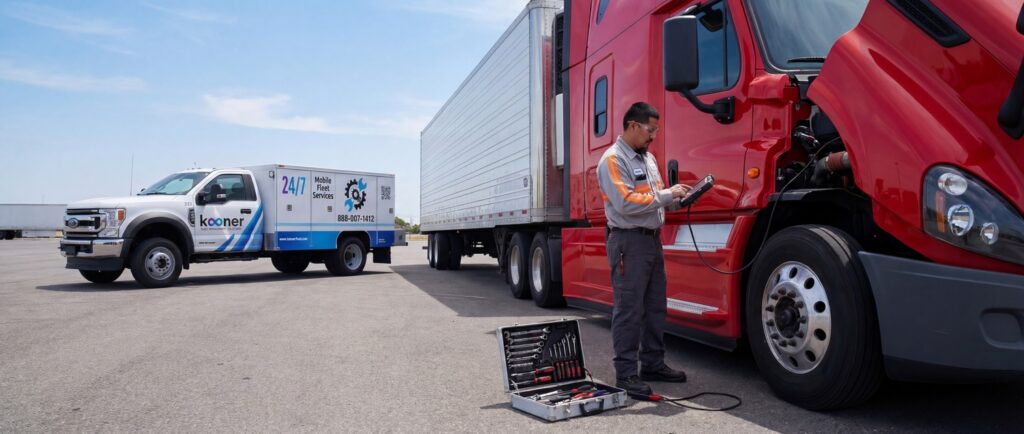
Mobile fleet repair and maintenance brings the technician to the vehicle instead of requiring the vehicle to travel to a workshop.
This service is useful when a vehicle develops a fault at a roadside location, delivery site, depot, or customer premises and the required work can be completed on site.
It allows operators to:
Send a technician directly to the vehicle.
Diagnose the fault at the vehicle’s location.
Carry the tools and parts required for the reported issue.
Complete suitable repairs on site.
Avoid unnecessary vehicle recovery.
Reduce the need to transport the vehicle to a workshop.
Return the vehicle to its planned operation after the repair.
Consider a vehicle that develops a fault during a delivery route. Sending a mobile technician to the vehicle allows maintenance work to begin at its current location. If the fault requires workshop repair, the vehicle can then be recovered based on the technician’s assessment.
This makes mobile repair teams a practical response to the waiting period between fault reporting and maintenance work.
Measure the Time Before the Repair Starts
Repair completion time is one maintenance metric. It should not be the only one.
Fleet managers should track the full maintenance timeline from fault reporting to vehicle return.
Useful measures include:
Time from fault reporting to job allocation.
Time from job allocation to technician dispatch.
Technician travel time.
Technician arrival against the required response target.
Time from technician arrival to repair start.
Total downtime from fault reporting to return to service.
Repeat call-outs related to previous repairs.
These measures show where the maintenance process creates delays.
Preventive maintenance records help fleet managers identify recurring faults, component issues, and vehicles that require increased maintenance attention.
Response Time Protects Vehicle Availability
Vehicle availability depends on what happens after a fault is reported.
Accurate fault reporting gives the maintenance team the information required to assess the job. Technician allocation puts the right resource on the job. Mobile fleet maintenance allows technicians to attend vehicles at their current location when on-site work is suitable. Clear communication keeps drivers, dispatchers, and maintenance teams informed.
Each part of this process affects the time a vehicle remains out of service.
Fleet operators should therefore treat response time as a core maintenance measure alongside repair duration. The aim is to reduce the period between fault reporting and the start of maintenance work.