

Outsourced Fleet Maintenance vs. In-House Maintenance: Which One to Consider

If you manage a regional fleet or oversee operations across multiple locations, you have likely encountered familiar hurdles. Ongoing technician shortages, unexpected equipment failures during peak operational hours, and valuable warehouse capacity tied up storing spare parts. They represent constant operational drag that erodes profitability. The Economics of In-House Maintenance In-house maintenance requires proactive planning. Capital investment: Purchasing diagnostic equipment, lifts, and tool sets. Space overhead: A functioning workshop also needs warehouse space. Talent retention: Experienced technicians demand competitive salaries, and training replacements costs time and money. Downtime during gaps: When technicians are on leave or busy handling emergencies, downtime increases. According to a study by the ATR Institute, fleet operators spend an average of $4,200 per vehicle annually on in-house maintenance; this figure excludes hidden costs like staff turnover and equipment depreciation. When you factor in these expenses, the number climbs significantly. The operational burden also includes compliance. Your team must stay updated on changing vehicle regulations, emission standards, and safety protocols. The Cost Structure of Outsourced Maintenance Outsourced providers operate at scale. They serve dozens of fleets, which means: Fixed monthly costs: Predictable budgets and transparent pricing Zero capital outlay: No equipment purchases or facility investments required Access to specialists: Providers have technicians who can handle multiple vehicle types 24/7 availability: Breakdowns are fixed immediately with around-the-clock commercial roadside assistance The efficiency advantage is measurable. Providers use standardized processes, data-driven scheduling, and inventory management systems. Comparing Both To See Which One Makes Financial Sense For Your Business The decision hinges on three variables: fleet size, vehicle age, and location. Choose in-house if: You operate 20+ vehicles of the same make/model (specialization pays off) Your fleet is new and under warranty (fewer complex repairs needed) You have dedicated workshop space readily available Choose outsourced if: Your fleet is mixed (multiple brands and model years) You operate in different states/regions Your current maintenance spend exceeds planned budgets Technician availability is your bottleneck The financial math typically favors outsourced operations for fleets under 50 vehicles. Factor In-House Maintenance Outsourced Maintenance Upfront investment Workshop, tools & diagnostic equipment Minimal capital investment Technician management Recruitment, training & retention Managed by the provider Maintenance coverage Limited to internal capacity Access to wider technician networks Cost structure Fixed overhead + repair costs Service-based, predictable costs Fleet mix Best suited to standardized fleets Suited to mixed vehicle types Geographic coverage Only fixed locations Multi-location fleets 24/7 breakdown support Requires internal staffing Available through roadside support Scalability Requires additional people & infrastructure Capacity scales with fleet requirements Operational control Direct control over technicians & scheduling Shared through service processes and reporting A hybrid model sits between the two. Routine servicing, preventive maintenance, and roadside repairs can be outsourced, while internal teams retain responsibility for specialized diagnostics or vehicle-specific work. Pros and Cons Of Each Approach Here is a list of pros and cons to support your decision. In-House Maintenance Advantages: You control scheduling, maintain proprietary knowledge, and build a team of technicians that understand the business. Disadvantages: High fixed costs, compliance responsibility rests with you, and downtime during staff absences is unavoidable. Outsourced Maintenance Advantages: Predictable costs, access to technical expertise, compliance handled by professionals, and no capital investment. Disadvantages: Less control, response times might vary by location, and switching between internal teams and providers creates transition friction. Conclusion The right maintenance decision should be based on control, cost structure, fleet complexity, and geographic coverage. For a large, standardized fleet with established workshop infrastructure, keeping core maintenance in-house makes commercial sense. For mixed fleets, multi-location operations or businesses facing technician capacity constraints, outsourcing removes much of the infrastructure and staffing burden. For businesses evaluating outsourced fleet maintenance, Kooner Fleet Management Solutions provides comprehensive fleet management services in the US, including preventive maintenance, mobile fleet maintenance, roadside assistance, on-site truck repair and fleet compliance. Our team is ready around the clock to minimize downtime and keep maintenance organised around vehicle availability, operating schedules and service requirements, without the need to build additional workshop capacity.
How to Choose a Fleet Maintenance Company: 10 Things to Check Before You Sign

Like any third-party partnership, choosing a service provider comes down to finding one that understands your business and has the right industry expertise. For fleet businesses, the technical requirements are different. Your maintenance partner needs to understand vehicle types, duty cycles, compliance demands, repair priorities, and what happens when a vehicle is taken out of service. Before you sign a contract, assess how the provider fits into your day-to-day operation. 1. Fleet and Vehicle Expertise A maintenance company needs experience with the vehicles your business actually runs. A provider familiar with light commercial vehicles may not have the technicians or equipment required for heavy-duty trucks and trailers. Check whether the company has experience with: Your vehicle makes, models, and configurations Heavy-duty or commercial vehicles Your industry and operating conditions The type of mileage and workload your fleet handles Manufacturer-specific maintenance requirements This gives you an early indication of the provider’s technical capability. 2. Range of Maintenance Services Look at the full scope of support, from routine servicing to component repairs. A suitable provider handles all vehicle maintenance work to minimize handoffs between suppliers. Check for services such as: Preventive fleet maintenance and scheduled servicing Brake and suspension work Engine and drivetrain repairs Electrical diagnostics Tire inspections and replacement DOT or safety inspections Trailer maintenance The goal is to understand what’s included in the contract and what gets treated as an additional service. 3. Mobile Maintenance Capability Taking a vehicle to a workshop is not always a practical solution. For fleets operating across multiple sites or covering large service areas, mobile fleet maintenance gives technicians access to the vehicle at its location. Ask how the mobile service works in practice: What repairs are handled on-site? How large is the mobile service area? What equipment do technicians carry? How are parts sourced for field repairs? What happens when a repair needs workshop facilities? Ask the provider how their mobile repair service model operates to fit your vehicle-specific requirements. 4. Proactive Maintenance Planning A maintenance provider should balance reactive repairs with proactive planning for upcoming work. Review how they track: Service intervals Mileage and engine hours Inspection findings Recurring faults Component replacement schedules Upcoming compliance requirements Evaluate the provider’s communication process for reminders and escalation of overdue tasks. 5. Technician Skills and Experience The technician’s qualifications, field experience, and commercial fleet expertise directly influence repair quality. TMC’s Standard Repair Times survey found that clutch assembly replacement was the most labour-intensive task among the 103 repair tasks analyzed. Its reported repair time increased by 7.89% from the previous year. To avoid this, analyze: Technician certifications Diagnostic capabilities Experience with your vehicle types Ongoing technical training Quality control processes Parts and repair standards This decision extends beyond selecting a vendor; you’re delegating responsibility for assets vital to your operations. 6. Maintenance Tracking and Reporting The provider executes maintenance, but your team also needs easily trackable records and regular reporting. You can easily monitor: Work completed Parts replaced Inspection findings Repair costs Vehicle maintenance history Outstanding work Recurring faults Accurate reporting helps your team understand maintenance spend and identify vehicles needing closer attention. 7. Emergency Roadside Support Breakdowns create a different set of maintenance requirements from planned maintenance. When a vehicle stops on the road, commercial roadside assistance matters. Ask the provider how roadside incidents are managed, including: Dispatch and technician allocation Coverage areas Towing arrangements On-site diagnostics Parts availability Escalation when the repair cannot be completed roadside Review the service agreement for response commitments, exclusions, and additional charges. This avoids confusion when a breakdown occurs. 8. Pricing and Service Costs Price evaluation must account for the complete service scope, not just hourly labour rates. Before signing, clarify: Labour rates Parts pricing Call-out fees Diagnostic charges Towing costs Emergency service charges Contract or account fees Request a clear itemization of included versus excluded services to set realistic budgets and avoid unexpected costs. 9. Coverage and Availability The provider’s service coverage area should align with your fleet’s operational footprint. If vehicles operate across multiple states, sites, or routes, check whether the provider has technicians and support resources in those areas. Also review: Service locations Mobile coverage Roadside coverage Weekend and holiday support Escalation contacts Backup arrangements A provider with strong coverage in one location does not automatically suit a fleet operating across a wider territory. 10. Flexibility With Your Business Business requirements change as routes, vehicle size, operating conditions, and workloads increase. Your agreement must be flexible enough to grow with your business. Fleet expansion New vehicle types Changes in service volume Additional locations Seasonal demand Changes to maintenance requirements Review contract terms, commitment lengths, and exit clauses to ensure the partnership can adapt as your business changes. In Conclusion Before signing, assess the company across four areas: Technical capability: Does the team understand your vehicles and repair requirements? Service delivery: Can it support planned maintenance, mobile repairs and roadside incidents? Visibility: Will your team have clear maintenance records, costs, and outstanding work? Commercial fit: Do the pricing and contract terms align with your fleet requirements? At Kooner Fleet Management Solutions, we bring these capabilities together through on-site fleet management, mobile truck repair, preventive maintenance, inspections, emergency breakdown support and 24/7 roadside assistance. With nationwide coverage across the US and Canada, our team supports commercial fleets across transportation, logistics, construction, utilities, and other industries.
Mobile Fleet Maintenance vs Repair Shop: Comparing Fleet Maintenance Options

Choosing between mobile fleet maintenance and a traditional repair shop isn’t a matter of one being universally superior; each solution serves a distinct purpose depending on operational needs. Mobile fleet maintenance brings the technician to your vehicle, while a repair shop requires the vehicle to travel to a fixed facility. For stop-and-go delivery fleets, heavy-duty trucks, service vans, and vehicles working to demanding schedules, having maintenance performed at the vehicle’s location keeps repair activity closer to the operation. A repair shop remains valuable when work requires specialist equipment, controlled conditions, or extensive mechanical disassembly. The decision, therefore, is less about choosing one service model permanently and more about matching the repair environment to the job. Mobile Fleet Maintenance vs Repair Shop: At a Glance Here’s a quick comparison table to understand the difference. Factor Mobile Fleet Maintenance Repair Shop Vehicle location Technician travels to the vehicle Vehicle travels to the facility Routine maintenance Technician comes to your location for scheduled servicing and repairs Vehicle is taken to the workshop for scheduled servicing and repairs Major repairs Limited by equipment and repair scope Access to lifts, specialist tools and workshop equipment Vehicle downtime Reduces transport and workshop waiting associated with the repair Includes travel, intake and potential queue time Driver involvement Minimal for depot-based work Driver time may be required to move the vehicle Complex diagnostics Suitable for many field-level faults Appropriate for complex diagnostic and mechanical work Best operational fit Where vehicle availability is closely tied to daily operations Operations with planned maintenance windows and access to a suitable facility The American Transportation Research Institute reported that the average cost of operating a truck reached $2.336 per mile in 2025, with repair and maintenance costs rising by 8.6% during the year. With repair and maintenance accounting for a growing share of fleet costs, the choice between mobile service and a repair shop deserves a closer look. Which Option Costs Less? For some fleets, mobile maintenance reduces the costs linked to moving vehicles and taking them out of operation. For major repairs, a workshop’s equipment and facilities provide the value required to complete the work. Here’s a list: Mobile fleet maintenance reduces costs associated with: Vehicle transport to and from a repair facility Towing following a breakdown Driver time spent moving vehicles between locations Lost productive vehicle time during routine maintenance Disruption caused by removing vehicles from an operating schedule Multiple vehicle movements for depot-based fleet servicing Repair shops provide cost value through: Access to specialist workshop equipment Larger parts inventories Facilities designed for major mechanical work Specialist diagnostic systems Technicians working within a dedicated repair environment Repair capacity for jobs that exceed mobile equipment limitations Evaluate the total cost of each service based on your fleet’s needs, not just the labour rate on the invoice. Focus on the cost of completing the repair and the resources required around it. Where Mobile Fleet Maintenance Adds Value Rather than treating mobile maintenance as a replacement for workshop repair, treat it as an option for repairs that do not require the vehicle to enter a workshop. 1. When the vehicle is already out of service Sending a technician to the vehicle removes one step from the repair process: getting an immobile asset to a repair facility. This applies to: Roadside breakdowns Vehicles stranded at customer sites Trucks stopped at depots Service vans experiencing mechanical faults Vehicles that fail during active routes The technician travels to the vehicle, eliminating the need to move it to a repair facility. 2. When scheduled maintenance needs to fit around operations Fleet maintenance does not operate independently from deliveries and service commitments. Mobile technicians can perform maintenance at: Fleet depots Distribution yards Company premises Job sites Designated vehicle parking locations This approach links maintenance to the fleet’s existing schedule. 3. When multiple vehicles require routine service For depot-based maintenance, a mobile technician can also carry out additional services. This includes: Preventive maintenance Fluid and filter service Battery replacement Brake inspections and repairs Electrical fault diagnosis Vehicle inspections They ensure everything a vehicle requires in case of an unexpected breakdown is available. 4. When towing adds another operational step A vehicle that cannot safely travel to a workshop needs to be recovered before it can be repaired there. When the fault is suitable for mobile repair, a technician can travel to the vehicle and carry out the work at its current location. This is particularly useful for breakdowns where moving the vehicle to a workshop would add towing, transport, or scheduling requirements to the repair process. Where Repair Shops Fit the Need A workshop remains essential for repairs that demand equipment, space, controlled conditions, or extensive mechanical access. 1. Major mechanical repairs Engine rebuilds, transmission work, and major drivetrain repairs require equipment that sits outside the normal scope of a mobile service vehicle. 2. Complex diagnostics Some faults require extended diagnostic procedures, manufacturer-specific systems, or repeated testing across multiple vehicle systems. 3. Alignment and specialist equipment Wheel alignment, fabrication, structural repairs, and other equipment-dependent work require dedicated workshop machinery. 4. Repairs involving extensive disassembly When a component needs to be removed, rebuilt and tested, a workshop provides the physical space and equipment needed to complete the job. 5. Planned major maintenance For fleets with planned maintenance schedules, a workshop provides access to specialist tools, parts and technical resources. How to Make a Decision For Your Business The decision boils down to the type of repair, the vehicle’s location, and the operational cost of moving it. 1. Does the repair require workshop equipment?Major mechanical work, alignment, extensive diagnostics, and repairs requiring specialist machinery belong in a workshop. 2. Is the vehicle able to reach the workshop safely?If not, mobile repair technicians can assess and resolve faults at the vehicle’s location if the repair is within field-service capability. 3. What does moving the vehicle involve?Factor in towing, driver time, transport coordination, and the impact on scheduled work. 4. Where are the vehicles based?Fleets operating from depots or fixed sites can
How Regular Fleet Maintenance and Repair Protects Your Last-Mile Profit Margins

Operating under some of the most challenging, unpredictable conditions, last-mile delivery fleets face frequent operational disruptions. This means missed deliveries, repair bills, driver downtime, and customer complaints. Those costs affect more than the day’s schedule. They eat into margins and put customer relationships at risk. Regular fleet maintenance and repair become pivotal here by controlling these costs, protecting vehicle availability, and keeping the customer promise intact. What Last-Mile Delivery Fleets Face and How It Erodes Profit Margins Last-mile vehicles work in conditions that place sustained stress on key vehicle components. Frequent stops, short trips, heavy loads, congested roads, and repeated acceleration and braking all contribute to vehicle wear. That vehicle strain comes with a significant financial impact. Research shows last-mile delivery costs increased by 12% year over year, while 40% of delivery operators identified vehicle operating costs as one of their three biggest cost pressures. Other cost pressures that follow: Unanticipated repair costs A worn brake component, damaged tire, or cooling issue that goes untreated slowly develops into a major repair. Emergency repairs also bring towing, parts, and roadside service costs. Delivery revenue is put at risk A vehicle taken out of service during a route stalls deliveries or leaves them incomplete. Missed delivery commitments lead to refunds, service credits, or lost accounts. Driver time becomes unproductive When a vehicle is undergoing repairs, the driver assigned to it may also sit idle or require reassignment. That adds labour cost without generating the planned delivery output. Fuel costs increase Poor tire pressure, engine issues, and neglected servicing affect fuel consumption. These issues influence fuel economy. Vehicle life is reduced Maintenance history is linked to vehicle lifespan and asset value. Consistent inspections and servicing help control component wear and support a longer service life. Customer trust takes a hit A failed delivery affects the customer’s experience, particularly when the service depends on a promised delivery window. The financial impact also grows when maintenance is handled after failure rather than through a planned schedule. Predictive maintenance uses vehicle data and fault indicators to identify developing issues before they lead to costly repairs or vehicle downtime. Where Regular Fleet Maintenance and Repair Protects Margins Last-mile fleet maintenance and repair understands the importance of reliability in the final stretch of the delivery, giving managers control over vehicle condition, repair priorities, and maintenance spending. Here is where regular maintenance makes a direct difference: 1. Planned repairs replace emergency repair bills Scheduled inspections allow maintenance teams to identify worn parts, brake issues, fluid problems, battery faults, and other mechanical concerns before failure. Planned repairs also provide time to source parts, assign technicians, and schedule vehicle downtime around delivery requirements. 2. Maintenance keeps vehicles available for revenue-generating work Taking care of service requirements keeps vehicles prepared for dispatch and reduces the chance of a vehicle being removed from a route because of an avoidable mechanical issue. 3. Maintenance spending becomes easier to control Preventive maintenance creates a record of service intervals, repairs, recurring faults, and component replacement. This gives fleet managers the information required for budgeting and identifying vehicles with rising maintenance costs. 4. Vehicle condition supports fuel cost control Tires, engine condition, and other mechanical systems influence fuel consumption. Keeping these components within required service standards helps prevent fuel waste across a high-mileage delivery fleet. 5. Repair records support informed fleet decisions Maintenance history shows which components fail repeatedly and how much those repairs cost. If the same vehicle returns with recurring brake, tire, battery, or cooling-system issues, the records give fleet managers evidence to investigate the underlying cause rather than treating each repair as a separate incident. Protecting the Margin Starts With Vehicle Readiness Last-mile delivery leaves little room for vehicle-related cost surprises. Fuel, labour, repairs and customer service already put pressure on delivery margins. Maintenance gives fleet managers direct control over repair-related costs. Regular inspections, scheduled servicing, timely repairs and condition-based maintenance keep vehicles ready for assigned routes and help prevent avoidable repair costs. Protecting profit margins starts before the delivery reaches the customer. It starts with keeping the vehicle in sound working condition. At Kooner Fleet Management Solutions, our last-mile fleet maintenance services help businesses keep delivery vehicles road-ready through scheduled maintenance, inspections, and repairs. Our team works around your business requirements to address vehicle issues before they become costly interruptions, helping businesses protect delivery capacity and control maintenance spending.
Fleet Success Starts with Smarter Maintenance Decisions, Not Bigger Budgets

Effective maintenance is not determined by the size of the budget, but by the quality of maintenance decisions. Fleet performance, in turn, depends on making effective use of your resources, prioritizing the risks that matter most, and having a structured decision-making process. The goal is not to spend more. It is to invest maintenance resources where they deliver the most value, protecting vehicle uptime and controlling costs. Telematics and GPS Tracking for Real-Time Monitoring A fleet without live visibility creates operational blind spots. It becomes essential for assessing vehicle location, mileage, utilisation, engine activity, and driving patterns. From a business perspective, operators use telematics and GPS tracking to measure: Vehicle deployment and utilization Route activity and unauthorised use Idling and fuel consumption Vehicle mileage and service intervals Driver behaviour and safety standard adherence Nearly half of maintenance work occurs outside planned schedules. This indicates that without real-time visibility, maintenance planning becomes reactive rather than strategic. Preventive Maintenance for Proactive Fault Resolution Preventive fleet maintenance shifts fleets from responding to failures to proactively combating them. It operates on the principle of detecting trends and resolving recurring repairs. A PM programme incorporates: Scheduled inspections Fluid and filter checks Brake and tire inspections Battery testing Lubrication and component checks Fault code reviews Documented repair histories Understanding which vehicles experience repeat failures helps identify assets that need closer attention and supports repair decisions based on evidence. Compliance Management to Limit Penalties Compliance is integral to fleet maintenance. Missing inspections, incomplete records, expired documentation, and unresolved defects result in penalties and fines. A compliance process should provide the following: Organized visibility into inspection schedules and maintenance records Transparent tracking of vehicle defects and required documentation Specified accountability for technicians and drivers A documented process for resolving issues before they become compliance violations This consistency reduces the risk of operational disruption and reputation damage. Driver Management and Safety Training Vehicle condition and driver behaviour are interconnected. Harsh braking, aggressive acceleration, speeding, and prolonged idling accelerate vehicle wear, increase fuel consumption, and create safety risks. Fleet managers must actively: Track key driving events through telematics data Review individual driving patterns to identify concerns Address recurring safety issues Provide targeted safety training Recognise consistent safe driving practices Drivers receive data-backed guidance, while managers gain visibility into fleet-wide safety performance. Fuel Consumption Tracking and Expense Control Fuel is a significant operating expense and serves as an indicator of vehicle condition. A sudden change in fuel consumption signals excessive idling, inefficient driving, tyre issues, or mechanical problems. Operators benefit from monitoring. Fuel cost per vehicle Fuel consumption by route Idle fuel use Consumption trends Fuel performance relative to vehicle activity By connecting fuel spending to vehicle condition and driver behaviour, managers can make informed decisions about cost control. Fleet Analytics and Reporting Fleet analytics consolidates maintenance history, fuel data, compliance records, utilisation metrics, and vehicle performance into a cohesive view. Performance metrics include: Overdue maintenance items Open work orders Repeat repairs Repair costs by vehicle Vehicle downtime Roadside incidents Maintenance backlog These metrics enhance fleet performance and support maintenance planning based on real-time operational conditions. Asset Lifecycle ManagementAsset lifecycle management helps identify when a vehicle is becoming expensive to maintain and when replacement planning is necessary. A complete lifecycle view supports decisions about: Vehicle replacement timing Repair versus replacement economics Asset utilization optimization Long-term maintenance cost projections Resale and disposal planning This approach prevents maintenance budgets from being consumed by assets that no longer provide the desired return on investment. Breakdown Recovery Plans Even a high-performing fleet requires a response strategy for unexpected failures. A breakdown recovery plan defines the protocols for managing roadside incidents. The plan addresses: Reporting vehicle failures Contacting roadside support services Assessing vehicle condition Arranging mobile repairs or recovery Recording incident details Reviewing root causes Roadside assistance reduces confusion during incidents and enables maintenance teams to use incident data to prevent recurring vehicle faults. Conclusion Fleet performance improves through connected maintenance decisions, not larger budgets. Telematics, preventive maintenance, compliance management, driver management, fuel tracking, analytics, asset lifecycle planning, and breakdown recovery each address a specific aspect of fleet performance. At Kooner Fleet Management Solutions, we provide on-site fleet management support that integrates these capabilities. Our services include real-time monitoring, preventive maintenance planning, compliance management, driver safety oversight, fuel tracking, fleet analytics, asset lifecycle management, and breakdown recovery support. The result is a practical maintenance programme aligned with your vehicle needs, people, and operational requirements.
Fleet Maintenance Mistakes That Cost Companies Thousands Every Year

Most maintenance plans look spotless at first. But costs rise without notice. This isn’t a random incident. It’s a consequence of small maintenance gaps, a missed service, an incomplete inspection, poor record-keeping, unnecessary idling, or untracked downtime-these issues steadily drain your maintenance budget. Maintenance costs need attention beyond the workshop. The way vehicles are inspected, documented, operated, and taken out of service has an immediate impact on fleet expenditure. Delays That Come Out of Nowhere Unexpected maintenance costs build through small gaps in routine fleet management. Five mistakes deserve close attention. 1. Skipped Preventive Maintenance Preventive maintenance loses its value when scheduled work gets pushed back. A service interval exists to address wear before it develops into a mechanical failure. When a vehicle misses its planned maintenance, minor issues remain unresolved, and parts continue operating under stress. That creates a chain of avoidable costs: Component wear continues without intervention Minor faults develop into repair jobs Unplanned workshop visits disrupt vehicle schedules Parts and labour costs increase once major repairs enter the picture Vehicle availability takes a hit A strong PM process needs clear ownership. Assign maintenance due dates, monitor completion, and flag overdue work before it becomes a roadside issue. 2. Inspection Gaps Inspections provide an early view of vehicle condition. Their value drops when checks are incomplete, inconsistent, or poorly followed up. A vehicle might pass through a daily inspection with a developing tyre, brake, fluid, or lighting issue that receives no documented action. The inspection itself then becomes a tick-box exercise rather than a maintenance control. Fleet teams need a defined process from inspection to resolution: Record defects as soon as they appear Classify issues by safety and maintenance priority Assign repair responsibility Confirm that reported defects receive attention Track recurring defects across individual vehicles This creates a direct link between what drivers report and what maintenance teams address. 3. Poor Documentation Maintenance records contain valuable information about the health of a fleet. Poor documentation breaks that chain of information. Missing service details, incomplete repair histories, and inconsistent records make it difficult to identify repeat failures or understand the true cost of maintaining each vehicle. The result is unnecessary guesswork around: Previous repairs Recurring faults Parts replaced Maintenance frequency Vehicle repair costs Downtime linked to specific issues A consistent record for each vehicle gives fleet teams a reliable maintenance history. It also supports decisions around repair, replacement, and maintenance planning. Related Read: Checklist for Reducing Vehicle Lifecycle Costs 4. Driver Idling Idling creates a cost that sits outside the repair invoice. Extended engine idling consumes fuel while the vehicle produces no productive mileage. It also contributes to engine wear and adds unnecessary operating hours to the vehicle. Fleet managers need visibility into idling patterns rather than relying on assumptions. Track: Idle time by vehicle Idle time by driver Locations with repeated idling Fuel consumption linked to idling Changes in idling behaviour over time The data provides a practical basis for driver coaching and fleet policy. Reducing unnecessary idling protects fuel budgets while supporting vehicle health. 5. Unaccounted Downtime Downtime does not end with the repair bill. When a vehicle leaves service, the business also absorbs lost utilisation, disrupted schedules, replacement vehicle costs, and potential service delays. If downtime is recorded as a single maintenance event, its wider financial impact stays hidden. Track the full downtime picture: Reason for vehicle removal Start and return-to-service time Repair duration Parts delays Repeat visits for the same fault Revenue or work affected by vehicle unavailability National Institute of Standards and Technology (NIST) found that organisations relying more heavily on preventive and predictive maintenance recorded 52.7% less unplanned downtime than those relying on reactive maintenance. Controlling Rising Fleet Costs Without Rebuilding the Entire Maintenance Strategy Cost control does not require a complete overhaul of the existing maintenance programme. The focus needs to sit on visibility, accountability, and follow-through. 1. Set Clear Maintenance Ownership Assign responsibility for scheduled maintenance, inspection follow-ups, and repair approvals. A defined owner keeps tasks from sitting between drivers, fleet managers, technicians, and external service providers. 2. Track the Metrics Behind Maintenance Spend Monitor a focused set of fleet indicators: Preventive maintenance completion Overdue maintenance Open work orders Repeat repairs Repair cost per vehicle Vehicle downtime Roadside incidents Idle time These figures reveal where maintenance spend is building and which issues require attention. 3. Connect Inspections With Repair Work An inspection should lead to an action when a defect appears. Use a consistent workflow that moves from defect identification to work order, repair, and closure. This prevents reported issues from disappearing into disconnected records. 4. Review Repeat Failures A vehicle returning for the same repair points to a maintenance issue that deserves investigation. Review recurring faults by vehicle, component, and repair type. This helps identify patterns that individual work orders do not show. 5. Build Maintenance Around Actual Fleet Data Review vehicle age, mileage, repair history, downtime, operating conditions, and recurring defects when planning maintenance. This creates a maintenance strategy based on the vehicle condition rather than a schedule viewed in isolation. Conclusion Fleet maintenance costs rarely rise without a reason. Missed PM schedules, inspection gaps, incomplete records, unnecessary idling and untracked downtime each create pressure on the budget in different ways. The solution starts with visibility. When maintenance teams have a clear view of vehicle condition, repair history, operating behaviour and downtime, they have the information needed to control costs before small issues become expensive events. Kooner Fleet Management Solutions supports businesses with comprehensive fleet management solutions designed around vehicle uptime, preventive maintenance and reliable fleet operations. With the right maintenance processes and professional support in place, businesses gain control over maintenance spend while keeping their vehicles ready for the work ahead.
How to Maximize Uptime with Preventative Fleet Maintenance

Uptime is maximised by the preparation that takes place when a vehicle comes in for planned service. A scheduled service allows maintenance teams to inspect the vehicle, diagnose developing issues, confirm required parts, and plan the necessary repairs before the asset returns to duty. When the fault is understood and the resources are ready, the repair does not have to wait for another inspection, parts order, or workshop decision. Preventative fleet maintenance protects productivity by preparing the work before vehicle availability is at risk. Practice 1: Base Maintenance on Vehicle Usage The first benefit of preventative maintenance is its focus on vehicle usage rather than the calendar. Two vehicles might reach the same service date while operating under very different conditions. Mileage, engine hours, workload, route conditions, inspection findings, and repair history provide direct information on the maintenance demands of each asset. Preventative maintenance uses these factors to set maintenance requirements around actual vehicle usage and condition. This approach helps teams: Set service intervals around vehicle usage Identify assets under greater mechanical demand Account for mileage and engine hours Prioritize vehicles with recurring defects Schedule maintenance around vehicle requirements The key takeaway: maintenance timing should reflect how a vehicle is used because usage directly influences its maintenance needs. Practice 2: Align Compliance Checks With PM Fleet compliance needs to sit within the preventative maintenance programme. Mileage, engine hours, and calendar-based intervals guide routine service and help identify compliance issues that require attention. A structured approach includes: Mileage-based maintenance intervals Engine-hour monitoring Regular DOT and BIT inspections Documented inspection findings Corrective action for identified deficiencies Maintained records that confirm inspection completion Here, the objective is to address maintenance and compliance requirements before they affect vehicle availability. Practice 3: Treat Every Repair as a Uptime Decision Every repair has two sides. There is the cost of the work itself and the time the vehicle remains unavailable. That makes repair planning an uptime decision. Maintenance teams consider: Repair severity Parts availability Technician requirements Vehicle assignment Expected repair duration Related maintenance due Planned service helps avoid repeated workshop visits. Parts planning also matters. Every repair counts because every repair affects cost, labour, and vehicle availability. Practice 4: Use Real-Time Data to Monitor Vehicle Condition Vehicle data gives fleet teams a current status of assets in use. Location, odometer readings, distance travelled, system status, and vehicle activity provide the information needed for tracking and monitoring vehicle use and wear-and-tear. This information supports preventative maintenance by helping teams: Monitor vehicle usage against service intervals Identify changes in vehicle status Track mileage between service visits Detect issues requiring maintenance attention Confirm vehicle availability for planned work Real-time monitoring helps improve response times and enhances service availability. Practice 5: Keep Parts and Resources Ready for Planned Work Resource planning needs to form part of the maintenance schedule, with parts, technicians, tools, and workshop capacity aligned with upcoming work. Before scheduled work, check: Required parts Technician skills Workshop capacity Tools and equipment External repair support Vehicle availability for the planned work Parts usage and upcoming maintenance requirements also help in efficient inventory planning. Quick Read: Steps to Build a Preventive Fleet Maintenance Culture Finally, PM Should Be Ahead of Vehicle Wear Preventative maintenance delivers its value through consistency. Consistent maintenance protects vehicle condition, limits sudden failures, and extends asset life. Track these maintenance indicators: Preventative maintenance completion Overdue maintenance Open work orders Repeat repairs Repair costs Vehicle downtime Roadside incidents Maintenance backlog Maintenance planning, vehicle inspections, fleet data, driver behaviour, and cost tracking are crucial areas for improving fleet performance. Uptime Best Practice Benefit Plan around vehicle use Maintenance that considers individual asset requirements Connect inspections to repairs Defects are resolved with a defined process Plan each repair carefully Repair time and cost remain transparent Analyze maintenance patterns Recurring issues receive attention Prepare parts and resources Planned work is not held up by unavailable resources Review maintenance performance Backlogs and recurring issues remain visible Make Preventative Maintenance Part of Your Uptime Strategy Uptime is built through maintenance decisions made before a vehicle becomes unavailable. The condition of the vehicle, the timing of service, the handling of repairs, the availability of parts, and the information captured along the way all influence how much time a fleet spends ready for work. At Kooner Fleet Management Solutions, we support commercial fleets with preventive maintenance, mobile fleet maintenance, on-site truck repair, diagnostics, inspections, and 24/7 roadside assistance. Our team helps fleet managers address maintenance requirements, manage repairs, and sustain vehicle availability. Every minute counts. Every repair counts. A preventative maintenance strategy gives both the attention they deserve.
Building a More Resilient Fleet in an Unpredictable Economy

Fleet management has entered a period where cost control is a core business concern. Fuel prices shift, parts supply faces disruption, vehicle acquisition costs put pressure on budgets, and maintenance bills continue to affect operating margins. For businesses managing multiple fleets, the challenge grows with each asset, location, driver, and maintenance schedule added to the operation. A cost increase across one vehicle becomes a significant financial issue when multiplied across hundreds of assets. The question is no longer how to run a fleet under stable conditions. It is how to build a fleet structure that holds up when those conditions change. Why Fleet Costs Are Becoming Difficult to Predict Fleet budgets rely on several costs that sit outside the direct control of operators: Fuel prices fluctuate with market conditions Vehicle and parts supply affects acquisition and repair decisions Maintenance costs rise as vehicles age and repair requirements increase Labor, insurance, and compliance costs add pressure to operating budgets Changes in demand affect the number of vehicles required across different locations A study found that 70% of fleet managers surveyed described their jobs as very or moderately challenging. Fleet maintenance, compliance, recordkeeping, and driver management are among key areas of concern. This pressure makes resilience a practical business requirement. Multiple Fleets Create Multiple Pressure Points A business with several fleets has different operating environments, vehicle types, maintenance schedules, locations, and workload patterns. This creates concerns such as: Vehicles remaining in service despite low demand Capital tied up in underused assets Replacement decisions based on incomplete cost information Maintenance teams spending time gathering information Fleet leaders lacking a clear comparison across locations Resilience starts with knowing what the business owns, where those assets operate, and what each vehicle costs to maintain and run. Rightsizing Makes Fleet Capacity a Strategic Decision Rightsizing evaluates real-world usage data to ensure every vehicle serves a purpose based on: Vehicle use Annual mileage Downtime Job requirements Seasonal demand Maintenance spend Vehicle age Replacement costs Residual value This information gives fleet leaders a basis for deciding whether an asset needs replacement, reassignment, retention, or disposal. Data Connects Fleet Costs With Business Decisions Fleet data has value when it supports a specific decision. Fuel records show where spending is rising. Maintenance records identify vehicles with repeated repair costs. Mileage data reveals how vehicles are being used. Vehicle age and residual value provide important information for replacement planning. Bringing these figures together through fleet analytics and reporting creates a clear cost picture. This supports decisions such as: Which vehicles justify continued investment? Which assets need reassignment? Where is maintenance spending increasing? Which vehicles are approaching replacement? Which locations have unused fleet capacity? Where does external fleet support make financial sense? Connected fleet systems also give managers a consistent source of operational information, replacing fragmented records with data that supports planning and cost control. Maintenance Decisions Need a Financial View Fleet maintenance is not an isolated workshop function. Repair decisions affect vehicle lifecycle costs, capital planning and fleet capacity. A repair decision needs to consider the vehicle’s condition, repair history, operating cost, residual value and expected service life. A major repair on an ageing vehicle could make financial sense in one situation while creating unnecessary expenditure in another. The study also found that 47% of fleet managers were concerned about knowing when a vehicle or trailer is damaged or non-compliant, while 38% were concerned with tracking, planning and scheduling routine maintenance. This highlights the value of maintenance information that correlates directly with financial planning. Outsourcing Adds Flexibility to Fleet Operations Managing fleet operations internally does not mean handling every activity in-house. As fleets expand across locations, specialist support for maintenance administration, compliance, data management and other fleet functions provides access to dedicated expertise without placing the full workload on internal teams. Outsourcing also gives businesses room to adjust when demand, costs or fleet requirements change. Internal teams retain control over strategic decisions while specialist providers manage defined operational responsibilities. This approach creates a flexible operating model without requiring the business to build additional internal resources for each new requirement. Must Read: Fleet Resilience 2026 Guide Resilience Starts With Flexibility A resilient fleet has the structure to respond when assumptions change. That means: Aligning fleet size with actual demand Using connected data to track asset performance Linking maintenance decisions with total vehicle cost Reviewing vehicle use across locations Building flexibility into fleet support Using specialist partners where internal capacity becomes a constraint The goal is to build a fleet with the visibility, financial control and flexibility to respond when conditions change. When costs continue to shift, resilience starts with control over the information behind each fleet decision. At Kooner Fleet Management Solutions, we help businesses build fleet resilience through dependable on-site maintenance, roadside support and end-to-end fleet management services. From planned maintenance and compliance checks to mobile repairs and 24/7 roadside assistance, our team helps keep vehicles ready for the work ahead. Need more control over your fleet? Let’s talk.
How Fleet Maintenance Data Helps You Make Better Business Decisions

Fleet maintenance data and records reveal patterns that otherwise go overlooked. When you bring individual records together, dashboards show trends in daily operations and maintenance activity, highlighting areas that need attention. Fleet maintenance data is a business resource. With the right information in place, fleet teams gain evidence to support spending decisions, asset planning and operational priorities. Maintenance Spend Reveals Cost Patterns Total fleet maintenance spend does not show which vehicles or repair categories are driving costs. Breaking expenditure down by vehicle, repair type, component, mileage and age brings those differences into view. Useful indicators include: Maintenance cost per vehicle Parts and labour expenditure Repair frequency by asset Cost by component or repair type Unplanned repair expenditure Maintenance spend by vehicle age This breakdown highlights assets with rising maintenance costs, supports preventive maintenance planning and shows where the maintenance budget is being consumed. Vehicle History Supports Replacement Planning Age and mileage provide limited insight into the vehicle’s financial position. Maintenance history adds the cost of keeping that asset in service. Rising repair expenditure, repeated component failures, extended downtime and declining utilisation all contribute to the lifecycle cost of a vehicle. A replacement assessment brings together: Acquisition and depreciation costs Cumulative maintenance expenditure Repair frequency Vehicle utilisation Downtime associated with faults Projected maintenance expenditure This gives fleet managers and finance teams a financial record of the asset when assessing replacement priorities and capital expenditure. Downtime Shows the Cost of Vehicle Unavailability A repair invoice captures maintenance expenditure. It does not capture the operational impact of taking a vehicle out of service. Recording downtime alongside maintenance activity shows how faults affect vehicle availability, driver allocation and schedules. It also highlights repair categories where the operational impact exceeds the financial cost of the repair itself. A component with a modest replacement cost, for instance, could create several days of downtime if parts are difficult to source. Another repair with a higher invoice could return the vehicle to service with limited disruption. This distinction helps fleet teams prioritize maintenance according to its effect on vehicle availability. Maintenance Trends Inform Procurement Decisions Maintenance records also provide procurement teams with evidence on parts, components, and suppliers. Frequent replacement of the same component highlights demand and potential reliability concerns. High parts consumption informs stocking decisions. Supplier delays and recurring quality issues provide evidence for supplier reviews and contract discussions. Fleet data supports decisions around: Parts stocking levels Supplier performance Component selection Warranty claims Repair vendor allocation Maintenance contract reviews Procurement decisions based on actual maintenance history reflect fleet consumption, component performance and supplier activity. Combining Data Sources Builds a Complete Fleet View Maintenance records provide one part of the asset picture. Fuel consumption, mileage, utilisation, inspection findings and telematics add operational context. A vehicle showing rising fuel consumption alongside recurring engine repairs presents a different maintenance concern from a vehicle with the same repair cost and stable operating data. Combining these sources connects maintenance expenditure with vehicle usage and performance. It also brings information from spreadsheets, workshop systems and operational platforms into a consolidated view of asset costs, condition and availability. Turn Maintenance Data Into Business Reporting By utilizing advanced fleet analytics and reporting, you can present information tailored to specific business responsibilities. For finance: maintenance expenditure, cost trends and projected requirements. For operations: vehicle availability, downtime and recurring faults. For procurement: parts expenditure, supplier activity and component trends. For fleet management: repair frequency, preventive maintenance activity and asset history. From onboarding to ongoing management, maintenance data helps utilize the full potential of the vehicle. Build Decisions Around the Full Cost of the Fleet Maintenance data records more than individual repairs. Connected with expenditure, utilisation, downtime and asset history, it shows the financial and operational position of the fleet. This gives fleet teams a stronger basis for budget allocation, replacement planning, procurement decisions and maintenance priorities. At Kooner Fleet Management Solutions, we use fleet maintenance data to help businesses understand asset performance, control maintenance costs and keep vehicles available for work. From preventive maintenance and inspections to mobile repairs and roadside assistance, our team supports fleet operations with maintenance services built around your business needs. Connect with us today.
The Link Between Fleet Maintenance and Customer Satisfaction
A business’s ability to deliver on its commitments directly shapes customer satisfaction. A delivery arrives as promised, a service vehicle reaches the site as scheduled, and the assigned work is completed without vehicle-related delays. When maintenance falls behind, service reliability takes a direct hit. The consequences move beyond the workshop and into the customer experience. For fleet-dependent businesses, maintenance has a direct connection to service reliability, customer trust, and brand reputation. Customer Experience Reflects Fleet Performance Customers do not see maintenance schedules, inspection records, or repair orders. They experience the outcome of those processes through the service they receive. Fleet management impacts: Delivery and appointment reliability Service completion Vehicle presentation Driver and vehicle safety Response to customer requests Service recovery when issues arise Real-time fleet information also supports customer service by giving teams access to vehicle location, route progress, and assignment status. Fleet analytics and reporting help customer-facing teams provide accurate updates when a delivery or service commitment changes. Vehicle Reliability Has a Direct Customer Impact A vehicle failure during an ongoing trip creates an immediate service issue. The business needs to address the challenge while managing the commitment made to the customer. The consequences include: Missed delivery windows Delayed site visits Rescheduled work Additional coordination Customer complaints Service recovery costs The relationship between fleet performance and customer experience relies heavily on vehicle reliability, route management, and maintenance with consistent service delivery. Poor Customer Experience Has a Business Cost PwC’s Customer Experience Survey found that 29% of U.S. consumers stopped using or buying from a brand because of poor customer experience, based on research involving 5,511 U.S. consumers. For fleet-dependent businesses, reliable vehicles play a direct role in customer retention. When a vehicle issue disrupts a delivery or field service visit, the impact reaches beyond the maintenance budget and into the customer experience. Maintenance Planning Protects Customer Commitments A truck scheduled for service needs to meet all required maintenance and inspection standards before it leaves the yard. Maintenance planning gives fleet teams a process for managing: Scheduled service Inspection requirements Reported defects Diagnostic findings Required repairs Component replacement Repair verification This gives dispatch and fleet teams the information needed to confirm whether a vehicle is suitable for its assigned work. The objective of proactive maintenance planning is straightforward: maintenance requirements need to be addressed before they interfere with the service commitment attached to the vehicle. When a Vehicle Issue Affects a Customer, Communication Matters Maintenance planning addresses scheduled requirements, but fleet teams also need a clear process for handling unexpected vehicle issues. Once a vehicle issue affects scheduled work, fleet managers need accurate information about the situation. A defined response should follow a flow: Issue identified Impact assessed Internal teams informed Customer updated Revised commitment followed This keeps communication aligned with current vehicle status, repair progress, and service requirements. Timely delivery, vehicle safety, enquiries, and complaints are important parts of customer service within fleet maintenance and repair. Fleet Maintenance Also Represents the Brand Commercial vehicles spend much of their time on the road fulfilling deliveries. Their condition therefore contributes to the impression a business leaves behind. A poorly maintained vehicle, visible defects, or unprofessional service quality influence how customers perceive the company operating it. Area Customer Experience Vehicle condition Reflects the company’s standards Inspection status Supports safe service delivery Maintenance status Supports vehicle readiness Vehicle presentation Influences brand perception Driver conduct Shapes the customer interaction Repair response Determines how service issues are handled The condition of a vehicle when it arrives at a customer’s location becomes part of the service they receive. Make Maintenance Part of the Customer Experience Strategy Fleet maintenance influences customer satisfaction through the reliability, compliance, safety, and condition of the vehicles used to deliver a service. Maintenance planning puts upcoming service needs on the schedule before they become operational disruptions. Kooner Fleet Management Solutions supports commercial fleets with preventive maintenance, mobile fleet maintenance, on-site truck repair, diagnostics, inspections, and 24/7 roadside assistance. Our team helps businesses manage vehicle condition and maintenance requirements to maintain an exceptional customer service experience.
Reducing Fleet Downtime Through On-Site Fleet Management

For businesses operating heavy-duty trucks, machinery, or specialised equipment, uptime is the most essential KPI. It reflects the strength of your maintenance strategy and directly influences customer service, driver productivity, repair costs, and revenue. When a vehicle sits idle, the work around it has to adjust. On-site fleet management brings maintenance to the assets that need attention, helping fleets address faults, complete scheduled service, and keep vehicles available for work. What Causes Fleet Downtime? Missed inspections, unresolved faults, worn components, delayed repairs, and maintenance gaps all create conditions that lead to vehicle inactivity. Several maintenance issues sit behind fleet downtime: Missed or delayed preventive maintenance Recurring mechanical faults Delays in fault diagnosis Parts unavailable when repair work begins Vehicles waiting for workshop access An out-of-service vehicle impacts driver availability, delivery commitments, customer service, and the workload placed on other assets. Why On-Site Service Changes the Maintenance Equation Moving a truck or piece of equipment to a workshop adds travel, scheduling, and coordination to the repair process. On-site fleet management brings technicians and maintenance services to your location, depot, or site. Routine service and repair work includes: Vehicle inspections at the depot or worksite Mobile diagnostics and fault assessment Brake, tire, battery, and fluid checks Minor mechanical repairs Trailer and equipment inspections By bringing maintenance to the vehicle, fleets reduce the time spent moving assets to workshops and waiting for service work to begin. From Fault Detection to Maintenance Action Diagnostic trouble codes, mileage, engine hours, inspection findings, and service history give maintenance teams the information they need to prevent unexpected downtime. Centralized fleet maintenance systems bring these details into a central view, supporting condition-based maintenance and maintenance scheduling. The focus needs to move from collecting information to acting on it: Flag diagnostic faults Review fault severity Match repair work with the required technician Schedule service around vehicle use Record completed work Monitor recurring faults This process gives technicians useful information before they begin work and gives fleet managers a record of maintenance activity. The Value of Taking Maintenance to the Fleet On-site fleet maintenance brings the workshop to your vehicle. A truck does not need to travel to a service facility; a mobile technician is trained to complete work at the depot or worksite. For fleet managers, this means: Maintenance takes place at the vehicle’s location Service work fits around your business schedules Faults identified during inspections are proactively repaired Technicians have access to the vehicle and its maintenance history Fleet managers have direct visibility into completed work Centralized maintenance programmes keep inspection and service records in one place, giving fleet teams a clear view of each asset’s maintenance history. Where Fleet Data Reveals the Real Maintenance Issues Repair history reveals patterns that individual maintenance events miss. It helps fleet teams identify recurring faults, repeated component issues, and vehicles that require ongoing maintenance attention. Fleet managers track: Downtime by vehicle Downtime by fault type Maintenance cost by asset Repeat repair frequency Preventive maintenance completion These figures support proactive maintenance planning and asset allocation. Metrics like maintenance cost per mile or per engine hour are a useful measure for understanding asset performance and total cost of ownership. Making On-Site Fleet Management Part of the Uptime Plan A strong uptime strategy connects inspection, diagnosis, maintenance, repair, and data in one process. On-site fleet management supports that connection by bringing maintenance services to the assets and giving fleet teams a direct view of vehicle condition. The process is straightforward: Inspect the asset Identify the fault Assess the maintenance requirement Complete the required work Record the repair Review the maintenance history For businesses that depend on trucks and heavy equipment to deliver services, transport goods, or complete field projects, on-site fleet management enhances vehicle availability, controls repair costs, and gives fleet managers a foundation for managing uptime. At Kooner Fleet Management Solutions, our on-site fleet management services bring maintenance, diagnostics, inspections, and repairs directly to commercial vehicles. Our services also include preventive maintenance, mobile truck repair, emergency roadside assistance, fleet compliance inspections, and fleet maintenance programmes designed to keep vehicles ready for work.
What High-Performing Fleets Do Differently Every Week

High-performing fleets rely on consistent routines rather than one-off maintenance initiatives to keep their vehicles road-ready. From reviewing vehicle condition and maintenance work to monitoring fleet data, supporting drivers, and addressing recurring issues, they keep these activities aligned. These practices help reduce downtime, extend vehicle life, and keep deliveries on schedule. Recording and Resolving Fleet Issues Beforehand A weekly fleet review gives managers a central point to assess the current state of a vehicle and determine what needs attention. The review includes: Open maintenance work Vehicles approaching service intervals Outstanding inspection defects Vehicles awaiting parts Repeat repair requirements Recent roadside incidents This creates a starting point for the week and gives teams time to address known requirements before they affect vehicle availability. Track Patterns Rather Than Isolated Events Repeated faults, repair patterns, and changes in vehicle performance reveal a wider maintenance issue. Weekly fleet data is reviewed for: Recurring faults on specific vehicles Repeated component replacements Rising repair frequency High-mileage assets Recurring inspection defects Changes in fuel consumption Vehicles with increasing downtime Fleet analytics and reporting provide evidence for maintenance decisions, replacement planning, and vehicle allocation. Give Vehicle Condition a Place in Daily Fleet Decisions Vehicle condition needs to remain part of regular fleet management. Inspections, maintenance records, driver feedback, and vehicle data give teams information about the condition of assets in service. This also influences fuel performance. The U.S. Department of Energy reports that properly inflated tyres improve fuel economy by 0.6% on average, with gains of up to 3%, while using the manufacturer-recommended motor oil improves fuel economy by 1% to 2%. This is why routine maintenance matters. Close the Loop on Reported Defects Reporting a fault is the beginning of a maintenance process, not the end of one. High-performing fleets have a defined path from defect identification through assessment, repair, verification, and closure. A weekly review should confirm that reported defects have moved through the appropriate stages: Reported → Assessed → Assigned → Repaired → Verified → Closed This process gives managers visibility into unresolved defects and helps prevent maintenance issues from remaining open without action. Treat Drivers as Part of Fleet Management Drivers have direct contact with vehicles throughout their working day. Their observations provide useful information about changes in vehicle condition that may not appear in routine fleet reports. A defined driver process covers: Pre-use vehicle inspections Defect reporting Vehicle condition feedback Incident reporting Fuel-related observations Escalation of safety concerns Driver feedback becomes useful fleet information when reports are recorded consistently and connected to the maintenance process. Review Maintenance Performance, Not Just Completion Completing maintenance work does not tell management whether the maintenance process is producing the desired results. Weekly performance reviews need to examine the quality and outcome of the work. Metric What It Records Repeat repairs Recurring maintenance problems Open work orders Outstanding maintenance workload Repair frequency Maintenance demand by vehicle Downtime Time vehicles remain unavailable Maintenance spend Cost associated with vehicle upkeep PM completion Scheduled maintenance adherence Roadside truck repair Frequency of emergency support needed These measures give management evidence for changes to maintenance planning, staffing, vehicle replacement, and fleet processes. Carry Lessons Into the Next Week The final part of a weekly review should focus on decisions rather than documentation. Teams need to identify issues that require action and assign them to the appropriate process. Which means: Adjusting a maintenance schedule Investigating a recurring component fault Reviewing a vehicle replacement decision Changing a driver training requirement Revising a route or assignment process Planning additional workshop capacity This turns weekly fleet management into a continuous decision-making cycle. Make Weekly Fleet Management a Discipline High-performing fleets build their results through consistent management practices. They monitor vehicle condition, examine maintenance patterns, involve drivers, close reported defects, and use fleet data to guide decisions. Kooner Fleet Management Solutions supports commercial fleets with preventive maintenance, mobile fleet maintenance, on-site truck repair, inspections, diagnostics, and 24/7 roadside assistance. Our team helps fleet managers maintain vehicle condition, address maintenance requirements, and support everyday fleet availability.
Fleet Maintenance Myths That Could Be Costing Your Business Money
Fleet industries are set in their ways. This raises a question worth addressing: which common myths are shaping everyday fleet decisions and costing businesses money? As a fleet management solutions provider handling everything from routine maintenance to roadside failures, we decided to dig a little deeper. Here is a list of fleet maintenance myths that need to be reconsidered before they influence another maintenance decision. Myth 1: Maintenance Is Due Only When the Manufacturer Says So Mileage, duty cycle, vehicle age, load, climate, and operating conditions all influence maintenance requirements. A vehicle working under demanding conditions needs attention based on its actual condition, rather than calendar date alone. What to consider instead: Manufacturer service intervals Mileage and engine hours Vehicle utilisation Inspection findings Diagnostic information Repair history Maintenance planning needs to combine manufacturer guidance with evidence from the vehicle itself. Myth 2: A Vehicle Is Fine Until a Fault Appears A vehicle does not need to reach a failure point before maintenance becomes necessary. Wear, fluid issues, tire problems, and component deterioration develop during normal vehicle use and could be identified through routine inspections or diagnostic checks. Waiting for a visible fault shifts the maintenance decision from planned servicing to corrective repair. A maintenance programme uses inspection findings, diagnostic information, service history, and manufacturer intervals to determine when a vehicle needs attention. The practical takeaway: Maintenance decisions need to account for the vehicle’s current condition, not just visible faults. Myth 3: Preventive Maintenance Is Just an Expense Preventive maintenance involves proactively planning for labour, parts, inspections, and vehicle downtime, so treating it as a cost with no direct value misses the purpose of the work. A scheduled inspection or component replacement addresses a known service requirement before it develops into a repair event. A study using real-world fleet data found that maintenance and repair costs account for about 7% of total vehicle ownership costs for the vehicles examined. The point is not to eliminate maintenance spending. It is to direct maintenance spending toward preserving vehicle condition and serviceability. Myth 4: All Vehicles Need the Same Maintenance Schedule Vehicles could be from the same manufacturer and model range, yet their maintenance needs can differ. Maintenance schedules need to reflect: Vehicle type and age Mileage and utilisation Operating conditions Component condition Previous repairs Recurring faults A standard maintenance framework provides consistency, while vehicle-level data determines the work each asset requires. Myth 5: The Oldest Vehicle Is Always the Most Expensive to Maintain A newer vehicle with recurring component faults demands significant repair attention, while an older asset with a consistent service history may remain manageable within its intended role. Fleet managers need to examine maintenance history rather than relying on age as the deciding factor. Look at: Repair frequency Maintenance spend Recurring component failures Downtime Mileage Parts replacement history This gives management a stronger basis for deciding whether to repair, retain, or replace an asset. Myth 6: Roadside Assistance Is Separate From Maintenance Planning Commercial roadside assistance is part of a complete maintenance strategy because vehicle failures do not always occur during planned workshop visits. Fleet teams need a defined response covering roadside assistance, mobile repair, diagnostics, towing, and communication with the relevant teams. Planned maintenance reduces the conditions that contribute to vehicle failures, while roadside support provides the response when a vehicle becomes unavailable on the road. Myth 7: Maintenance Records Are Just Administrative Data Maintenance records contain information that influences future decisions. Service history, repair frequency, component failures, inspection findings, and parts usage reveal patterns across individual vehicles and the wider fleet. Accurate records help teams: Identify recurring faults Review maintenance trends Plan upcoming work Assess vehicle performance Support replacement decisions Track maintenance expenditure When these records are incomplete, management loses part of the evidence required to assess vehicle condition and maintenance performance. Move Beyond The Maintenance Myths Fleet maintenance decisions need evidence rather than assumptions. Manufacturer intervals, vehicle condition, maintenance history, diagnostic data, and operating conditions all contribute to a sound maintenance strategy. Kooner Fleet Management Solutions supports commercial fleets with preventive maintenance, mobile fleet repair, on-site truck repair, diagnostics, inspections, and 24/7 roadside assistance. Our extensive experience in commercial fleet maintenance has taught us that the right approach starts with questioning assumptions, reviewing the data, and making decisions based on the actual condition and requirements of the fleet.
Why Maintenance Planning Should Be Part of Every Fleet Growth Strategy
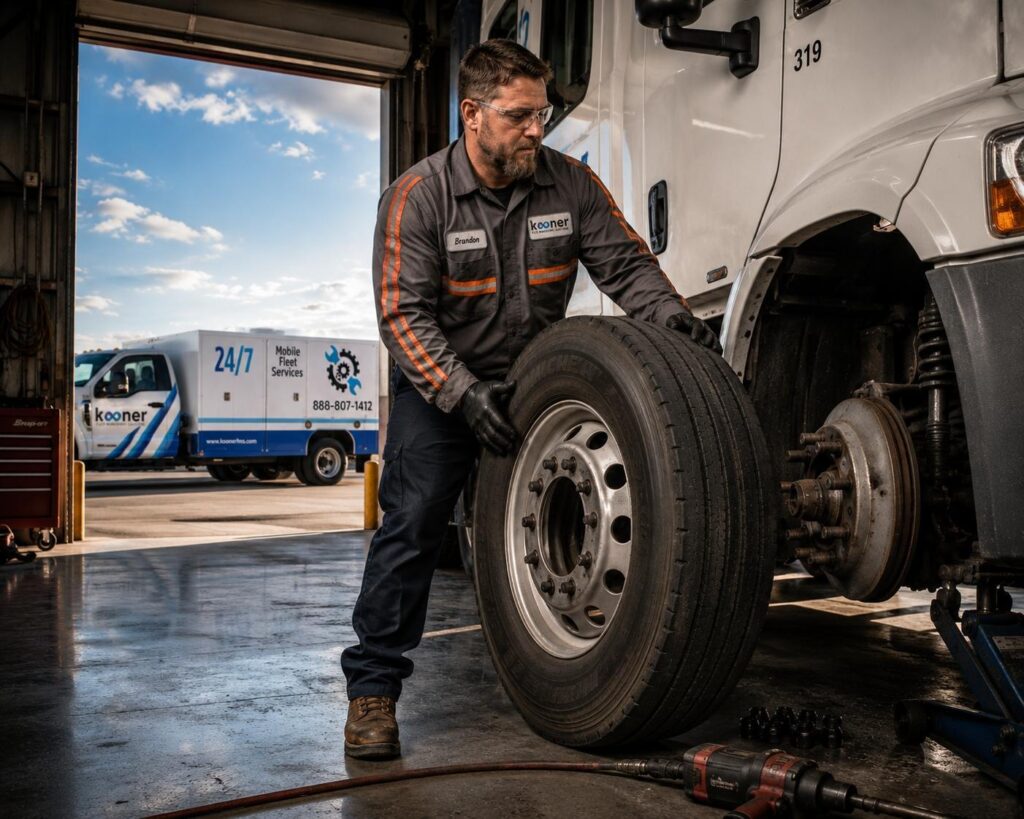
Fleet growth changes the demands placed on maintenance. As the number of assets in service increases, teams need capacity for handling scheduled servicing, inspections, repairs, parts, technicians, and workshop space. Without a defined maintenance plan, this workload accumulates, affecting vehicle readiness. Making maintenance part of the growth strategy prepares your business for these rising demands before fleet expansion puts pressure on existing maintenance capacity. Fleet Expansion Equals High Maintenance Demand Fleet expansion adds workload on maintenance teams. Each vehicle has its own service intervals, inspection requirements, component needs, repair history, and utilisation patterns. A fleet growth plan should account for: Preventive maintenance intervals Inspection requirements Expected repair workload Parts and component requirements Technician capacity Workshop capacity Maintenance records A planned maintenance schedule gives teams visibility into upcoming work and the resources required to complete it. Maintenance Capacity Must Scale With Fleet Size Fleet growth needs adequate maintenance support behind it. Technician availability, workshop space, tools, parts, and external service support all influence the fleet’s ability to sustain its maintenance requirements. Before expansion, review: Area Planning Consideration Technicians Skills, staffing levels, and workload Workshop Tools, equipment, and space Parts Stock levels and component demand Service partners Repair and commercial roadside assistance Systems Scheduling, records, and reporting This assessment helps management determine whether existing resources support the planned fleet size or require investment alongside expansion. Vehicle Requirements Should Drive Maintenance Planning Each vehicle follows unique maintenance patterns. Mileage, utilisation, operating conditions, and repair history influence the work each asset requires. Maintenance planning should use vehicle-level information rather than applying one schedule across the fleet. Key information includes: Mileage and engine hours Manufacturer service intervals Inspection findings Diagnostic faults Repair history Component replacement history Vehicle utilisation Recurring defects Maintenance scheduling platforms also use service records, inspection results, equipment data, and maintenance history to support planned fleet servicing. Maintenance Work Needs to Be Future-Forward Maintenance planning creates a structured service cycle for the fleet. Defined intervals and vehicle requirements guide the timing of maintenance work and help teams keep service commitments on track. A forward maintenance plan should account for: 1. Scheduled serviceWork due according to mileage, time, engine hours, or manufacturer requirements. 2. Planned repairsKnown defects and repair requirements identified through inspections or diagnostics. 3. Parts requirementsComponents required for upcoming maintenance work. 4. Technician allocationSkills and labour required for planned jobs. 5. Vehicle availabilityPeriods when vehicles are available for scheduled maintenance. Maintenance planning establishes the work, resources, and requirements. Scheduling assigns that work to a defined time based on available capacity and vehicle needs. Maintenance History Should Influence Fleet Investment Maintenance records provide evidence for decisions about fleet replacement and acquisition. Repair frequency, component failures, service history, and maintenance expenditure reveal the maintenance profile of individual assets. This information helps management identify: Vehicles with recurring repair requirements Components with repeated failures Assets with high maintenance workloads Service patterns across vehicle types Maintenance requirements linked to higher mileage These findings support decisions around vehicle replacement, maintenance budgets, and future fleet investment. Maintenance Performance Needs to Be Measured as the Fleet Expands A maintenance plan needs measurable outcomes. Performance data shows whether maintenance capacity remains aligned with fleet demand and highlights areas requiring management attention. Relevant measures include: Preventive maintenance completion Scheduled service completion Vehicle downtime Open maintenance work orders Repeat repairs Maintenance cost per vehicle Repair frequency Reviewing these measures gives management evidence for decisions around staffing, workshop capacity, parts planning, and fleet investment. Make Maintenance Part of the Fleet Growth Strategy Fleet growth involves more than acquiring vehicles. Each asset brings service intervals, inspection requirements, repair needs, parts demand, and maintenance workload that need to be accounted for within the wider growth plan. Kooner Fleet Management Solutions supports commercial fleets with preventive maintenance, mobile fleet maintenance, on-site truck repair, inspections, diagnostics, and 24/7 roadside assistance. Our team helps fleets manage maintenance requirements and maintain vehicle readiness as fleet demands change. Get Started.
The Business Case for Standardizing Fleet Operations
Standardization lays the groundwork for optimized fleet operations. When fleets operate in silos, with different maintenance schedules, inspection protocols, and reporting practices, data becomes fragmented and administrative overhead builds up. Standardizing processes removes these inconsistencies altogether by establishing a consistent framework for maintenance, repairs, inspections, and driver oversight. What Falls Under Standardization Standardization influences vehicle condition, maintenance decisions, costs, and driver activity. The aim is to establish a common method that teams can follow across vehicles, locations, and shifts. Maintenance Maintenance standards establish service intervals, work allocation procedures, and required maintenance records. A standard maintenance process covers: Service intervals based on mileage, time, or engine hours Preventive maintenance schedules Repair approval and escalation rules Parts and labour records Work order completion Vehicle service history A consistent maintenance process gives managers a reliable record of scheduled work, completed maintenance, and vehicles requiring attention. Inspections Inspections provide the information used to identify vehicle defects. When inspection methods vary between drivers or locations, comparing records becomes challenging. Standardize: Inspection checklists Inspection frequency Defect classification Photo and evidence requirements Defect reporting Follow-up inspection procedures This creates a common process for identifying and documenting vehicle condition. Workflow Management A reported defect needs a defined path from identification to resolution. Without it, work orders sit without a clear owner or priority. A standard workflow looks something like: Report → Review → Assign → Repair → Verify → Close Each stage has a defined owner. This creates a traceable process for managing repairs and prevents unresolved work from being lost across emails, spreadsheets, or paper records. Expense Tracking Maintenance expenses escalate quickly, with fleet repair and maintenance costs increasing by 8.6% year over year. Standardization gives the business a consistent way to track spending against each vehicle and maintenance activity. Record: Parts Labour External repair invoices Fuel Roadside service Inspection fees Other vehicle-related expenses Consistent expense records enable managers to compare spending across vehicles, locations, and maintenance periods. Driver Training and Monitoring Driver activity directly impacts vehicle condition and maintenance records, so these processes need a defined standard. Training establishes the same expectations for: Pre-trip and post-trip inspections Defect reporting Vehicle use Fuel recording Incident reporting Maintenance escalation Driver records must follow a defined format so training, incidents, and corrective actions remain connected to the relevant driver and vehicle. How It Looks in Action Standardization leaves a mark when teams follow the same process for routine fleet decisions. It defines how an issue is reported, assessed, assigned, repaired, verified, and recorded, so each stage has a clear owner and outcome. Take a vehicle defect as an example. Once a driver reports an issue, the maintenance team assesses its priority and assigns the required work. After the repair is completed, the vehicle is inspected before returning to service, and the work is recorded in its maintenance history. This creates a traceable process from defect identification to vehicle release. Managers also have a record of outstanding work, completed repairs, and vehicle readiness. Build the Process Before Rolling It Out Businesses should establish preventive maintenance, inspections, and work orders before expanding standardization. Start with a structured approach: 1. Define the current processExamine existing processes across teams and identify where practices differ between locations. 2. Set the standardDecide which steps, responsibilities, records, and approval points should apply across the fleet. 3. Assign ownershipGive each stage a defined owner so tasks do not sit between departments. Pro tip: A comprehensive fleet management solutions provider manages maintenance, drivers, data, and compliance for your business operations. 4. Introduce the processTrain the relevant teams and provide clear instructions for applying the new standard. 5. Review and refineUse team feedback and fleet data to identify gaps and update the process where required. This approach gives teams time to adopt the standard without introducing multiple process changes at once. Measuring the Impact of Standardization A standardised process needs measurable results. Fleet data helps operators assess whether teams are following the agreed procedures and identify gaps between locations. Focus on process performance: Measure What It Shows Process completion rate Whether required fleet procedures are being followed Task ownership Whether work has a defined person or team responsible Open task age How long unresolved fleet tasks remain active Record completeness Whether required information is captured Process exceptions Where teams are working outside the defined procedure Location comparison Whether the standard is being applied consistently across sites These measures give a basis for reviewing the standard, addressing process gaps, and maintaining consistency. Standardization Creates Control Across Your Operations Standardization gives teams a defined way to manage maintenance, inspections, repairs, expenses, and driver processes. The business case goes beyond consistency. A defined process makes responsibilities clear, keeps fleet records structured, and gives management reliable information for reviewing maintenance activity, costs, vehicle readiness, and process performance. Kooner Fleet Management Solutions supports fleets with preventive maintenance, mobile fleet maintenance, on-site truck repair, roadside assistance, inspections, and fleet compliance services. Our team helps businesses maintain defined maintenance processes while keeping vehicles prepared for service.
How to Prepare Your Fleet for Peak Delivery Seasons
Peak delivery season puts fleet uptime under a different level of pressure. Delivery volumes rise, schedules tighten, and customers expect their orders to arrive as promised. A vehicle taken off the road at the wrong time affects a route, a delivery window, and the customer experience tied to it. That makes vehicle readiness a business priority, with brand reputation at stake. Proactively Evaluating Vehicle Readiness Before demand rises, assess whether the current fleet is prepared to handle the additional workload. Capacity planning should account for vehicle availability, maintenance requirements, driver coverage, and seasonal demand. A practical review should cover: Fleet size against projected delivery volume Vehicles due for scheduled maintenance Assets with recurring repair requirements Available spare or replacement vehicles Driver availability and seasonal staffing needs Trailer and equipment requirements Historical delivery data also provides a reliable basis for estimating route volumes and resource requirements. Keep Maintenance Requirements Up to Date Peak workloads put additional demands on vehicles. Starting the season with overdue service, worn components, or unresolved faults increases the risk of vehicle downtime when fleet availability is critical. Use the weeks before peak season to close outstanding maintenance work. Maintenance Check Proactive Actions Scheduled service Complete due maintenance Tires and brakes Inspect wear and replace components where required Fluids and filters Check condition and service requirements Diagnostic faults Investigate active and recurring faults Inspection defects Complete required repairs Repair history Identify vehicles with recurring issues Maintain preventive maintenance schedules and use diagnostic information to identify issues before they develop into major vehicle failures. Plan Routes Around Seasonal Traffic A route that works during standard delivery volumes may not hold up when traffic, delivery density, and stop times increase. Route planning needs to reflect the conditions drivers will face during the peak period. Review previous delivery data and identify: High-volume delivery areas Traffic-heavy corridors Routes with extended stop times Areas affected by seasonal congestion Locations that require additional delivery capacity Route plans should also leave room for real-world conditions. Road closures, severe weather, traffic incidents, and vehicle faults can change the day’s plan after vehicles leave the depot. Real-time visibility gives teams the right information to respond when the planned route no longer matches road conditions. Prepare for the Vehicle That Does Not Make It Planning for high-demand season should account for vehicle failures. A roadside repair can remove a vehicle from a route and place pressure on the remaining fleet. A contingency plan should define: 1. Replacement capacityIdentify spare vehicles, rental options, or external capacity before demand peaks. 2. Repair prioritiesDefine which vehicle issues require immediate attention and which can wait for scheduled service. 3. Route reassignmentEstablish how deliveries are transferred when a vehicle becomes unavailable. 4. Roadside supportPartner with a mobile repair service provider who can handle faults on-site. Planning for vehicle downtime and arranging replacement vehicles before peak season helps keep deliveries moving, even when workload rises. Give Drivers the Preparation They Need Peak delivery periods place additional strain on drivers. Route density, delivery volumes, traffic, and tight schedules all affect their productivity. In this situation, drivers must be well aware of the routes, vehicle requirements, safety procedures, and escalation process. Training preparation includes: Vehicle inspection procedures Route and delivery instructions Seasonal traffic considerations Breakdown reporting procedures Hours-of-service requirements Communication procedures for route changes Driver readiness is part of fleet readiness. Driver safety, seasonal onboarding, route planning, and vehicle preparation are key areas for peak-season planning. Keep Capacity Flexible as Demand Changes Forecasts provide a starting point, but actual delivery volumes can differ from projections. Fleets need a capacity plan that allows resources to be added when demand exceeds available vehicles or drivers. Consider securing: Additional vehicles Rental agreements Seasonal drivers Contract carriers Additional trailers Temporary delivery capacity Rental agreements and other external capacity options provide additional vehicle capacity when seasonal demand rises. Monitor Performance Once Peak Season Starts Preparation does not end when the first peak-season route leaves the depot. Fleet managers must monitor vehicle location, condition, route progress, maintenance requirements, and delivery performance throughout the season. Focus on indicators such as: Vehicle availability Roadside repair events Maintenance backlog Route delays Missed delivery windows Driver hours Fuel consumption Vehicle utilisation Real-time fleet information helps teams identify where plans are falling short and take action before one issue affects multiple deliveries. Wrapping Up Peak delivery season tests how well a fleet prepares for increased demand. Vehicle condition, maintenance planning, route capacity, driver readiness, contingency support, and real-time monitoring all contribute to keeping vehicles available when delivery volumes are high. Kooner Fleet Management Solutions supports this preparation through preventive fleet maintenance, mobile fleet maintenance, on-site truck repair, roadside assistance, and compliance management services. Protect your delivery experience when demand reaches its peak with Kooner FMS.
How Smart Maintenance Scheduling Improves Driver Productivity
Driver productivity is closely linked to vehicle condition. Completing inspections, replacing worn-out components, and meeting maintenance requirements-all before the vehicle goes on the road. Miss any one, and drivers face repair delays, roadside failures, and time away from assigned work. Maintenance scheduling plays a crucial role by ensuring service, inspections, and repairs are planned around vehicle requirements before they affect the driver’s working day. Planning Maintenance Around Vehicle Availability Saves the Day Maintenance work needs to fit into your planned schedule, not the other way around. Taking a vehicle out of service during an ongoing delivery directly impacts driver productivity. To avoid pulling a vehicle out of service during an active assignment, maintenance teams should schedule service around vehicle availability and workload. Start by: Reviewing upcoming vehicle assignments Checking mileage and service intervals Scheduling inspections before due dates Grouping related maintenance tasks where practical Reserving workshop capacity for planned work Scheduling maintenance around vehicle assignments helps ensure drivers start their shifts with vehicles that are serviced and ready to hit the road. Use Vehicle Data to Set the Right Service Point Preventive maintenance schedules plan routine service according to each vehicle’s condition, which includes mileage, diagnostic faults, inspection findings, service history, and vehicle utilisation. Fixed service dates overlook these data points. Vehicle Data What It Represents Mileage When scheduled service is due Diagnostic faults Components that require inspection or repair Inspection findings Defects that require maintenance attention Service history Previous repairs and recurring maintenance issues Vehicle utilisation Impact of vehicle workload on maintenance requirements Using these records helps maintenance teams schedule service based on the vehicle’s actual maintenance needs. Addressing Repairs Before They Affect Driver Time Minor warning signs appear in inspection findings, recurring faults, and component wear before the vehicle is on the road. Maintenance teams need a process for recording these issues, assessing their severity, and scheduling the required repair. This helps reduce time lost to: Roadside repair events Vehicle recovery Replacement vehicle arrangements Repeat visits for unresolved faults Driver time spent reporting the same issue Repairing a component during planned maintenance keeps the issue within the maintenance process rather than leaving it to be dealt with in the middle of a route. Keeping Inspections and Repairs on Schedule Inspections identify defects before a vehicle returns to service. Repairs address those defects and restore the vehicle to the desired condition. When inspections or repairs fall behind schedule, vehicles with outstanding maintenance requirements remain unavailable when needed. A maintenance schedule should track: Inspection due dates Defects identified during inspections Repair status Parts requirements Follow-up inspections Service completion Tracking these stages gives maintenance teams control over outstanding work and confirms that required repairs are completed on time. Maintain Vehicle Condition to Support Driver Productivity Vehicle condition affects both fuel consumption and the driver’s ability to complete an assigned route. Tire pressure, engine condition, filters, and other components need regular inspection and maintenance to keep the vehicle performing as required. Reports indicate more than 1 million long-haul heavy-duty trucks idle during required rest stops, consuming more than 1 billion gallons of fuel each year. Maintenance scheduling keeps these vehicle checks and service requirements on the maintenance plan. Addressing condition-related issues before a vehicle starts its route helps drivers avoid vehicle-related delays and keep their assigned work on schedule.. Give Drivers Vehicles Ready for Assignment Driver productivity depends on vehicle availability and road readiness. Outstanding maintenance requirements can take a vehicle out of service and reduce the driver’s available working time. Scheduling maintenance before vehicle assignment keeps required inspections, servicing, and repairs on track. Drivers benefit from: Completed inspections Serviced vehicles Addressed vehicle defects Functional components Documented maintenance status The maintenance team handles these requirements before the vehicle reaches the driver, keeping the driver’s working time focused on assigned duties. How To Build Maintenance Around the Fleet Schedule An effective maintenance schedule connects vehicle requirements with the fleet’s actual workload. This requires coordination between maintenance, dispatch, and drivers. Record Maintenance Requirements Track mileage, inspections, diagnostic faults, service intervals, repairs, and component replacements for each vehicle. Review Upcoming Assignments Check vehicle workloads before scheduling maintenance to avoid removing vehicles during active assignments. Utilize Mobile Maintenance Integrate mobile maintenance services to perform repairs and inspections at the vehicle’s location, reducing downtime. Prioritize Vehicle Issues Address safety-related defects, recurring faults, overdue inspections, and repairs according to their effect on vehicle readiness. Confirm Maintenance Completion Record completed inspections, repairs, parts replaced, and outstanding work before returning a vehicle to service. Monitor Driver Time Review vehicle downtime, roadside events, repeat repairs, and maintenance-related delays to identify where scheduling needs adjustment. Conclusion Driver productivity starts with vehicle readiness. Completed inspections, addressed defects, and scheduled maintenance give drivers vehicles prepared for assigned work. Maintenance scheduling helps fleet teams plan inspections, repairs, servicing, and component replacements around vehicle requirements and workload. Kooner Fleet Management Solutions supports this process through preventive maintenance, mobile fleet maintenance, inspections, diagnostics, and truck repair services, helping fleets keep vehicles road-ready and maintenance work on schedule.
Fleet Health Scores: A Smarter Way to Measure Fleet Performance
A fleet can meet its daily workload, meanwhile vehicle faults, repeat repairs, tire issues, and maintenance problems continue to build. Reviewing each metric individually takes time and makes it difficult to assess overall fleet condition and its impact on performance. A fleet health score is a combination of key indicators and metrics that evaluate vehicle condition and maintenance performance. It helps fleet managers identify vehicles that need attention, recognize recurring issues, and track performance changes over time. What Goes Into a Fleet Health Score A fleet health score combines data from vehicle systems, maintenance records, inspections, and fleet performance metrics into a single score. Key data points required to measure fleet health: Vehicle availability Percentage of vehicles ready for service versus vehicles unavailable due to repair or maintenance. Maintenance frequency Number of times a vehicle requires scheduled and unscheduled maintenance. Repair frequency Number of repairs per vehicle over a defined period. Repeat repairs Recurring repairs on the same vehicle or component. Scheduled maintenance completion Preventive maintenance completed on time. Unplanned downtime Time vehicles remain unavailable due to faults or repairs. Vehicle age and mileage Helps understand wear, service requirements, and repair patterns. Tire condition Tire wear, replacements, pressure issues, and related maintenance events. Fault and diagnostic data Active faults, warning codes, inspection findings, and vehicle health alerts. Breakdown frequency Number and type of roadside or in-service failures. Vehicle utilisation The level of vehicle use against its intended role and capacity Fleet managers assign health scores to individual vehicles, vehicle classes, locations, or the entire fleet. These scores give maintenance teams a common reference point for reviewing vehicle condition and tracking changes over time. How Is a Fleet Health Score Calculated A fleet health score is calculated by assigning a weight to key indicators of vehicle condition, reliability, maintenance, and availability. Metric Includes Fleet Management Value Mechanical Health Diagnostic faults, component condition, and repair history Identifies vehicles with mechanical concerns Telematics Data Vehicle activity, fault alerts, mileage, and operating data Adds vehicle-level performance data MTBF Average time between vehicle failures Measures vehicle reliability MTTR Average time required to complete repairs Measures repair performance First-Time Fix Rate Repairs completed without a repeat service visit Shows repair quality Repeat Fault Rate Faults that return after repair Flags unresolved maintenance issues Maintenance Cost per Mile Maintenance spend relative to miles driven Connects maintenance activity with cost Each metric is given a level of importance based on how strongly it affects fleet health. How Fleet Health Scores Help Fleet Operators Fleet managers need a way to turn large volumes of vehicle data into maintenance priorities. Fleet health scoring gives managers a basis for: Identifying vehicles with recurring faults Finding maintenance patterns across locations Tracking changes in vehicle condition Comparing vehicle groups by make, model, age, or location Reviewing maintenance performance against fleet targets Supporting repair and replacement decisions Connecting vehicle condition with maintenance spending Tracking the score over time shows whether fleet maintenance and repair work is addressing vehicle issues and improving fleet condition. How to Improve Fleet Health Scores A stronger fleet health score comes from addressing the maintenance factors that drive the rating. Fleet teams should review the individual metrics behind the score and assign action to the issues affecting vehicle condition. 1. Resolve Recurring Faults Repeated fault codes point to unresolved vehicle issues. Review repair records alongside diagnostic data to identify vehicles with recurring problems and determine the root cause. 2. Measure Repair Quality First-time fix rate provides a direct measure of repair results. A high number of repeat service visits points to gaps in diagnosis, parts selection, repair procedures, or technician work. 3. Monitor Vehicle Condition Combine inspection results, diagnostic information, tire data, and telematics. A connected view of these metrics gives maintenance teams the information needed to assess vehicle condition. 4. Compare Vehicle Groups Break health scores down by location, vehicle type, make, model, and vehicle age. These comparisons reveal patterns across specific groups and direct maintenance resources toward problem areas. 5. Connect Vehicle Health With Cost Pair health scores with maintenance cost per mile, repair spending, downtime, and fuel data. This shows how vehicle condition affects fleet expenses and supports decisions around repair, replacement, and maintenance planning. Conclusion Fleet health scores are a structured way to measure vehicle condition, maintenance performance, and cost. A consistent scoring system provides maintenance teams with a defined way to track vehicle condition, identify recurring issues, measure repair outcomes, and monitor changes across the fleet. At Kooner Fleet Management Solutions, we use fleet analytics and reporting to assess performance and identify recurring trends. From preventive maintenance and compliance management to asset lifecycle management and GPS tracking, we support your fleet at every step of its journey and beyond. Explore how we enhance your fleet performance. Get started.
How Real-Time Fleet Visibility Improves Operational Decisions

Maintenance records reflect a part of the information required to assess fleet condition. Vehicle utilisation, telematics and GPS tracking, service schedules, and daily operating activity all contribute to the broader picture of fleet performance. Real-time fleet visibility puts current fleet activity into perspective. It shows where a vehicle stands within the operation and provides managers a strong base for interpreting maintenance data and evaluating fleet performance. Monitor Your Fleet as It Operates A fleet management team needs a clear view of vehicle activity across the operation. Live tracking provides current information on vehicle location, movement, stops, and assignments. This information helps teams: Monitor vehicle locations across the fleet Confirm vehicle status and availability Track progress against planned routes Review active vehicle assignments Identify vehicles available for new work Consistent fleet analytics and reporting gives dispatch and management teams a consistent source of information throughout the working day. Make Route Decisions With Current Information A planned route provides a starting point, but road conditions and service requirements influence what happens during a journey. Traffic, road closures, site access issues, and route deviations affect vehicle movements after departure. Real-time visibility gives dispatch teams current information about vehicle position and route progress. Tracking systems use this information to support route monitoring, fleet control, and route planning. Route visibility supports: Monitoring route adherence Identifying route deviations Reviewing extended stops Assessing delays against scheduled work Adjusting vehicle assignments when conditions change The benefit comes from having current information available when a route or assignment needs review. Match Vehicle Availability With Workload Vehicle allocation requires more than knowing which trucks are in service. Dispatch teams need information on current assignments, location, availability, and vehicle status before allocating additional work. Real-time fleet visibility brings these factors together and gives dispatchers a clearer basis for assigning vehicles. Teams can review: Current vehicle location Active assignments Vehicle availability Route progress Maintenance status Mileage and vehicle utilisation This supports more informed allocation decisions and gives dispatch teams a clear view of available fleet capacity. Connect Fleet Visibility With Maintenance Planning Vehicle location provides one part of the picture. Maintenance information provides another. When these data points work together, maintenance teams gain a stronger understanding of vehicle availability and service requirements. They can use this information to: Identify vehicles approaching scheduled service Review mileage against maintenance intervals Check vehicle availability before scheduling work Coordinate service with vehicle assignments Track vehicles requiring repair attention Connecting vehicle activity with maintenance records gives teams a clearer basis for scheduling service work and managing vehicle availability. Direct Resources Where They Are Needed Technicians, service vehicles, workshop capacity, replacement vehicles, and roadside support resources all need to be coordinated. Real-time visibility provides teams with up-to-date information on vehicle location and status, supporting resource allocation across the fleet. This information helps in: Roadside assistance Mobile technician deployment Vehicle inspections Repair requirements Replacement vehicle allocation Service assignments With current vehicle information available, teams have a stronger basis for directing resources to the right location and managing competing service requirements. Use Historical Data to Understand Fleet Activity Real-time information shows current fleet activity. Historical data adds context by showing how vehicles have been used over time. Trip history, mileage, route records, stops, and vehicle activity reveal patterns that support planning and fleet management decisions. Historical fleet data helps teams review: Repeated route deviations High-mileage vehicles Extended stops Recurring maintenance requirements Vehicle utilisation patterns Driver activity These records provide fleet managers with a foundation for decisions regarding vehicle allocation, maintenance planning, route selection, fuel management, and driver training. Creating a Decision-Making Process Backed by Real-Time Visibility Real-time visibility delivers value when internal teams integrate the information gathered to improve their daily processes. A structured approach keeps fleet visibility connected, transparent, and accessible. 1. Identify Critical Decisions Define the areas where current information has a direct impact. Vehicle allocation Route management Preventive maintenance scheduling Resource deployment Roadside support With all the critical information in place, issues are resolved without any hassle. 2. Consolidate Relevant Fleet Data Bring the information required for these decisions to one place. Vehicle location Vehicle status Route history Mileage Maintenance records Service schedules Driver activity The result? Instant access accelerates the decision-making process for fleet managers. 3. Establish Clear Response Procedure Define the action associated with specific fleet conditions. Maintenance alerts should lead to a service review. Route deviations should trigger an assessment of the vehicle assignment. Vehicle failures should initiate the appropriate roadside or repair response. 4. Analyse Recurring Patterns Review historical information to identify trends across vehicles, routes, drivers, and maintenance records. Recurring deviations, high mileage, repeated repairs, and extended vehicle stops may indicate areas that require management attention. 5. Measure Decision Outcomes Track the results associated with changes made using fleet visibility data. Relevant measures include: Vehicle availability Maintenance expenditure Route performance Fuel consumption Service completion Vehicle utilisation Measuring these outcomes shows whether fleet decisions are producing the intended results. Wrapping It Up Real-time fleet visibility helps managers access current information about vehicle location, status, movement, and activity. When combined with maintenance records and historical fleet data, it creates a broader view of fleet performance. At Kooner Fleet Management Solutions, our team provides commercial fleets the visibility required to make informed decisions. Additionally, we deliver on-site fleet management, mobile fleet services, truck and trailer repair, preventive maintenance, DOT/BIT inspections, computer diagnostics, and 24/7 roadside assistance. Get fleet management solutions under one roof. Connect with us today.
Fleet Maintenance Benchmarks: How Does Your Fleet Compare?

To keep a truck working at its best, replace guesswork with benchmarking. Putting your vehicle data against industry-specific standards gives you a clear view of where your fleet maintenance stands. Compare operational costs, downtime, repair frequency, vehicle availability, and other key measures with relevant benchmarks. The results give you a practical foundation for improving processes, setting targets, and planning future work. Internal vs External Benchmarking Benchmarking starts by analyzing your own data. Historical performance shows how your vehicles have changed over time, while external data shows how your fleet compares with industry standards. Internal benchmarking Internal benchmarking compares different parts or segments of your own fleet to identify historical trends and performance metrics. Compare: Maintenance costs by vehicle Repair frequency by vehicle model Downtime across depots Parts usage across vehicle groups Current maintenance costs against previous periods It helps find internal best practices, fix weak spots, and raise overall work efficiency. External benchmarking External benchmarking compares a fleet’s KPIs against industry competitors. Key comparison points include: Industry maintenance costs Average downtime Fleet availability Cost per mile Fuel consumption Repair frequency Vehicle utilisation It helps in learning how market leaders achieve desired results through optimized fleet repair and maintenance to fix internal operations. Metrics To Track For Accurate Comparison A practical benchmark focuses on metrics that influence maintenance decisions. Metric What It Measures Operational Cost Cost per mile including labor, parts, and downtime Downtime Hours per year a truck is unavailable for work Repair Frequency Number of maintenance events per 100,000 miles Vehicle Availability Percentage of fleet ready for work each day Compliance Rate Percentage of scheduled maintenance completed on time 1. Maintenance cost per vehicle Track total maintenance spending against the number of vehicles or miles covered. Break the figure down by vehicle, vehicle type, and maintenance category. This helps identify vehicles that consume a large share of the maintenance budget. 2. Downtime Record the number of days or hours vehicles remain unavailable due to maintenance or repair. Look at the reason for repeated downtime, repair duration, parts availability, and repeat visits. 3. Repair frequency Count repairs by vehicle and component. Repeated repairs on the same vehicle point to a maintenance issue that needs attention. 4. Preventive maintenance completion Preventive maintenance tracks regular, scheduled maintenance. A gap between planned and completed work gives you a direct view of maintenance discipline. 5. Vehicle availability Track how many vehicles are ready for service at a given point. Pair this figure with downtime and repair records to understand the effect of maintenance on fleet capacity. 6. Cost per mile Maintenance cost per mile puts spending into operational context. It gives fleet managers a useful basis for comparing vehicles with different mileage levels. Fleet repair and maintenance costs jumped by 8.6% in a single year. Hence, tracking these KPIs lets operators catch maintenance needs before they escalate into catastrophic road failures. Steps To Move From Fleet Data to a Maintenance Benchmark Start with a focused set of figures and build from there. 01 – Define What You Want to Measure Choose the maintenance outcomes that matter to your fleet. Set a clear maintenance objective Select relevant KPIs Define the measurement period Decide which vehicles or groups to compare 02 – Build a Reliable Data Set Pull information from maintenance records, inspection reports, work orders, fuel records, telematics, and fleet management systems. Check the data before using it. Duplicate entries, missing records, and inconsistent reporting methods can distort the comparison. 03 – Choose a Relevant Benchmark Use historical fleet data, industry reports, peer fleet information, or data from recognised industry sources. The benchmark needs to reflect your vehicle type, operating environment, fleet size, and maintenance requirements. 04 – Find the Gap Place your numbers beside the benchmark and identify the areas that need investigation. A maintenance cost above the benchmark does not automatically mean the maintenance programme is failing. Look at vehicle age, mileage, component condition, repair history, and operating conditions before deciding what the figure means. 05 – Trace the Cause Move from the number to the reason behind it. Ask: Which vehicles drive the increase? Which components require repeat repairs? Are scheduled services being completed? Are repairs being closed correctly? Is a particular vehicle group creating the downtime? This step turns benchmarking into a maintenance planning tool. 06 – Set the Next Target Use the findings to establish a measurable maintenance target. That could mean reducing repeat repairs, improving preventive maintenance completion, controlling maintenance cost per mile, or increasing vehicle availability. Record the baseline, set the target, and review the same figures after the changes have been introduced. Benchmarking works as an ongoing cycle of measuring, comparing, investigating, and acting. Turn Maintenance Data Into Action With Kooner FMS At Kooner Fleet Management Solutions, our team supports fleets with on-site fleet management, mobile fleet services, preventive service and repair, DOT/BIT inspections, and emergency breakdown support. Our services give teams access to maintenance support across the vehicle lifecycle, helping them address repair needs, maintain service schedules, and keep maintenance work organised. If your fleet data shows rising maintenance costs, repeat repairs, or vehicle downtime, the next step is to turn those findings into a maintenance plan.
Why Fleet Maintenance Response Time Matters More Than Repair Time
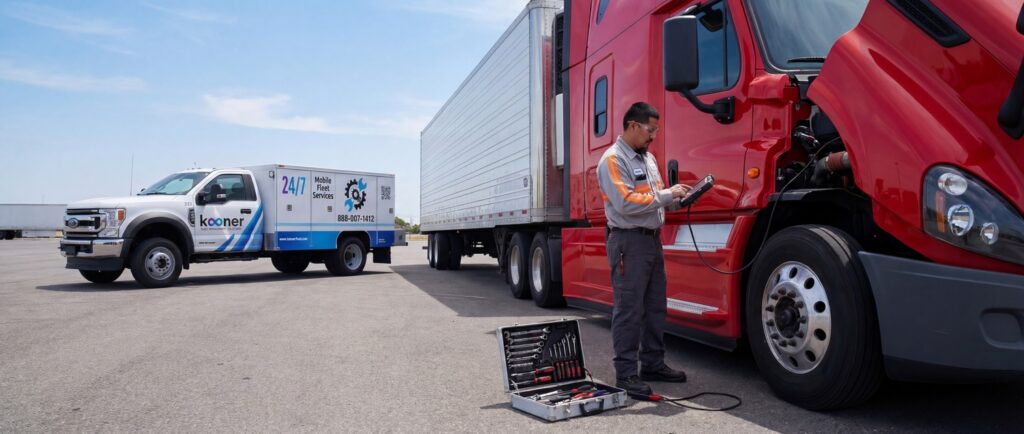
A vehicle loses productive time from the moment a maintenance fault is reported. The time spent waiting for a technician can keep the vehicle out of service before any repair work begins. Once a driver reports a fault, the maintenance process involves several steps. The team assesses the fault, assigns a technician, coordinates travel to the vehicle, and starts the repair. During this period, the vehicle remains unavailable. For fleet operators, response time is therefore a key maintenance measure. It shows how long a vehicle waits for maintenance after a fault is reported. The Waiting Period Determines Total Downtime Repair time shows how long a technician spends working on a vehicle. It does not show how long the vehicle waited before maintenance began. A delayed response can result in: Drivers waiting for maintenance assistance. Delivery schedules being changed. Other vehicles being assigned to the work. Dispatch teams managing route and workload changes. Customers receiving revised delivery information. A repair can be completed within the required service window, but the vehicle may have spent a longer period waiting for assistance. Response Time Starts with the Maintenance Process A maintenance response depends on the process used to handle a fault report. When a driver reports a problem, the maintenance team needs accurate information about the vehicle, its location, and the reported fault. This information supports technician allocation and helps the team determine what assistance the vehicle requires. A maintenance response process should include: Clear fault information from the driver. Accurate vehicle location. Immediate job allocation. Technician availability information. Direct communication between the driver, dispatcher, and maintenance team. Access to previous repair records when they relate to the reported fault. Without a defined process, maintenance teams can spend time confirming information, finding available technicians, and coordinating attendance. That time adds to vehicle downtime. Mobile Repair & Maintenance Reduces the Wait for Assistance Mobile fleet repair and maintenance brings the technician to the vehicle instead of requiring the vehicle to travel to a workshop. This service is useful when a vehicle develops a fault at a roadside location, delivery site, depot, or customer premises and the required work can be completed on site. It allows operators to: Send a technician directly to the vehicle. Diagnose the fault at the vehicle’s location. Carry the tools and parts required for the reported issue. Complete suitable repairs on site. Avoid unnecessary vehicle recovery. Reduce the need to transport the vehicle to a workshop. Return the vehicle to its planned operation after the repair. Consider a vehicle that develops a fault during a delivery route. Sending a mobile technician to the vehicle allows maintenance work to begin at its current location. If the fault requires workshop repair, the vehicle can then be recovered based on the technician’s assessment. This makes mobile repair teams a practical response to the waiting period between fault reporting and maintenance work. Measure the Time Before the Repair Starts Repair completion time is one maintenance metric. It should not be the only one. Fleet managers should track the full maintenance timeline from fault reporting to vehicle return. Useful measures include: Time from fault reporting to job allocation. Time from job allocation to technician dispatch. Technician travel time. Technician arrival against the required response target. Time from technician arrival to repair start. Total downtime from fault reporting to return to service. Repeat call-outs related to previous repairs. These measures show where the maintenance process creates delays. Preventive maintenance records help fleet managers identify recurring faults, component issues, and vehicles that require increased maintenance attention. Response Time Protects Vehicle Availability Vehicle availability depends on what happens after a fault is reported. Accurate fault reporting gives the maintenance team the information required to assess the job. Technician allocation puts the right resource on the job. Mobile fleet maintenance allows technicians to attend vehicles at their current location when on-site work is suitable. Clear communication keeps drivers, dispatchers, and maintenance teams informed. Each part of this process affects the time a vehicle remains out of service. Fleet operators should therefore treat response time as a core maintenance measure alongside repair duration. The aim is to reduce the period between fault reporting and the start of maintenance work. Conclusion Repair duration measures the time required to complete maintenance. Response time measures the period between reporting a fault and receiving maintenance assistance. Both affect vehicle downtime, but they measure different parts of the maintenance process. At Kooner Fleet Management Solutions, we empower fleet operators through structured fault reporting, clear technician allocation, coordinated dispatch, and mobile fleet maintenance. Additionally, our dedicated team provides end-to-end fleet management solutions including preventive maintenance, compliance inspections, and emergency roadside assistance tailored to your specific vehicle requirements. Get in touch to explore how our solutions help reduce downtime.
The Fleet Manager’s Checklist for Reducing Vehicle Lifecycle Costs
A vehicle generates costs at every stage of its service life. Driver idling, delayed maintenance, and outdated replacement schedules lead to excessive fuel consumption, increased repair bills, and unplanned downtime. Left unchecked, these expenses impact fleet performance and profitability. By adopting a structured approach to vehicle lifecycle management, fleet managers can control costs, boost reliability, and make informed investment decisions. Fleet Lifecycle Stages Four primary stages influence vehicle lifecycle costs. Stage 1: Acquisition Purchasing vehicles that fit the job. Stage 2: Operation Controlling daily expenditures. Stage 3: Maintenance and RepairProtecting vehicle condition throughout its service life. Stage 4: Replacement and DisposalReplacing vehicles before ownership costs exceed their value. 1. Acquisition A vehicle purchased at a competitive price will substantially contribute to operating costs if it consumes excessive fuel, requires frequent maintenance, or is unsuited to its intended workload. Purchasing decisions should be guided by the total cost of ownership, which incorporates fuel consumption, maintenance requirements, reliability, and expected service life. What to Do at This Stage Match vehicle specifications to mileage, terrain, and operating conditions. Compare total ownership costs, including fuel consumption, scheduled servicing, warranty coverage, insurance, and projected resale value. Standardize vehicle models to simplify servicing, technician training, and replacement parts. Use telematics and GPS tracking during procurement to support vehicle monitoring from the start. Review manufacturer service schedules before purchase to understand future maintenance requirements. A well-planned acquisition strategy prevents unnecessary spending throughout the vehicle’s life instead of correcting expensive purchasing decisions later. 2. Operation Operating practices affect vehicle performance. Harsh acceleration, heavy braking, poor route planning, and overloading increase fuel consumption and accelerate component wear. Monitoring vehicle performance enables businesses to identify inefficient driving patterns and take corrective action based on data. What to Do at This Stage Compare monthly fuel reports. A sudden spike in fuel consumption deserves immediate investigation. Review idle-time reports and address unnecessary engine running that increases fuel use without adding productive mileage. Assign vehicles according to workload requirements instead of using the same assets for every job. Analyze utilization reports to identify vehicles accumulating excessive mileage and others remaining underused. Plan routes that reduce unnecessary mileage, repeated journeys, and avoidable congestion. Review driver behaviour data to identify repeated harsh braking, rapid acceleration, and speeding that increase wear on tyres, brakes, and driveline components. Defined adjustments yield significant savings over the life of the fleet. 3. Maintenance and Repair Vehicle components wear through regular use. Tires lose tread, brake pads wear down, fluids degrade, and belts weaken over time. Scheduled inspections help identify these issues and keep maintenance aligned with service requirements. What to Do at This Stage Schedule preventive maintenance using mileage, engine hours, and manufacturer recommendations. Inspect tires, brakes, suspension, steering, batteries, lighting, belts, hoses, and fluid levels during all services. Investigate recurring faults instead of replacing the same components repeatedly. Record each inspection, repair, and replacement to identify vehicles generating the peak maintenance costs. Use diagnostic reports to identify developing mechanical faults before major component failure. Schedule servicing during planned vehicle availability to reduce disruption to fleet schedules. Maintenance Inspection Priorities Component Why It Matters Tires Uneven wear increases fuel consumption and shortens tire life. Engine oil and fluids Clean fluids protect engines, gearboxes, and cooling systems from premature wear. Brake system Regular inspections prevent damage to discs, callipers, and related components. Battery Voltage testing identifies weakening batteries before starting failures occur. Suspension and steering Damaged components accelerate tire wear and affect vehicle handling. Lights and electrical systems Faults create safety risks and lead to failed roadside inspections. Consistent maintenance protects vehicle value while keeping repair expenditure predictable throughout the ownership period. 4. Replacement and Disposal Vehicle replacement must be guided by operating costs, maintenance history, reliability, and utilization. As vehicles remain in service, repair requirements increase while resale value diminishes, impacting overall fleet costs. Reviewing lifecycle data helps businesses determine the appropriate time for replacement and supports consistent fleet performance. What to Do at This Stage Compare annual maintenance expenditure with replacement costs. Review downtime records alongside repair history to identify vehicles becoming increasingly expensive to operate. Replace vehicles while resale value remains commercially attractive. Remove branding, telematics equipment, cameras, and reusable accessories before disposal. Maintain complete disposal records for financial reporting and fleet audits. Analyse replacement data to refine future purchasing decisions. Replacing vehicles at the right point protects maintenance budgets and keeps the fleet financially sustainable. Final Thoughts Vehicle lifecycle costs are managed through informed purchasing, consistent maintenance, regular performance reviews, and timely replacement decisions. At Kooner Fleet Management Solutions, we execute a structured approach to lifecycle management that controls operating expenses, improves fleet reliability, and maintains long-term financial performance through preventive maintenance, responsive on-site fleet management, 24/7 roadside assistance, compliance inspections and checks, and comprehensive vehicle lifecycle management.
How Fleet Managers Can Reduce Shop Bottlenecks
Every hour spent in the shop is one less hour spent on the road. A workshop is there to keep vehicles moving, not hold them back. Apart from technician shortages, poor scheduling, reactive repairs, and work arriving without a clear plan add to this challenge. Reducing these operational bottlenecks starts with changing how maintenance is managed before a vehicle even enters the workshop. Maintenance Planning Starts Before a Vehicle Enters the Shop Scheduled maintenance keeps fleets productive when they’re needed the most. A well-defined maintenance plan helps workshops dedicate their time to proactively identifying issues and repairing vehicles, so less time is spent on deciding what to do next. Common Practice A Better Approach Servicing vehicles only when issues appear Plan maintenance using vehicle usage and service history Booking repairs as requests come in Prioritise work based on urgency and workshop capacity Multiple workshop visits for small jobs Complete related maintenance during one scheduled visit A few changes make a significant difference: Maintenance scheduled around mileage, engine hours, and vehicle usage rather than fixed calendar dates Combine multiple service tasks into one visit instead of bringing the same vehicle back repeatedly Prioritise work based on safety, legal requirements, and vehicle availability instead of booking jobs as they arrive Reserve workshop capacity for urgent repairs rather than filling every available bay in advance Use Fleet Data to Schedule Work, Not Just Record It Every fleet manager has piles of vehicle data that isn’t utilized the way it should. The challenge? Turning that information into decisions that reduce workshop pressure. Repair history, inspection reports, telematics, and work orders often reveal the same patterns. Keep an eye on: Vehicles with repeated repair history Frequently replaced components Average repair time for common jobs Service intervals that are regularly missed Workshop backlog by vehicle type When maintenance decisions are based on historic fleet data and performance trends, workshop schedules become easier to manage, and technicians spend less time responding to avoidable repairs. Preventive Maintenance Creates Space in the Workshop A delayed inspection or postponed service is hard to spot when deadlines are tight, and fleet managers are busy syncing teams. Preventive maintenance helps distribute work more evenly throughout the month instead of allowing repairs to arrive all at once. Focus on improving your PM programme by: Reviewing service intervals based on actual vehicle usage Scheduling maintenance before seasonal demand increases Ordering commonly used replacement parts ahead of planned services Grouping inspections, servicing, and minor repairs into the same appointment Reviewing overdue maintenance every week instead of once a month Small adjustments to maintenance planning often free up workshop capacity without increasing labour or expanding the facility. Driver Behaviour Shapes Workshop Demand Daily driving habits directly impact vehicle performance. Excessive idling, harsh braking, rapid acceleration, and ignoring minor defects all contribute to faster component wear. Over time, these issues increase workshop visits and create additional pressure on maintenance teams. Encourage drivers to: Complete vehicle inspections before and after every shift Report small defects as soon as they appear Reduce unnecessary engine idling Avoid harsh acceleration and heavy braking wherever possible Follow vehicle loading guidelines to minimise strain on key components Drivers may never step inside the workshop, but their decisions influence how busy it becomes. Not Every Job Needs a Workshop Bay Another way to reduce congestion is to keep simple maintenance work out of the workshop whenever possible. Most times, routine inspections and minor repairs don’t require travelling to a service facility. Mobile maintenance teams can complete many of these tasks on-site, leaving workshop space available for larger repairs that genuinely need specialised equipment. Jobs well suited for mobile maintenance include: Fluid top-ups and filter replacements Battery testing and replacement Lighting repairs Brake inspections Minor electrical checks Preventive maintenance inspections At the same time, regularly reviewing workshop performance helps identify where delays are occurring. Track measures such as: Vehicle turnaround time Repair backlog Technician productivity First-time repair completion rates These metrics provide a clearer picture of where workshop capacity is being lost and where improvements should be made first. Keep the Workshop Working for the Fleet Every workshop has a limit, but many reach that limit sooner than necessary because maintenance isn’t planned effectively. Fleets that organise repairs in advance, make better use of maintenance data, invest in preventive servicing, and reduce avoidable workshop visits are often able to handle more work with the same people and facilities. At Kooner Fleet Management Solutions, we ensure your vehicles spend more time on the road and less time at the repair shop. Our expert team provides on-site fleet management services that include preventive maintenance, compliance inspections, driver mentoring, asset lifecycle management, and mobile repairs. Connect with our team to get started.
Building a Preventive Maintenance Culture Across Your Fleet

On average, a commercial vehicle in the U.S. runs 120,000 miles per year. That’s roughly 2,300 miles per week. With the majority of life spent on the road, this leads to component wear and tear and recurring repairs, which will only worsen if not treated on time. To get the best out of your vehicle, preventive maintenance becomes critical. The good news? When maintenance is planned instead of postponed, your vehicles perform better, last longer, and cost less to operate. The Story Behind Every Breakdown Most fleet managers operate on borrowed time. They wait for something to fail, then scramble to fix it. A breakdown on the road becomes an expensive emergency Engine failures sideline vehicles and drain budgets Unpredictable maintenance costs throw off planning When you service vehicles on a preventive schedule, surprises disappear. Fleets that adopt this mindset see fewer unexpected stops and more reliable operations. Build Your Foundation With the Three-Tier Model Different vehicles and driving conditions demand flexibility. Dependability is built through an approach where every vehicle isn’t treated equally. A tiered approach keeps vehicles running without overkill. Light Service: Oil changes, fluid checks, routine inspections Medium Service: Deeper inspections of brakes, belts, and bearings Major Service: Transmission work, electrical diagnostics, component replacements The strategy is straightforward: catch minor issues beforehand, address them in due time. PM understands that a truck running heavy loads needs more frequent attention than a highway cruiser. Stay Regulatory-Ready With Systematic Tracking Compliance inspections aren’t just a standard practice. They’re an operational baseline. Regulators look at maintenance records, especially when incidents occur, and poor documentation raises serious business concerns. Documented maintenance proves you take safety seriously Digital records make audits straightforward and stress-free Data analysis and reporting reveal patterns others miss Staying ahead of compliance requirements protects your reputation When you track maintenance systematically, you spot trends that matter. A recurring issue across similar vehicles signals something worth investigating. This proactive approach keeps your operation clean and your stakeholders confident. The Digital Advantage: From Chaos to Control Manual tracking systems break down fast. Emails get lost. Important maintenance windows slip past unnoticed. Without a system in place, it’s easy to miss when a vehicle is due for service. Automated alerts remind you what’s due and when Real-time visibility shows exactly where each vehicle stands Drivers can flag issues directly, eliminating communication gaps Coordination improves when everyone sees the same information The transformation happens naturally. When mechanics know what’s coming, they plan. Drivers report problems before they escalate. Costs become predictable because surprises become rare. That’s the real payoff. Building a Culture of Preventive Maintenance Building a culture where preventive maintenance matters means getting drivers, mechanics, and managers aligned on the same goal: keeping vehicles reliable. Train drivers to spot warning signs and report issues early Reward mechanics for preventing problems, not just fixing them Celebrate milestones: highlight vehicles with strong service records Involve everyone: maintenance is a team responsibility, not just a shop task When your team understands that PM keeps schedules on track, they stop seeing it as a burden. It becomes the way you work. Drivers become your frontline inspectors. Managers make better decisions because they have the information they need. This cultural shift is where real transformation happens. The process and tools matter, but the mindset matters more. The Choice Is Clear Every fleet manager faces the same basic decision: manage maintenance proactively or react when things break. Preventive maintenance won’t eliminate every problem, but it eliminates the preventable ones. Small issues caught early stay small Surprises become rare when you’re staying ahead of wear Your operation runs smoother when vehicles are reliable It’s not complicated. Vehicles that receive regular care simply work better. They stay on the road, they make their schedules, and they cost less to maintain. That’s worth the effort. Conclusion: How Kooner Fleet Management Solutions Can Help Building and sustaining a preventive maintenance program requires the right tools and support. Kooner fleet management solutions bring structure to maintenance scheduling, visibility to compliance tracking, and data analysis and reporting that turns information into action. With Kooner, your team gets clarity on what’s due, what’s coming, and what needs attention today. Regular checks, oil changes, tire inspections, and minor repairs ensure trucks stay operational and reduce downtime. The result is less firefighting, more planning, and vehicles that stay on the road where they belong. Learn more.
Fleet Maintenance Trends Every Operations Manager Should Watch
The struggle to keep a fleet in peak condition grows tougher with each passing year. Rising repair costs, ageing vehicles, and a shortage of skilled technicians are putting extra pressure on maintenance teams. Many businesses still spend too much time reacting to breakdowns instead of preventing them. The focus is now shifting towards using vehicle data, proactively planning maintenance, and fixing problems at the source. Here are the fleet maintenance trends every operations manager should watch in 2026. Predictive Maintenance for Reducing Guesswork Servicing vehicles after a set number of miles or days has worked for years; it does not always match how a vehicle is actually being used. Predictive maintenance uses vehicle data to highlight early signs of wear, making it easier to plan repairs before a breakdown happens. Key areas operations managers should focus on: Monitor engine performance, battery health, fault codes, and other vehicle data. Look for patterns that show a part may be wearing out sooner than expected. Schedule maintenance based on the condition of the vehicle instead of fixed intervals. Replace parts when they need attention rather than changing them too early. This gives operation managers control over maintenance planning and helps reduce unexpected downtime. Connected Fleet Data for Informed Maintenance Decisions Vehicle data–inspection reports, repair records, and telematics data are maintained separately. Bringing everything together makes it easier to understand how the fleet is performing and where attention is needed. Operations teams should use connected data to: Monitor vehicle health across different locations. Spot repair issues that keep happening across the fleet. Review service history before approving major repairs. Identify vehicles that need maintenance more often than others. Having all this information in one place helps managers make decisions based on facts instead of assumptions. Technician Shortages Will Continue to Affect Fleet Repairs Finding experienced technicians to maintain and repair commercial vehicles is a challenge itself. Modern trucks rely on more electronic systems and advanced technology, which means repairs require specialist knowledge. Common approaches include: Providing regular training so technicians can work on newer vehicle technology. Working with external maintenance providers when specialist skills are needed. Using mobile fleet maintenance services to reduce delays and travel time. Planning repairs to ease pressure on maintenance teams. Having access to skilled support will become just as important as having the right maintenance plan. Electric Trucks Will Bring New Maintenance Priorities Businesses are shifting towards electric and alternative fuel vehicles. Maintenance teams will require different processes for different vehicle types. Areas that will need more attention include: Monitoring battery condition and overall battery performance. Maintaining charging equipment to avoid unnecessary delays. Keeping vehicle software updated for better performance. Training technicians to work safely on different types of vehicles. A single maintenance plan will no longer suit every vehicle in the fleet. Preventive Maintenance Will Play a Bigger Role in Combating Costs Repair costs continue to increase, making reactive maintenance more expensive than ever. Waiting until something breaks often leads to higher repair bills, longer downtime, and more disruption to daily operations. PM helps businesses deal with minor repairs and faults to avoid unexpected downtime. A strong program should include: Replacing worn parts before they damage other components. Fixing minor problems during scheduled maintenance visits. Reviewing repair history to identify vehicles with repeated issues. Following regular service schedules to help vehicles stay on the road. Preventive maintenance plans ahead of time, making it far less expensive than dealing with emergency repairs. Accurate Maintenance Records Will Support Better Planning Without a clear service history, it gets tricky to understand repair costs or decide when a vehicle should be replaced. Digital records give fleet managers a much clearer picture of how every vehicle is performing. Maintenance records should help teams: Keep a complete service history for every vehicle. Track inspections, repairs, and planned maintenance. Identify vehicles with rising repair costs. Make better decisions about vehicle replacement. Good records make planning easier and help businesses spend their maintenance budgets more wisely. Sustainability Will Shape Future Maintenance Strategies Sustainability in day-to-day operations is built through treating each vehicle differently based on its requirements. Well-maintained vehicles use less fuel, perform better, and stay on the road for longer. Many businesses are improving sustainability by making small changes to their maintenance schedules. This includes: Keeping vehicles regularly serviced to maintain performance. Extending the life of vehicles through consistent maintenance. Managing replacement parts and repairs more responsibly. Preparing maintenance teams for changing vehicle technology. Looking after existing vehicles is one of the simplest ways to reduce overheads and improve long-term fleet reliability. Preparing Your Fleet for the Maintenance Challenges In conclusion, operations managers need to balance repair costs, vehicle availability, changing technology, and limited maintenance resources without losing sight of day-to-day operations. At Kooner Fleet Management Solutions, we help build a proactive maintenance strategy that helps reduce downtime, control repair costs, and keep vehicles working reliably. We provide on-site fleet management, mobile repair services, 24/7 roadside assistance, and last-mile maintenance. We’ve got a solution for your fleet-related problem. Let our team assist you.
Why Some Fleets Experience Fewer Roadside Breakdowns Than Others
Roadside breakdowns aren’t as random as you think. Staying on the road with little to no downtime means treating breakdowns as preventable rather than inevitable. The cost of doing otherwise is steep. Repair expenses alone range from $450 to $760 per vehicle, but when you factor in towing, lost revenue, driver overtime, and customer delays, the real impact is much higher. The difference between vehicles with fewer breakdowns comes down to three core practices: Consistent preventive maintenance Immediate roadside assistance On-time audit reporting to track Let’s look at what separates the fleets that get it right from those that don’t. Reasons Behind Roadside Breakdowns: The Signs Are Always There Understanding the causes behind roadside breakdowns is the first step to controlling them. 1. Skipped or Delayed Preventive Maintenance Preventive maintenance schedules exist in maintenance plans but are never followed. The result? Vehicles miss oil changes, filter replacements, fluid checks, or brake inspections because of scheduling pressure and poor planning. 2. Worn or Damaged Components Going Undetected Vehicle components wear down gradually. These degradations are visible during inspections but are overlooked when routine repairs are rushed, incomplete, or not documented properly. 3. Ignored Warning Lights and Fault Codes Dashboard alerts and check engine lights appear for a reason. Not responding immediately allows sensor issues to become large repairs. A faulty oxygen sensor affects fuel mixture and performance. Coolant warnings become overheating. Low voltage becomes a no-start on the next cold morning. 4. Poor Maintenance Record Keeping When repair history is scattered, nobody knows what was already done. Warranty coverage gets missed. Technicians can’t identify repeat failure patterns. Without centralized records, same mistakes are repeated. 5. Lack of Organization-Wide Visibility Managers can’t see which vehicles are overdue for service, which have open defects, or which are experiencing recurring problems. Decisions become reactive instead of proactive. Vehicles fail because nobody had a clear view of their condition. Common Fleet Issues What Could It Mean Action to Take Tire pressure warning light Underinflation or slow leak developing Check pressure; inspect for damage Brake noise or soft pedal Pad wear or air in brake lines Schedule inspection immediately Engine temperature rising Coolant leak or thermostat failing Stop vehicle; check coolant level Rough idle or misfire Fuel delivery or ignition issue Run diagnostic; investigate fault code Fluid leaks under vehicle Seal failure or connection loosening Identify fluid type; locate source Check engine light Sensor issue or emission system problem Scan for fault codes; assess severity Squealing belts Belt wear or alignment issue Inspect belt condition; check tension Battery cranking slowly Charging system or battery failing Test alternator; check battery voltage These early signs are the fleet’s opportunity to act before anything escalates. Managing Breakdown Risks at the Source Through Preventive Maintenance Preventive maintenance is the foundation. It’s the single biggest factor that determines whether vehicles fail on the road or get serviced in your shop. The challenge is execution. Many fleets have a PM plan on paper but don’t follow it reliably. What makes the difference: Clear intervals based on vehicle type and usage, not guesswork Automated reminders that don’t rely on memory Immediate documentation when service is completed Tracking of overdue maintenance so nothing slips through Vehicles that receive regular oil changes, filter replacements, fluid checks, and belt inspections simply don’t break down as often. It’s not that these vehicles never fail. It’s that problems get caught during planned service instead of roadside emergencies. How Mobile Repair Services Get Stranded Vehicles Back on the Road Even with preventive maintenance, unexpected failures happen. When they do, how quickly you respond determines the impact on your operations. Fleets with fewer total hours of downtime have immediate access to mobile repair services. These aren’t your regular shop visits. They’re emergency technicians who come to your vehicle wherever it breaks down. Mobile repair services accomplish three things: Reduce towing costs by diagnosing and fixing issues on-site Get vehicles back in service hours instead of days Provide immediate support when regular shops are full A vehicle stranded on a highway isn’t just out of service. It’s causing ripple effects through your entire operation. Every hour of downtime multiplies the cost. Quality mobile repair teams can handle: Brake adjustments and replacements Battery and charging system repairs Fluid leaks and top-offs Tire repairs or replacements Electrical troubleshooting Engine diagnostics The key is having a service partner available 24/7. You don’t get to choose when your fleet breaks down. Key Takeaways: Building a Breakdown-Prevention Culture The fleets with few roadside breakdowns do three things consistently: They commit to preventive maintenance schedules and follow them. No excuses. No delays. They respond immediately to warning signs and driver reports. Minutes matter when a vehicle is showing distress. They track their maintenance data to see what works and what doesn’t. They use that data to improve continuously. You don’t need expensive software or complex systems to get this right. You need discipline, clear processes, and a fleet maintenance plan that covers everything end-to-end. Where Kooner Fleet Management Solutions Can Help Kooner Fleet Management Solutions helps fleets achieve this through preventive maintenance services that keep vehicles healthy before failure occurs. Our service team schedules, tracks, and documents every PM visit to ensure nothing gets missed. When breakdowns do happen, our 24/7 mobile repair services get your vehicles back on the road immediately. Beyond repairs, Kooner’s on-time audit reporting gives you complete visibility into what’s happening across your fleet. Track PM completion, identify patterns, and make decisions based on real data. Let Kooner help you build a fleet that stays on the road, where it belongs. Get started.
Fleet Maintenance Planning for High-Mileage Commercial Vehicles

High mileage should not automatically place a vehicle on the retirement list. Instead, it should change how maintenance is planned. Components age differently, repair priorities shift, and service intervals that worked during the first few years may no longer be enough. Understand this transition early to continue using experienced vehicles and tap into their full potential while avoiding repair bills that gradually keep getting more expensive. High Miles On a Fleet Changes the Area of Attention A high-mileage vehicle has already reached a point where maintenance stops being about routine servicing and starts becoming about managing wear and tear. Maintenance planning should begin by answering different questions. Which components are approaching the end of their expected service life? Which repairs have appeared more than once in the past year? Which vehicles are working in harsher conditions than others? Answering these questions helps maintenance teams plan repairs before ageing components begin affecting the rest of the vehicle’s performance. Avoid Servicing Ageing Vehicles with the Same Standards A truck travelling long motorway routes accumulates mileage differently from one making frequent urban deliveries. Constant braking, idling, uneven road surfaces, and heavier payloads all accelerate wear on different systems. Instead of following one maintenance calendar across all ageing fleets, divide vehicles according to how they are actually being used. Vehicle Usage Maintenance Planning Focus Long-distance highway transport Engine performance, cooling system, drivetrain inspection Urban delivery routes Brakes, steering, suspension, transmission Heavy-load applications Axles, wheel bearings, tires Mixed operations More frequent full-vehicle inspections to identify uneven wear This approach ensures maintenance resources are spent where they deliver actual value. Ageing Components Never Fail Without Warning Most major repairs are preceded by smaller warning signs that appear weeks or months earlier. This is where preventive maintenance becomes especially valuable. Proactive service schedules prevent breakdowns, reduce downtime, and extend vehicle life. Inspection checklists for high-mileage vehicles should place greater emphasis on: Cooling system pressure and hose condition Steering response and suspension movement Oil leaks around engine and transmission seals Electrical connectors exposed to moisture and vibration Engine mounts and driveline vibration Looking beyond obvious faults allows maintenance teams to solve problems while repairs remain relatively straightforward. Every Repair Should Improve the Next Maintenance Plan For high-mileage fleets, repair records are one of the most valuable planning tools available. Recurring repairs are a sign to replace critical components and plan maintenance based on these trends. Useful records should include: Mileage when the repair was completed Cause of the failure Parts replaced Labour time Whether similar repairs have occurred previously This approach helps fleets invest in repairs that genuinely extend vehicle life rather than replacing parts based on assumptions. High-Mileage Vehicles Need Quick Support on the Go When a high-mileage vehicle develops a fault during a route, getting it back on the road quickly is important. Because even with careful planning, commercial vehicles spend most of their lives away from the workshop. Professional mobile repair services can diagnose and repair many faults on-site, reducing unnecessary towing and allowing vehicles to complete their routes on planned time. When looking for emergency support, consider: Identifying service providers across operating regions Keeping vehicle maintenance history accessible to field technicians Standardizing inspection reports after roadside repairs Reviewing every callout to identify recurring maintenance issues Roadside assistance contributes to long-term maintenance planning rather than simply getting the vehicle moving again. Experience Deserves a Different Maintenance Strategy A truck that has hit 300,000 or even 500,000 miles has already proven its reliability. It can handle demanding work. Replacing them because the odometer continues climbing will increase costs when the vehicle still has productive years ahead. At Kooner Fleet Management Solutions, we adopt a separate approach for each fleet type; our maintenance is scheduled around your operational needs and specific vehicle requirements. With the right tools and expert technicians, we deliver comprehensive fleet management solutions that include on-site maintenance, mobile repair services, and last-mile maintenance. Give your vehicle the best opportunity to deliver value beyond its standard service life. Connect with us today.
How Digital Vehicle Inspections Improve Fleet Reliability
Ticking inspection boxes manually might seem like you’re getting the job done, until mistakes begin to surface. Here’s a number that puts it in perspective: roughly 3 out of 10 manual checks end up recorded inaccurately due to human error. When an inspection record is wrong, the vehicle pays for it eventually, through a missed brake issue, an ignored tire wear pattern, or a breakdown that could’ve been fixed earlier. Digital vehicle inspections were built to close that gap. Instead of paper records scattered across offices, everything lives in one centralized system, and that single change has reshaped fleet reliability. Where Paper Checklists Prove to Be Ineffective Manual checklists depend on jotting information down by hand. That works fine until something slips through. Handwriting gets misread or rushed, and details go missing A flagged note can sit in a drawer for days before anyone reads it There’s no backup; once the document is misplaced, it can’t be recovered Recurring issues don’t get noticed when every form is filed away on its own None of this is really anyone’s fault. It’s just what happens when a process depends on memory, timing, and legible handwriting. What Changes Once You Go Digital Switch to a digital inspection app or software, and the workflow tightens up almost immediately. Drivers follow a checklist built for their specific vehicle type, attach photos the moment they spot an issue, and submit everything straight to a central dashboard. Submissions reach the manager in real time Every entry carries a timestamp, creating a genuine audit trail Photos and short notes back up each flagged issue Records are searchable, so patterns across vehicles actually surface Fleet analytics and reporting remove most of the guesswork that used to slow the whole process down. The Real Link Between Inspection and Compliance Fleet compliance doesn’t come from arranging inspection reports. It is built through daily habits that help in reporting defects, maintaining accurate records, and monitoring vehicle health. Its impact: Recurring issues become visible once inspection history is searchable Maintenance teams can schedule a repair before a part fails outright Vehicles spend less time sitting idle waiting on a diagnosis Drivers get clear direction on what to check and how to report it Adopting digital vehicle inspection to your operations will have a direct impact on fleet compliance. Compliance Without the Scramble Digital records make the process of preparing for an audit a lot less stressful. Historical reports are stored automatically and never misplaced Auditors can pull years of data in minutes instead of hours Reminders for upcoming inspections cut down on missed deadlines Every report follows the same format, so nothing depends on one person’s habits With reliable compliance management, fleet operators no longer need to dig through filing cabinets when regulators ask for proof. The record already exists, dated and ready to share. Less Paper, Less Busywork There’s also a benefit that doesn’t get talked about enough: how much administrative time this saves. Less paperwork means less time spent chasing approvals, organizing records, and monitoring performance. Reports generate and store themselves automatically in the cloud No physical filing space or manual sorting required Staff spend less time on data entry and more on maintenance decisions Historical records stay accessible from any device, anytime That A Practical Fix, Not a Trend This shift towards digitization results in long-term fleet reliability. It’s a direct response to a process that was never built to keep pace with how fleets operate today. Accurate data means managers act before problems escalate, not after Fewer disputes with regulators over missing or unclear records Vehicles stay in service longer because issues get caught early Drivers spend less time on paperwork and more time on the road At Kooner Fleet Management Solutions, our team uses a digital approach to fleet compliance and safety, including routine DOT/BIT inspections, electronic logging, emissions standards, and regular safety checks. We believe technology is most effective when paired with human expertise. By combining these, we ensure your fleet remains reliable, consistent in quality, and operationally efficient.
The Role of Mobile Fleet Maintenance in Modern Transportation

Keeping commercial vehicles on the road has never been more challenging. Fleets today face tighter delivery schedules, rising operating costs, technician shortages, and increasing compliance requirements. Every hour a truck sits in a repair shop is an hour it is not generating revenue. That is why more fleet operators are rethinking how maintenance gets done. Instead of taking vehicles off the road and sending them to a service center, many companies are bringing maintenance directly to the vehicle. Mobile fleet maintenance has become a practical solution for reducing downtime, improving fleet efficiency, and keeping operations moving without unnecessary interruptions. As transportation becomes faster and more connected, mobile service is no longer a convenience. It is becoming an essential part of a modern fleet management strategy. Why Mobile Fleet Maintenance Is Growing Across the Industry Mobile fleet maintenance allows qualified technicians to perform inspections, preventative maintenance, diagnostics, and many repairs at the customer’s location. Whether vehicles are parked at a distribution center, warehouse, customer site, or fleet yard, maintenance can often be completed without disrupting operations. The demand for this approach continues to grow. According to the American Transportation Research Institute (ATRI), vehicle downtime remains one of the largest contributors to rising fleet operating costs, making faster maintenance response a priority for carriers across the industry. For fleet managers, the question has shifted from “Can maintenance be mobile?” to “Why should every repair require a shop visit?” Less Downtime Means Better Fleet Performance Every fleet manager knows that downtime creates a chain reaction. One unavailable truck can delay deliveries, force dispatch changes, increase overtime, and reduce customer satisfaction. Traditional maintenance often includes: Driving vehicles to a repair facility Waiting for shop availability Transportation back to the yard Administrative delays Mobile maintenance removes much of that lost time. Instead of taking vehicles out of service for an entire day, technicians perform maintenance while trucks are already parked between routes or during scheduled breaks. This approach helps maximize vehicle availability without compromising maintenance quality. Preventative Maintenance Becomes Easier to Manage One of the biggest advantages of fleet maintenance and repair performed on-site is improved preventative maintenance compliance. Routine services such as: Oil and filter changes Brake inspections Battery testing Tire inspections Fluid checks Lighting repairs Can often be completed without interrupting daily operations. Industry research shows that fleets with strong preventative maintenance programs experience significantly fewer roadside breakdowns and lower long-term maintenance costs than fleets relying primarily on reactive repairs. Keeping maintenance schedules consistent is much easier when technicians come to the fleet rather than the other way around. Mobile Fleet Maintenance Supports Faster Repairs Not every mechanical issue requires towing a truck to a repair facility. Many common repairs can be completed where the vehicle is located, including: Battery replacement Starter and alternator repairs Air system repairs Electrical diagnostics Lighting issues Minor brake repairs Hose and belt replacement Resolving these issues quickly keeps vehicles moving and prevents minor problems from becoming expensive failures. For fleet managers, that means fewer disruptions to dispatch schedules and improved asset utilization. Better Support for Multi-Location Fleets Managing vehicles across several cities or multiple operating locations creates additional maintenance challenges. Coordinating shop appointments for every location takes time and often creates inconsistent service standards. Mobile maintenance provides greater flexibility by delivering standardized service wherever vehicles operate. Whether fleets manage: Regional delivery trucks Utility vehicles Service fleets Construction equipment Long-haul tractors Mobile technicians can often support multiple locations under one maintenance strategy. This creates greater consistency across the fleet while simplifying maintenance planning. Mobile Service Complements Truck Roadside Assistance Unexpected breakdowns still happen. Even fleets with excellent preventative maintenance occasionally experience failures caused by road conditions, weather, or component wear. This is where truck roadside assistance and heavy-duty roadside assistance become important extensions of a fleet maintenance strategy. Instead of relying only on emergency towing, mobile technicians can often diagnose and repair many issues on-site, helping vehicles return to service much faster. For critical situations, access to 24-hour roadside assistance for trucks reduces downtime and helps fleets maintain delivery commitments even when unexpected failures occur. Combining preventative maintenance with responsive roadside support creates a much stronger maintenance program. Data Makes Mobile Maintenance Even Smarter Modern maintenance is driven by information as much as by mechanical expertise. Telematics, onboard diagnostics, and fleet management platforms allow technicians to identify problems before arriving on-site. Fault codes, engine alerts, battery health, and service history help technicians arrive prepared with the correct tools and replacement parts. This reduces repeat visits and improves first-time repair rates. Instead of spending valuable time diagnosing problems after arrival, technicians can begin repairs almost immediately. The result is faster service and shorter vehicle downtime. Mobile Maintenance Helps Control Operating Costs Every fleet is looking for ways to reduce operating expenses without sacrificing reliability. Mobile maintenance contributes to cost savings in several ways: Reduced towing expenses Less vehicle downtime Lower fuel costs from unnecessary trips to repair facilities Improved technician productivity Better preventative maintenance compliance Fewer emergency breakdowns According to industry estimates, the average cost of unplanned commercial vehicle downtime can exceed $700 per day, with larger operations experiencing significantly higher losses once missed deliveries and operational disruptions are included. Preventing even a handful of breakdowns each year can deliver meaningful savings across an entire fleet. Choosing the Right Fleet Maintenance Partner Not every service provider offers the same level of support. When evaluating fleet management services, fleet managers should look for partners that provide: Nationwide service coverage Experienced commercial vehicle technicians Preventative maintenance programs Digital maintenance reporting Real-time communication Emergency response capabilities Flexible scheduling Scalable support for growing fleets A dependable truck management company should function as an extension of your operation, helping reduce downtime rather than simply responding after problems occur. The Future of Fleet Maintenance Is Mobile Transportation continues to evolve. Delivery expectations are increasing, operating costs remain unpredictable, and fleets need every available asset on the road. Mobile maintenance fits naturally into this new operating environment because it reduces unnecessary downtime while making maintenance
Why Fleet Uptime Starts Before the Vehicle Leaves the Yard
Fleet uptime is treated as something that can only be measured when the vehicle is on the road. In reality, downtime usually starts long before a vehicle even leaves the yard. If a truck isn’t ready for dispatch due to a missed inspection or a lingering mechanical issue, the failure has already happened. This kind of neglect comes at a real cost, turning a productive vehicle into a parked liability that throws off the entire schedule. Key pointers worth noting: Downtime is a yard problem before it’s a road problem A truck that isn’t dispatch-ready has already failed, even if it looks fine Small pre-trip issues quietly turn into high operational costs Downtime Can Hit When You Least Expect It Many breakdowns are labeled “unplanned,” but a large share of them trace back to routine checks that were skipped or rushed. A truck sitting idle in the yard rarely looks like a problem until the schedule falls behind. When fleet managers focus only on mileage and fuel while the vehicle is on the road, they miss the damage that was already done during a hurried inspection or repair. A worn brake pad caught too late turns a five-minute fix into a half-day repair. Delays in compliance inspections hold back vehicles that are otherwise ready to go. Poor parts inventory management stretches a routine fix into a multi-day wait. Small issues left unchecked build up until they force a vehicle off the road. Catching these gaps early is the only real way to protect your dispatch schedule. Preventive Maintenance Keeps Vehicles Road-Ready A regular maintenance program can’t catch everything. What really decides the cost of downtime is how fast you respond when something goes wrong unexpectedly. This is where a strong preventive maintenance strategy makes a difference. Regular checks on vehicle requirements can prevent costly repairs. Scheduled maintenance keeps vehicles dispatch-ready and reduces unexpected downtime. Timely servicing extends vehicle reliability and helps avoid major component failures. Fewer repairs mean more vehicles on the road and less disruption to the rest of the operations. Fleet Uptime Indicators to Track Before Dispatch Many fleet managers miss the indicators that should be recorded before a vehicle is dispatched. Metric What it Records Pre-trip inspection completion rate Percentage of vehicles inspected before dispatch Dispatch readiness rate Vehicles cleared for departure on time Open maintenance backlog Number of unresolved repair requests Parts availability Availability of commonly used replacement parts Compliance readiness Status of required inspections and documentation First-time repair success Repairs completed without requiring repeat work If you’re looking to track metrics to address issues before they start impacting daily schedules, these can help. Get the Uptime Advantage With Kooner Fleet Management Solutions Uptime isn’t something you win by reacting well. It’s built by closing gaps before they open. Clear data analysis and reporting turn scattered vehicle history into decisions you can act on Preventive maintenance scheduling adapts to how each vehicle is actually used, not to a fixed calendar Streamlined compliance inspections keep paperwork from becoming the reason a truck sits idle Mobile repair services and last-mile maintenance support meet the vehicle where it is One point of coordination keeps dispatch and maintenance in sync, so nothing slips through Kooner Fleet Management Solutions brings the yard, the road, and the shop together on one platform, so small issues get caught before they turn into big ones. Conclusion: Success Is Built Before the Wheels Turn Fleet uptime was never just about what happens on the road. It’s the sum of every check, report, and decision made before the ignition turns. Fix the yard, and the road takes care of itself. Every missed check-in in the yard shows up later as downtime on the road Fixing the communication chain between the yard and the shop prevents unanticipated breakdowns Our skilled technicians at Kooner Fleet Management Solutions help your fleet spend less time waiting and more time moving. Because when you master the yard, you master the road.
How to Build a Fleet Maintenance Program That Actually Scales

Fleet maintenance has traditionally been viewed through a narrow lens. A vehicle develops a fault; it goes into the workshop, gets repaired, and returns to complete the planned route. That approach may keep vehicles moving or running on the road, but it does little to support a growing fleet. When you scale, the same outdated maintenance practices affect scheduling, compliance, operating costs, technician workloads, and asset lifecycle. In actuality, a fleet maintenance program follows a structured system that keeps every vehicle, process, and decision working together, regardless of fleet size. Understand What a Fleet Maintenance Program Is A fleet maintenance program is a well-defined procedure that defines how every vehicle will be inspected, serviced, repaired, documented, and monitored throughout its lifespan. It also includes: Scheduled preventive maintenance Inspection procedures, including DOT/BIT inspections Service intervals for different vehicle classes Digital maintenance records Parts and inventory management Repair approval workflows Data analysis and reporting to monitor fleet performance The objective is consistency. Rather than leaving maintenance decisions to individual technicians or reacting to faults as they appear, the program establishes clear standards for the entire fleet. How to Build a Fleet Maintenance Program That Grows As You Scale A scalable maintenance program is built in layers. Each layer supports the next, creating a system that remains organized even as the fleet expands. Know Your Fleet Before Planning Maintenance Every maintenance strategy begins with understanding the assets being managed. Separate vehicles by factors such as: Vehicle type Manufacturer recommendations Vehicle age Average mileage Operating environment Criticality to business operations A delivery van completing last-mile maintenance routes requires a different servicing schedule than a long-haul tractor. Building maintenance around actual vehicle usage creates far better outcomes than applying identical schedules across the fleet. Standardize Maintenance Across Every Vehicle Consistency is what allows maintenance programs to scale. Create standard procedures for: Daily inspections Scheduled servicing Repair documentation Technician reporting Parts replacement Service approvals When everyone follows the same process, maintenance quality becomes less dependent on individual experience. Schedule Maintenance Before It Becomes Urgent Reactive maintenance raises serious concerns, including scheduling conflicts, uneven workshop workloads, and higher repair costs. A planned preventive maintenance schedule helps spread servicing throughout the year while reducing the likelihood of major component failures. Rather than asking whether a vehicle needs attention today, the maintenance schedule should already provide that answer. Keep Every Maintenance Record in One Place Maintenance history becomes increasingly valuable as fleets grow. Each vehicle should have a complete digital record containing: Previous services Inspection reports Repair history Parts replaced Warranty information Technician observations Reliable data analysis and reporting allow fleet managers to identify recurring issues, monitor maintenance spending, and make informed replacement decisions. Use Flexible Service Support As fleets expand across multiple locations, transporting every vehicle to a workshop becomes increasingly difficult. Incorporating mobile repair services into the maintenance program enables routine servicing, inspections, battery replacements, and minor repairs to be completed while vehicles are operating. This reduces travel time while keeping maintenance aligned with operational schedules. A Maintenance Program Is Important as the Fleet Grows Fleet maintenance programs are designed to adapt rather than remain static. Service schedules change, new vehicle types are introduced, regulations evolve, and operating patterns shift. A scalable program allows these changes to be absorbed without disrupting day-to-day maintenance. Elements of Fleet Maintenance Programs Why They Matter Vehicle segmentation Creates maintenance schedules based on vehicle utilization Standard maintenance procedures Delivers consistent servicing across every vehicle Preventive maintenance planning Keeps servicing organized and downtime predictable Digital maintenance records Improves visibility and decision-making Mobile repair services Supports fleets operating across multiple locations Performance reporting Helps refine maintenance strategies over time Instead of relying on individual knowledge or manual processes, fleet managers gain a repeatable framework that supports consistency across every vehicle. Final Thoughts Keeping vehicles roadworthy will always be an important part of fleet maintenance. But as fleets grow and operations become more complex, maintenance must be supported by planning, standardization, accurate records, and continuous evaluation. At Kooner Fleet Management Solutions, we support your fleet with end-to-end fleet maintenance solutions, from preventive maintenance to compliance management, and from asset lifecycle management to data analysis. Our expert team maintains reliability, meets compliance requirements, and supports long-term growth without losing control of day-to-day operations.
The Cost of Ignoring Minor Vehicle Fault Codes
A warning light flashes on the dashboard. The truck is still driving normally, deliveries are on schedule, and there are no obvious signs of trouble. It seems harmless enough to deal with later. That’s exactly how many expensive fleet repairs begin. Modern commercial vehicles constantly monitor their own health through onboard sensors. When something isn’t working as expected, the system generates vehicle fault codes that point technicians toward potential issues. While some codes are less urgent than others, ignoring them can allow small problems to grow into major mechanical failures. According to the American Trucking Associations, unplanned vehicle downtime costs fleets hundreds of dollars per day for every truck taken out of service, before considering missed deliveries or customer impact. Meanwhile, industry research from Geotab shows that predictive maintenance programs can reduce breakdowns by as much as 40% by identifying problems before they become critical. For fleet managers, responding early to fault codes is one of the simplest ways to reduce repair costs and keep vehicles moving. What Are Vehicle Fault Codes? Vehicle fault codes are diagnostic alerts generated by a truck’s electronic control systems whenever sensors detect an abnormal reading or component issue. These codes can relate to: Engine performance Fuel system problems Emissions components Cooling systems Battery charging Transmission performance Brake systems Electrical faults Some codes indicate immediate safety concerns, while others provide an early warning before noticeable symptoms appear. Ignoring these early alerts often means waiting until the problem becomes impossible to overlook. Why Small Fault Codes Become Expensive Repairs A fault code rarely represents the full repair bill. More often, it signals the beginning of a problem. For example: A faulty temperature sensor may eventually lead to engine overheating. A battery charging warning could leave a truck stranded during a delivery. An emissions fault may trigger reduced engine performance. A minor coolant issue can develop into significant engine damage. Addressing these problems early usually involves replacing a relatively inexpensive component. Waiting until the vehicle breaks down often means additional repairs, towing costs, emergency labor, lost productivity, and unhappy customers. Fleet Maintenance and Repair Starts With Early Detection Effective fleet maintenance and repair focus on preventing failures instead of responding to them. Fault codes give maintenance teams valuable time to: Schedule repairs around operating hours Order replacement parts in advance Prevent roadside breakdowns Reduce emergency repair costs Protect critical vehicle systems Instead of disrupting operations, maintenance becomes part of a planned schedule. That shift alone can make a noticeable difference to fleet performance. Common Vehicle Fault Codes Fleet Managers Should Never Ignore Not every dashboard warning carries the same level of urgency, but several deserve immediate attention. Engine Warning Codes Engine-related codes often indicate problems with fuel delivery, ignition, airflow, or emissions. Even when performance appears normal, continued operation may increase engine wear or fuel consumption. Cooling System Faults Cooling system alerts should never be delayed. Low coolant levels, thermostat issues, or failing sensors can quickly develop into overheating, one of the most expensive failures for commercial engines. Battery and Charging System Alerts Electrical issues often appear without warning. A weak alternator or charging fault may leave a truck unable to restart after a routine stop, creating avoidable downtime. Brake System Faults Brake-related fault codes directly affect vehicle safety. Delaying inspection increases both operational risk and repair costs while creating potential compliance concerns. Transmission Fault Codes Transmission problems rarely improve on their own. Early diagnostics often prevent internal damage that could otherwise require complete transmission replacement. How Fleet Management Solutions Help Prevent Bigger Problems Modern fleet management solutions allow maintenance teams to monitor diagnostic information across the entire fleet instead of relying solely on drivers to report issues. These systems can: Receive fault code alerts in real time Prioritize repairs by severity Track recurring vehicle issues Schedule maintenance automatically Build maintenance histories for every asset This level of visibility helps managers make informed maintenance decisions before operations are affected. The Hidden Costs Beyond the Repair Bill The replacement part itself is often the smallest expense. Ignoring fault codes can also lead to: Missed customer deliveries Increased fuel consumption Driver delays Emergency roadside service Overtime labor Reduced vehicle lifespan Lower resale value One overlooked warning light can trigger costs that extend well beyond the workshop. Build a Fleet Culture That Takes Fault Codes Seriously Technology is only effective when people respond to it. Fleet managers should encourage drivers to report warning lights immediately rather than waiting until the scheduled maintenance. Simple practices include: Daily vehicle inspections Driver reporting procedures Regular diagnostic scans Maintenance tracking software Technician follow-up after repairs When everyone treats small issues as important, major breakdowns become far less common. Why Preventive Maintenance Still Wins The best maintenance strategy isn’t repairing vehicles faster. It’s reducing the number of repairs needed in the first place. Routine inspections combined with diagnostic monitoring help fleets: Improve uptime Extend vehicle life Reduce operating costs Improve safety Support regulatory compliance Preventative maintenance transforms vehicle fault codes from expensive surprises into manageable service tasks. Final Thoughts Every commercial vehicle communicates its condition long before a breakdown happens. Vehicle fault codes are one of the clearest signals fleet managers receive, yet they’re often ignored because the truck still appears to be running normally. Responding early protects far more than the vehicle itself. It safeguards schedules, customer relationships, driver safety, and operating budgets. In today’s competitive transportation industry, staying ahead of small issues is often what separates reliable fleets from expensive ones. Investing a little time today can prevent hours of downtime tomorrow. Pro Tip from Kooner Fleet Management Solutions Don’t wait for a warning light to become a roadside breakdown. Kooner combines advanced diagnostics, preventative maintenance programs, Truck Service and Repair, Truck and Trailer Repair, and nationwide mobile support to help fleets identify problems early, reduce downtime, and keep vehicles operating at their best. Stay ahead of unexpected repairs Kooner Fleet Management Solutions delivers proactive fleet management services that help fleets detect issues sooner, reduce emergency repairs, and improve vehicle reliability. Whether
7 Fleet Maintenance Metrics Every Fleet Manager Should Track

Managing a fleet today is about much more than keeping vehicles on the road. Rising operating costs, tighter compliance requirements, and increasing customer expectations mean fleet managers need better visibility into every aspect of their operation. The decisions that make the biggest difference are no longer based on instinct alone. They’re driven by data. Fleet maintenance metrics give fleet managers a clear picture of what is working, what needs attention, and where money is being lost. Instead of reacting to breakdowns, teams can identify trends early, improve planning, and make smarter maintenance decisions. According to the American Transportation Research Institute (ATRI), maintenance and repair costs have increased significantly over the past few years, making vehicle upkeep one of the largest operating expenses for commercial fleets. At the same time, research from Geotab shows that predictive maintenance programs can reduce unexpected vehicle failures by up to 40%, helping fleets improve reliability while lowering operating costs. If you’re only tracking service dates, you’re missing valuable opportunities to improve performance. Here are seven maintenance metrics every fleet manager should monitor in 2026. 1. Fleet Maintenance Metrics: Vehicle Downtime Fleet maintenance metrics should always begin with downtime because every hour a vehicle sits idle affects productivity, deliveries, and revenue. Track: Planned maintenance hours Emergency repair hours Average downtime per vehicle Repeat downtime incidents When you understand why vehicles are unavailable, you can fix recurring issues instead of treating the symptoms. Reducing downtime often delivers faster financial results than simply reducing repair costs. 2. Preventive Maintenance Compliance Rate Preventive maintenance is one of the simplest ways to avoid expensive breakdowns. A strong preventive maintenance compliance rate tells you how consistently scheduled services are completed before they become overdue. Monitor: Services completed on schedule Missed maintenance intervals Delayed inspections Average service completion time Fleets with high preventive maintenance compliance typically experience fewer roadside failures and longer vehicle life. 3. Repair Cost Per Vehicle Every fleet manager knows repair costs fluctuate. The important question is why. Instead of only tracking total maintenance spending, monitor the repair cost for each vehicle individually. This helps identify: Vehicles becoming expensive to maintain Components that fail repeatedly Assets nearing replacement Maintenance trends by vehicle type When repair costs continue rising for the same truck, replacing the asset may become more economical than continuing repairs. 4. Fleet Uptime Percentage Fleet uptime measures how often your vehicles are available to operate. High uptime means your maintenance program supports business goals instead of disrupting them. Important factors include: Vehicle availability Workshop turnaround time Parts availability Maintenance scheduling efficiency Improving uptime often requires better planning rather than simply performing more maintenance. This is where experienced fleet management services help create maintenance schedules that work around operational demands instead of interrupting them. 5. Mean Time Between Failures (MTBF) Mean Time Between Failures measures how long vehicles operate before experiencing another mechanical issue. Longer intervals generally indicate: Better maintenance quality Higher component reliability Improved technician performance Better preventive maintenance planning If MTBF begins decreasing, it usually points to a deeper maintenance issue that deserves investigation before costs increase further. 6. Fleet Maintenance and Repair Response Time Fleet maintenance and repair isn’t just about fixing problems. It’s about how quickly repairs begin after an issue is reported. Track: Time from fault detection to repair approval Time waiting for technicians Time waiting for parts Total repair completion time Even small improvements in response times can significantly reduce downtime across an entire fleet. Many fleets now use digital maintenance platforms and mobile service teams to shorten repair cycles without sacrificing quality. 7. Cost Per Mile Cost per mile combines maintenance spending with actual vehicle usage, making it one of the most valuable indicators of fleet health. It includes: Maintenance costs Repairs Tires Labor Vehicle utilization Tracking cost per mile helps compare vehicles fairly, regardless of mileage or age. Over time, it becomes much easier to identify which assets are delivering value and which are quietly increasing operating costs. Why Fleet Management Solutions Make KPI Tracking Easier Modern fleet management solutions automatically collect maintenance data instead of relying on spreadsheets and manual reporting. They help fleet managers: Monitor vehicle health in real time Receive maintenance reminders automatically Track repair history Generate maintenance reports Analyze long-term fleet performance Having accurate information available every day allows managers to make faster decisions with greater confidence. The goal isn’t collecting more data. It’s using the right data to improve performance. Common Mistakes When Tracking Fleet KPIs Many fleets collect dozens of reports without acting on them. Some of the most common mistakes include: Measuring too many metrics at once Looking only at monthly totals Ignoring recurring repair patterns Separating maintenance data from operational data Waiting until vehicles fail before reviewing performance The most effective maintenance programs focus on a handful of meaningful KPIs that support everyday decisions. Turn Metrics Into Better Fleet Performance Numbers alone don’t improve fleets. Action does. When maintenance metrics are reviewed regularly, fleet managers can: Reduce unexpected repairs Improve technician productivity Extend vehicle life Lower operating costs Increase fleet availability Improve customer service Small improvements across several KPIs often produce larger savings than one major operational change. Final Thoughts In 2026, successful fleets won’t simply maintain vehicles. They’ll measure how well every maintenance decision supports business performance. Tracking the right fleet maintenance metrics helps eliminate guesswork, improve planning, and reduce unnecessary costs across the entire operation. Whether you manage a regional delivery fleet or hundreds of commercial vehicles, these KPIs provide the visibility needed to make better decisions every day. The strongest fleets aren’t necessarily the ones spending the most on maintenance. They’re the ones measuring the right things and acting before small issues become expensive problems. Ready to improve your fleet performance? Kooner Fleet Management Solutions provides proactive fleet management services designed to reduce downtime, improve maintenance efficiency, and help you make better decisions using real-time fleet data. Contact our team today to learn how a smarter maintenance strategy can lower costs and keep your vehicles on the road
Why Fleet Maintenance KPIs Matter More Than Ever in 2026

Running a fleet has never been more demanding. Repair costs continue to climb, parts availability remains unpredictable, and customer expectations leave little room for delays. At the same time, fleet managers are expected to improve uptime, control expenses, and keep every vehicle compliant. In this environment, experience alone is no longer enough. The fleets making smarter decisions are the ones backed by data, and that starts with tracking the right Key Performance Indicators (KPIs). Fleet maintenance KPIs are no longer just numbers on a dashboard. They tell the story of how efficiently your operation runs, where money is being lost, and where improvements can make the biggest impact. As we move through 2026, understanding these metrics has become essential for every fleet manager looking to stay competitive. Why Fleet Maintenance KPIs Are Becoming Business-Critical Fleet maintenance KPIs help fleet managers move from reacting to problems to preventing them altogether. Instead of waiting for a vehicle to break down or a repair bill to spike, KPIs reveal patterns that can be addressed early. According to the American Transportation Research Institute (ATRI), repair and maintenance costs for trucking fleets have increased by more than 30% over the past decade, making maintenance one of the industry’s fastest-growing operating expenses. When every unexpected repair affects schedules, customers, and profitability, having measurable insights is no longer optional. The right KPIs help answer questions like: Which vehicles are becoming expensive to maintain? Are preventive maintenance schedules actually working? Where is downtime increasing? Are maintenance investments reducing long-term costs? Without these answers, fleets often end up solving the same problems repeatedly. Fleet Downtime Is Still the Biggest Cost Driver Downtime remains one of the most expensive challenges in fleet operations. A truck sitting in the shop is not generating revenue. Deliveries are delayed, drivers lose productive hours, dispatch teams rearrange schedules, and customers feel the impact. Industry estimates show that unplanned vehicle downtime can cost between $500 and $1,000 per day for every commercial vehicle, depending on the operation. Tracking downtime as a KPI helps managers identify recurring issues before they become recurring expenses. Rather than asking, “Why did this truck fail?” successful fleets ask, “Why are certain vehicles failing more often than others?” That small change in thinking often leads to significant savings. The Fleet Maintenance KPIs Every Fleet Should Monitor There are dozens of maintenance metrics available today, but not every number deserves equal attention. The most valuable KPIs are the ones that directly influence uptime, maintenance costs, and operational performance. Preventive Maintenance Compliance Rate Preventive maintenance compliance measures how consistently scheduled services are completed on time. A low compliance rate usually signals future problems. Delayed maintenance often leads to larger repairs, higher costs, and unnecessary downtime. Keeping this KPI above target ensures vehicles receive attention before failures occur. Mean Time Between Failures (MTBF) This KPI measures how long vehicles operate before experiencing mechanical failures. An increasing MTBF generally indicates healthier assets and a more effective maintenance program. When MTBF begins falling, it often highlights underlying issues that deserve immediate attention. Maintenance Cost Per Mile Maintenance spending means very little without context. Tracking maintenance cost per mile provides a clearer picture of vehicle performance and helps identify assets that are becoming financially inefficient. It also supports better replacement planning by highlighting when repair costs begin outweighing vehicle value. Vehicle Downtime Every hour a truck spends off the road affects productivity. Tracking downtime by vehicle, location, or repair category helps maintenance teams identify recurring bottlenecks, supplier delays, or operational inefficiencies. Small improvements in downtime often create noticeable gains across the entire fleet. First-Time Repair Success Rate Repairs should solve problems, not create repeat shop visits. Monitoring first-time repair success helps ensure technicians have the right information, parts, and processes to complete repairs correctly the first time. Higher first-time fix rates reduce labor costs and improve vehicle availability. Data Alone Doesn’t Improve Fleet Performance Many fleets collect enormous amounts of maintenance data. The challenge isn’t gathering information. It’s turning that information into action. Modern fleet operations generate telematics data, diagnostic alerts, inspection reports, fuel information, and maintenance histories every day. Without a structured process, valuable insights often remain buried inside software dashboards. The highest-performing fleets use KPIs to guide operational decisions instead of simply reporting historical performance. That’s the difference between monitoring data and managing a fleet. Technology Makes KPIs More Accurate Manual spreadsheets can only go so far. Today’s fleet management solutions combine telematics, maintenance records, inspections, and repair history into a single operational view. This allows fleet managers to monitor maintenance performance in real time rather than waiting for monthly reports. Automated alerts also help maintenance teams respond before small issues develop into expensive roadside failures. Instead of relying on assumptions, decisions become based on current vehicle health. KPIs Improve More Than Maintenance Maintenance metrics influence much more than repair operations. When maintenance improves, so do: Fleet availability Driver confidence Customer satisfaction Compliance performance Fuel efficiency Asset lifespan A well-maintained fleet delivers better service because vehicles spend more time moving and less time waiting for repairs. This creates a competitive advantage that customers notice. Common KPI Mistakes Fleet Managers Should Avoid Tracking too many metrics often creates confusion instead of clarity. Some fleets monitor dozens of reports but rarely use them to make operational improvements. Others focus only on repair costs while ignoring leading indicators like preventive maintenance compliance or recurring failures. The most effective maintenance programs concentrate on KPIs that support clear business outcomes. Every metric should answer one simple question: What decision will this number help us make? If it doesn’t support action, it probably doesn’t deserve attention. Building a KPI-Driven Maintenance Culture Successful fleets don’t review KPIs only during quarterly meetings. They make performance data part of everyday operations. Maintenance teams review trends regularly. Dispatch teams understand vehicle availability. Drivers report issues early because they know those reports matter. Leadership uses maintenance performance to improve planning rather than assign blame. Over time, this creates a proactive maintenance culture where problems are
What Fleet Managers Should Know About Fleet Compliance
Fleet compliance has a habit of slipping down the priority list, not because it isn’t taken care of, but because there are visibility gaps. In the middle of routine deliveries, maintenance procedures, and tight deadlines, renewing a permit or closing out an inspection report becomes secondary. That being said, staying compliant doesn’t require more effort. It requires a better process. Compliance Does Not Equal Passing an Audit Audits are periodic assessments; they measure your fleet at a particular moment. It’s conducted to review previous records for credibility and accuracy. Compliance is built through daily habits. That involves keeping accurate records, servicing vehicles when they’re due, following up on reported defects, and making sure drivers have the right qualifications before they get behind the wheel. Shifting From Reactive Compliance to Proactive Compliance For many organizations, compliance only becomes a priority when a vehicle fails an inspection or a violation notice arrives. The problem with this approach is that it focuses on fixing issues after they’ve affected the business. Here’s what a proactive fleet approach looks like in practice: Follow a consistent maintenance programme to reduce safety-related issues. Set automated alerts for license, registration, permit, and insurance renewals. Review compliance reports every month to identify recurring issues. Train drivers on reporting defects as soon as they notice them. Keep all compliance documents organised and accessible for audits. When compliance becomes part of the daily workflow, audits become routine rather than disruptive. The Five Areas You Shouldn’t Ignore Trying to manage every regulation individually is exhausting. Instead, focus on the areas that influence compliance every single day. 1. Vehicle Documentation Registration details, insurance, inspection reports, and maintenance records should be easy to access. If it takes ten minutes to find a document, that’s already a sign the process needs improving. 2. Vehicle Health Regular servicing keeps vehicles safe and roadworthy. A structured preventive maintenance programme helps identify worn components before they become inspection failures or safety concerns. 3. Driver Records Driver compliance deserves the same attention as vehicle compliance. Licence renewals, training certificates, and required qualifications should all be reviewed regularly instead of waiting until they’re due to expire. 4. Routine Compliance Inspections Regular inspections are an opportunity to catch problems while they’re still inexpensive and easy to fix. 5. Keeping Up With Regulations Compliance requirements aren’t a one-time task. Setting aside time to review regulatory updates helps prevent outdated processes from becoming costly mistakes. A Compliance Checklist That’s Easy to Stick To The best compliance systems aren’t complicated. They’re consistent. Every week, make time to: Review new vehicle defects. Confirm scheduled inspections have been completed. Check that maintenance appointments haven’t been delayed. Update any driver records that have changed. Every month: Review upcoming licence, permit, and insurance renewals. Check for overdue servicing. Audit a sample of vehicle files for missing documents. Make sure inspection records are complete and signed off. Every quarter: Review your compliance process from start to finish. Refresh driver training where needed. Identify recurring issues that keep appearing across the fleet. Compliance management prevents small admin tasks from turning into bigger operational problems. KPIs Worth Tracking Measure KPIs that provide a clear picture of whether your compliance process is aligning with the rest of the operations. Keep an eye on: Inspection completion rate Percentage of scheduled preventive maintenance completed on time Average time taken to resolve reported defects Number of compliance violations each month Percentage of vehicle records that are complete and up to date Looking at these figures over time tells a much clearer story than reviewing them only when an audit is approaching. Key Takeaways: Fleet Compliance Review Matrix Use this checklist as a simple framework to assign ownership and make sure every area of compliance is reviewed before it becomes a risk. Compliance Focus What Should Be Reviewed Review Schedule Driver eligibility Driving licences, endorsements, training records Monthly Vehicle documentation Registration, insurance, permits, and compliance certificates Monthly Compliance inspections Inspection reports, defect corrections, and inspection due dates Weekly Preventive maintenance Service history, scheduled maintenance, completed repairs Ongoing Regulatory records Policy updates, audit documentation, and record accuracy Quarterly Defect reporting Open defects, repair status, vehicle release approvals Daily Data analysis and reporting Compliance KPIs, recurring issues, overdue actions Monthly Final Thoughts Fleet compliance isn’t about chasing paperwork or preparing for the next audit. It’s about building a routine that keeps vehicles, drivers, and records informed throughout the year. At Kooner Fleet Management Solutions, our expert team helps you maintain compliance with DOT inspections, vehicle reliability with asset lifecycle management, and make informed decisions with analytics and reporting. Instead of reacting to deadlines, we empower businesses to gain the confidence that their fleet is ready whenever it’s called upon.
Fleet Efficiency Tips to Minimize Costs and Maximize Uptime

Every business owner aims to lower costs and maintain high vehicle availability, but somehow their budgets are drained by small, routine inefficiencies instead of major repairs. In fact, many organizations capture just 60% of their actual fleet costs, leaving hidden expenses behind. Because an extra hour of idling, a missed inspection, an underused truck, or a delayed service appointment seems minor individually. When multiplied across vehicles, these everyday choices increase fuel consumption, maintenance expenses, and reduce productivity. Enhancing fleet efficiency begins with pinpointing these hidden losses and developing processes to prevent them from recurring. 1. Identify Where Your Fleet Is Losing Money Most fleets already collect plenty of data. The challenge isn’t the lack of information but identifying where money is leaking. Instead of reviewing dozens of reports, focus on waste that directly affects costs. Hidden Cost What to Measure Fuel waste Idle time, harsh driving, and speeding Labour waste Vehicle waiting time, repair delays Asset waste Vehicle utilization Maintenance waste Repeat repairs, overdue servicing Route waste Empty miles, unnecessary detours Shift your attention from a reactive fix-when-it-breaks approach to a proactive approach. 2. Eliminate the Hidden Gaps of Underused Vehicles One interesting point across the articles is that efficiency isn’t only about moving vehicles. It’s also about making sure every vehicle is actually contributing value. Review your fleet regularly. Ask questions like: Which vehicles spend most of their time parked? Are multiple vehicles performing the same work? Can workloads be redistributed? Is it time to sell underused assets? Reducing unnecessary assets often lowers insurance, servicing, licensing, and depreciation at the same time. 3. Schedule Maintenance on Vehicle Performance, Not Calendar Servicing every vehicle at fixed intervals sounds organised, but vehicles rarely operate under identical conditions. Maintenance becomes more effective when it’s influenced by: Mileage Engine hours Driver inspections Vehicle diagnostics Previous repair history Preventive maintenance ensures that vehicles running more miles are attended to on time. This helps in reducing unanticipated breakdowns. 4. Improve Driver Performance to Reduce Operating Costs The way a driver handles a vehicle also impacts daily operations. It doesn’t show up at once, but when you look at the bigger picture, you’ll notice signs like shortened asset lifespans and vehicle wear and tear. Driving habits also affect: Tire life Brake wear Clutch replacement Engine stress Accident frequency Regular coaching supported by telematics helps fleets reduce maintenance costs while extending vehicle life. 5. Resolve Issues Before They Impact Routine Operations Today, a delayed repair affects one of your vehicles; tomorrow, it impacts your deliveries, and in the long run, it creates friction in routine operations. It also leads to: Driver overtime Missed appointments Customer complaints Lower vehicle availability Improve your vehicle response time beforehand. Use data analysis and reporting to keep track of every scheduled maintenance and delivery timeline. 6. Use Digital Inspections to Catch Problems Early Paper inspection forms usually disappear into filing cabinets. When you need them the most, they’re nowhere to be found. Digital records make issues visible immediately. Benefits include: Faster defect reporting Better maintenance planning Complete service history Easier compliance tracking Quicker repair approvals Minor defects are less likely to become expensive repairs when information reaches maintenance teams quickly. 7. Keep Critical Parts Available to Avoid Repair Delays Making inventory parts available should be included in your fleet efficiency plan. It’s a way to minimize stockouts and delays caused by unexpected repairs. The result of preplanning inventory: Quick turnaround time Improved technician productivity Consistent maintenance scheduling The right parts, at the right time, help keep maintenance on schedule and vehicles on the road. Pro tip: But not every breakdown can be prevented. A 24/7 roadside assistance partner ensures help is available whenever your fleet needs it. 8. Continuously Optimize Routes to Cut Fuel Costs Many businesses optimize routes when something goes wrong. Fleet efficiency means reoptimising routes continuously to lower costs and maintain availability. Review: Traffic patterns Delivery windows Driver feedback Vehicle capacity Even small route adjustments reduce fuel use and increase the number of completed jobs. 9. Finally, Fleet Efficiency Depends on Consistency The biggest difference between average fleets and high-performing ones isn’t necessarily better vehicles or larger budgets. It’s consistency. Consistent inspections. Consistent servicing. Consistent driver behaviour. Consistent reporting. When every part of the operation follows the same standard, costs become easier to predict, and vehicles spend more time where they should be: on the road. Conclusion Fleet efficiency isn’t created by one piece of software or a single maintenance programme. It comes from eliminating the small sources of waste that accumulate every day. At Kooner Fleet Management Solutions, we help businesses improve asset utilization, preventive maintenance planning, driver habits, data analysis, and reporting to improve vehicle performance. Looking for ways to enhance cost efficiency and vehicle uptime. Let’s discuss.
The Fleet Leader’s Guide to Cost Predictability in 2026
The challenge for fleet leaders in 2026 isn’t simply reducing costs. It’s making them predictable. When every expense is tracked throughout a vehicle’s lifecycle, budgeting becomes accurate, replacement decisions become easy, and unexpected downtime becomes less common. Instead of reacting to invoices, businesses start reacting to current trends. This guide looks at fleet costs from start to finish, the metrics that keep them under control, and the financial mindset behind long-term fleet profitability. Understanding Fleet Costs From Start to Finish Looking only at repair bills creates an incomplete picture. Here’s a detailed list of fleet costs that matter. Acquisition Costs The first layer includes: Vehicle purchase or lease Registration and licensing Financing charges Initial equipment installation Branding and customisation These costs are fixed, but they influence every financial decision that follows. Operating Costs Once vehicles enter service, recurring expenses begin to build. These usually include: Fuel Driver wages Insurance Tires Scheduled servicing Parking and tolls To control operating costs, follow structured preventive maintenance programmes. It reduces the need for emergency roadside repairs and eliminates the risks of reactive repairs. Maintenance and Repair Costs Maintenance isn’t limited to replacing worn parts. Businesses also absorb costs related to: Workshop labour Spare parts Vehicle downtime Emergency roadside assistance Temporary replacement vehicles This is where mobile repair services make a difference. Minor repairs completed at depots or breakdown locations reduce towing costs and return vehicles to operation much faster. Compliance Costs Fleet operators also need to budget for: Safety certifications Regulatory documentation Driver records Emissions testing These expenses look minor, but missing them creates financial consequences such as penalties or unexpected vehicle downtime. Unplanned Costs Some expenses never appear under “maintenance” but still affect fleet profitability. These include: Driver idle time Missed deliveries Customer compensation Administrative effort Unplanned overtime Poor asset utilization When combined, these indirect costs often exceed the original repair invoice. Metrics That Help Fleet Costs Stay Predictable Fleet data only becomes valuable when it leads to better decisions. Rather than monitoring dozens of reports, focus on a handful of financial and operational indicators. Cost Per Mile (CPM) Perhaps the simplest measure of operating efficiency. Cost Per Mile = Total Fleet Costs ÷ Total Miles Driven This allows comparisons across vehicles regardless of age or utilisation. Total Cost of Ownership (TCO) TCO shows what a vehicle truly costs throughout its lifecycle. TCO = Acquisition + Operating + Maintenance + Administrative Costs − Resale Value Purchase price alone rarely reflects long-term value. Vehicles with a lower upfront cost sometimes become significantly more expensive after several years of repairs and downtime. Preventive Maintenance Compliance Tracking scheduled servicing prevents maintenance from becoming reactive. PM Compliance (%) = Completed Scheduled Services ÷ Planned Services × 100 A consistently high compliance rate usually leads to fewer breakdowns and better vehicle availability. Vehicle Downtime Every hour off the road represents lost earning potential. Track: Total downtime hours Repair turnaround time Repeat failures Workshop waiting time Patterns quickly reveal where maintenance processes require improvement. Maintenance Spend by Vehicle Rather than viewing maintenance as a single total figure, measure costs for each asset individually. Consistent data analytics and reporting bring all these numbers together. Trends become visible, budgets become more accurate, and maintenance planning shifts from guesswork to evidence. A Practical Guide to Fleet Economics Today, fleet economics is less about cutting costs and more about understanding where every dollar goes. A few practical principles make a significant difference. Think Beyond Repair Bills Every maintenance decision affects: Fuel efficiency Vehicle lifespan Driver productivity Customer service Asset availability Reducing repairs while increasing downtime is rarely a financial win. Replace Vehicles at the Right Time Running vehicles indefinitely often increases total ownership costs. Track repair frequency, downtime, and operating costs together before making replacement decisions instead of relying on vehicle age alone. Budget Using Trends, Not Estimates Historical maintenance records provide a far stronger budgeting foundation than assumptions. Review: Seasonal repair patterns Vehicle utilisation Parts consumption Vendor performance Small adjustments throughout the year are easier than reacting to budget overruns later. Treat Maintenance as an Investment Maintenance should not be viewed as an unavoidable expense. Well-planned servicing protects revenue by keeping vehicles available, drivers productive, and deliveries on schedule. Final Thoughts Cost predictability doesn’t come from spending less. It comes from understanding where costs originate, measuring them consistently, and acting before they become expensive. At Kooner Fleet Management Solutions, we manage the complete asset lifecycle with preventive maintenance, telematics, data analytics and reporting, and compliance management. Connect with us to keep your costs predictable and business profitable.
Why the Best Fleet Operations Think Beyond Repairs
There’s a lot more to fleet operations than routine repairs. The best-performing fleets combine preventive maintenance, data-driven decision making, and telematics to maximise performance. They treat maintenance as a continuous process that must be recorded, managed, and monitored on time. The result? Reduced downtime Scalability in operations Controlled maintenance costs Less breakdowns Here’s a list of actions that help fleet operations move differently. 1. Building Maintenance Around Usage Servicing every vehicle at fixed intervals doesn’t reflect real-world usage. A truck covering long motorway routes will require different parts replacement and repairs than one making local deliveries. Instead, combine routine servicing with inspection reports, telematics, mileage, and fault diagnostics. This provides maintenance teams and technicians with an accurate vehicle condition so work can be scheduled accordingly. The impact: Fewer unexpected breakdowns Longer service life for key components Higher vehicle availability Lower spending on emergency repairs Use preventive maintenance as a proactive activity to identify and treat unanticipated downtime and breakdowns. 2. Jotting Down the Costs of Maintaining a Vehicle Buying a vehicle is only the beginning. As it ages, fuel consumption, maintenance, repairs, downtime, insurance, and depreciation all contribute to its overall cost. Tracking these costs helps fleet managers understand which assets continue to deliver value and which ones are beginning to affect profitability. The outcome Better replacement planning Earlier identification of high-cost vehicles More accurate budgeting Greater return from assets The focus shifts from extending vehicle life to extending its value. 3. Helping Drivers Improve Their Skills The way a driver handles the vehicle goes a long way. Harsh braking, rapid acceleration, speeding, and idling increase fuel consumption while placing additional stress on brakes, tires, and other components. Training and mentoring help fleet managers improve their skills, maintain safety standards, and meet regulatory requirements. What this delivers Fewer accidents Reduced wear on vehicles Improved fuel economy Consistency across operations An on-site fleet management provider helps businesses maintain driving habits that protect both the vehicle and service quality. 4. Keeping Fuel Performance Under Constant Review Fuel costs are the easiest to lose track of. They rise gradually through inefficient routes, traffic delays, or inconsistent driving practices. Without regular monitoring, these small losses continue unnoticed. Reviewing fuel consumption alongside route data and vehicle usage helps identify where efficiency is being lost. Once the root cause is identified, fleet managers can make practical adjustments that improve day-to-day operations. The result is Lower fuel costs Reduced idling More efficient route planning Lower vehicle emissions Consistent monitoring turns fuel management into an opportunity for continuous savings. 5. Replacing Paperwork with Unified Systems Maintenance records are never found in one place. They’re scattered in documents, spreadsheets, and separate systems, which makes finding the right information time-consuming. Keeping maintenance history, inspection reports, and compliance records in one digital system makes information easier to access for everyone involved in the process. Teams can see what has been completed, what is overdue, and what needs attention. What this means Greater visibility across the team Simpler compliance management Less administrative effort More consistent maintenance planning Data analytics and reporting lead to better decisions because every record is available in one place. Key Takeaways: Practical Steps To Move Beyond Repairs Review Your Schedules: Plan your repair schedules based on vehicle usage, mileage, and condition instead of fixed time intervals. Track every cost: Fuel, repairs, downtime, and overhead maintenance expenses to understand cost leaks. Invest in driver development: Regular coaching to encourage safer driving and reduce unnecessary wear. Use fleet data to guide decisions: Combine telematics, inspections, and maintenance records to identify trends before they become operational issues. Digitize records: Store service history, driver records, and compliance documentation in one system. Conclusion Reactive maintenance isn’t reliable for achieving efficiency in fleet operations. It requires a preventive maintenance strategy, consistent driver training, accurate asset tracking, and reliable compliance processes that keep fleets running without the hassle. At Kooner Fleet Management Solutions, we provide businesses with end-to-end fleet management services. From preventive maintenance and driver coaching to asset management and DOT/BIT inspections, our teams help keep your truck reliable and ready to hit the road.
Why More Fleet Data Isn’t Always Better

Maintenance records, invoices, GPS tracking, routine inspections, and repair histories: all of this is crucial for daily operations. The problem is never a lack of information. It’s knowing which part of it deserves attention. When dashboards are filled with hundreds of numbers, the metrics that affect cost, vehicle availability, and service quality go unnoticed. Fleet data doesn’t mean creating more reports; it means identifying the KPIs that consistently lead to better decisions. The Downside of Information Overload Access to data has never been easier. The challenge begins when every department tracks different numbers, reports overlap, and dashboards grow without a clear purpose. Instead of improving decision-making, excessive reporting creates: Multiple versions of the same KPI across different systems Time spent reviewing reports that rarely influence decisions Important trends hidden behind unnecessary metrics Delayed action because teams wait for “complete” information More numbers do not automatically create better visibility. Clear priorities do. That’s why fleet analytics and reporting are crucial for making informed decisions. Not Every Metric Deserves Equal Attention Every fleet has hundreds of measurable data points, but only a small percentage directly influence business outcomes. Rather than monitoring everything equally, focus on metrics that support day-to-day decisions. High-Value Metrics Why They Matter Vehicle availability Shows how many assets are ready for service Maintenance consistency Indicates whether preventive work happens on schedule Vehicle downtime Highlights the business impact of repairs Repair turnaround time Measures how quickly vehicles return to service Fuel consumption trends Reveals unusual usage patterns that require investigation First-time repair success Reflects maintenance quality and reduces repeat workshop visits These indicators provide practical insights without overwhelming fleet managers with unnecessary information. Data Should Answer Questions, Not Create More Interpreting and acting on data is one of the top challenges. If a metric cannot improve scheduling, maintenance planning, budgeting, or asset replacement, it shouldn’t be measured in the first place. Useful fleet data should help answer questions such as: Which vehicles require immediate attention? Are preventive maintenance schedules being followed? Which assets cost the most to maintain over time? Where are service delays occurring? Which locations consistently perform better than others? Professional fleet maintenance providers consolidate maintenance records, service history, fuel usage, and compliance reporting into a single view. Historical Data Must Be Replaced With New Data Many organizations continue storing every maintenance record and performance report. While historical information supports long-term trend analysis, outdated or duplicated data gradually reduces reporting quality. Replacing old records helps identify information that is: No longer relevant to current vehicles Duplicated across multiple systems Based on outdated maintenance processes Unnecessary for compliance or business analysis Keeping only meaningful historical records improves reporting accuracy while making dashboards easier to understand. A Small Set of KPIs Delivers Better Results High-performing fleet teams rarely succeed because they monitor hundreds of metrics. They succeed because everyone focuses on the same priorities. A focused reporting approach offers several advantages: Managers spend less time searching through reports. Teams identify trends earlier. Performance discussions become more consistent. Maintenance planning relies on reliable indicators instead of assumptions. Leadership receives reports that support faster decisions. Consistency often creates more value than complexity. Quality of Data Matters More Than Quantity Even the best KPIs lose value if the underlying information is inconsistent. Reliable reporting depends on: Preventive maintenance schedules Standardized inspection processes Consistent repair documentation Shared reporting standards across locations Clean, reliable data builds confidence in every decision. Inaccurate data creates doubt, regardless of how advanced the reporting system may be. Final Thoughts Technology has made it possible to collect more fleet information than ever before. However, successful fleet maintenance isn’t determined by the number of dashboards or reports available. It depends on identifying the small group of metrics that increase long-term business value. At Kooner Fleet Management Solutions, we use data analysis to assess performance, identify trends, and make informed decisions about fleet operations and maintenance needs. Additionally, we provide fuel, driver, asset, and compliance management that transform fleet data into practical insights. Connect with us to learn more.
What Fleet Managers Can Learn From Supply Chain Resilience Strategies
A resilient supply chain does not avoid disturbance. It continues operating despite it. It absorbs delays, adapts quickly, and keeps goods moving with minimal impact on planned schedules. Fleet operations work the same way. A vehicle breaking down isn’t an issue if it can bounce back without missing deliveries or affecting customer commitments. Fleet managers must understand that resilience comes from a connected network of suppliers, service providers, logistics partners, and contingency planning. Not Every Maintenance Plan Needs to Be Rigid For years, businesses followed a just-in-time mindset. It kept resources lean and expected every part of the process to work exactly as planned. That approach works well when you’re working with a single supplier or workshop. Resilient organizations managing multiple vendor networks are switching to a “just in case” approach. They keep an inventory of critical replacement parts like brakes and tires in-house. Here’s the difference. Just-in-Time Planning Resilient Fleet Planning One preferred workshop Multiple approved service partners Parts ordered only when needed Critical parts forecasted in advance Maintenance follows a fixed schedule Service plans adjust based on changing conditions Recovery begins after delays occur Backup options are prepared beforehand Build accuracy in maintenance planning through preventive maintenance schedules to avoid last-minute decisions when circumstances change. Consider Suppliers a Part of Your Fleet Strategy A fleet isn’t supported only by vehicles and technicians. It relies on parts suppliers, recovery services, service centres, inspection providers, and internal teams working together. When one of those connections slows down, the effects spread far beyond the workshop floor. Instead of reviewing vehicle performance alone, regularly assess the wider support network: Which suppliers have the longest response time? Are service providers available across every operating region? Where are maintenance bottlenecks appearing most often? Which vendors consistently meet agreed turnaround times? Viewing suppliers as an extension of your fleet helps identify vulnerabilities before they affect maintenance schedules. Choose Service Partners That Grow With Your Needs Instead of managing different providers for every new location, businesses can benefit from working with a partner that offers nationwide coverage and a consistent standard of service. This simplifies coordination, improves visibility, and reduces the administrative effort of managing multiple vendor relationships. When evaluating a long-term service partner, consider whether they provide: Nationwide maintenance and repair coverage Roadside assistance across operating regions Vehicle inspections and compliance support Centralized service records and maintenance data Choosing a reliable fleet management provider that can scale alongside your business makes expansion easier without adding unnecessary complexity to fleet management. Look for Trends Instead of Waiting for Problems Supply chain leaders should proactively mitigate risks that can lead to unexpected breakdowns. Rather than waiting for potential signs to appear, track indicators such as: Vehicles returning with similar faults Growing repair backlogs Longer waiting times for replacement parts Increasing service demand during specific seasons Workshops regularly operate at full capacity These patterns often reveal pressure building within the maintenance network, giving teams time to adjust their plans. Build Contingency Into Everyday Decisions Many contingency plans sit untouched until something goes wrong. By then, valuable time has already been lost deciding what to do next. Resilient businesses prepare those decisions in advance. These practical steps help minimize the impact of service disruptions. Identify backup suppliers for critical components Document alternative maintenance locations for every operating area Keep service records accurate and accessible Assign responsibilities before emergencies occur Review response plans after every major service delay Preparation removes uncertainty when quick decisions matter most. Resilience Should Go Beyond Recovery Many businesses measure success by how quickly they recover from disruption. Supply chain resilience measures something different: how well disruption is contained before it spreads. That mindset changes the questions fleet managers ask. Instead of asking, “How do we get this vehicle back on the road?” ask, “What allowed this issue to affect multiple schedules in the first place?” The first question solves today’s problem. The second improves tomorrow’s planning. The Bottom Line Reliable fleet performance needs a connected network of service providers, skilled technicians, unified maintenance data, and support systems that continue working when circumstances change. At Kooner Fleet Management Solutions, we help businesses build that resilience through nationwide maintenance coverage, 24/7 roadside assistance, compliance support, and data-driven fleet management services. Discover how Kooner can strengthen your fleet resilience. Contact our team to learn more.
The Hidden Costs of Running a Fleet Without Standard Operating Procedures
The hidden costs in fleet management appear without notice. These expenses are not always the ones you plan for. They’re a result of missed inspections, patched paperwork, or poor service quality. A clear standard operating procedure flips that. When technicians and drivers know what needs to be done and when they need to do it, managers spend less time fixing mistakes and more time keeping the fleet moving. SOPs help create consistency that lasts. It enables teams to make well-informed decisions and reduce resource waste. Without SOPs, Costs Slip Through the Cracks Many unexpected vehicle breakdowns begin as problems that could have been spotted much earlier. Without clear procedures for routine maintenance, minor defects stay out of sight until something major disrupts schedules. A simple checklist can save hours of downtime and expensive repairs later. Without Standard Procedures With Defined SOPs Irregular vehicle inspections Scheduled pre-trip and post-trip checks Reactive repairs Preventive maintenance plans Missed warning signs Early maintenance and repair issue detection Unexpected repair costs Controlled long-term maintenance expenses Adding preventive maintenance schedules and documented inspection routines gives drivers and technicians a shared and standardized process to follow. This prevents emergency repairs and unexpected downtime. Fuel Costs Often Hide in Plain Sight Excessive driver idling, poor route planning, unauthorized stops, and inconsistent driving habits contribute to fuel overspending. Clear SOPs create accountability by establishing: Idling limits for drivers. Approved fueling locations and procedures. Route planning guidelines. Regular fuel usage reviews through data analysis and reporting. Tracking these metrics consistently makes it easier to identify trends before they become recurring costs. Compliance Isn’t Just About Passing Audits Compliant fleets must maintain accurate records and complete required safety checks. But when documentation is inconsistent, businesses expose themselves to fines, insurance complications, and legal disputes. Strong compliance procedures should include: Scheduled compliance inspections. Standardized maintenance documentation. Accurate driver log management. Incident reporting protocols. Regular internal audits. These practices not only reduce regulatory risk but also strengthen client confidence by demonstrating that vehicles are maintained responsibly. Administrative Overload Slows Maintenance Teams A repair request should not go through multiple phone calls, spreadsheets, or conflicting updates. Yet without standardized workflows, dispatchers, technicians, and managers spend valuable time tracking information instead of acting on it. Common symptoms include: Duplicate work orders. Delayed approvals. Miscommunication between departments. Longer workshop turnaround times. Incomplete maintenance histories. Digital SOPs supported by centralized data analysis and reporting simplify communication and make information available when teams need it most. Drivers Perform Better When Expectations Are Clear Drivers make decisions throughout the day, but uncertainty around procedures creates unnecessary stress. Doubts about accident reporting, inspection routines, cargo handling, or service requests can lead to inconsistent outcomes. Well-defined SOPs provide: Step-by-step onboarding. Consistent safety expectations. Clear reporting responsibilities. Standard loading and unloading procedures. Confidence when handling roadside situations. A structured environment helps drivers focus on their work instead of second-guessing what the company expects. Extending Support Beyond the Workshop Even the best maintenance plans cannot eliminate every roadside issue. What matters is how quickly assistance reaches the vehicle. Combining SOPs with mobile repair services allows fleets to respond faster when problems occur in the field. Likewise, businesses managing local distribution networks benefit from organized last-mile maintenance strategies that keep delivery vehicles available during critical operating hours. Rather than waiting for towing or workshop availability, mobile support can resolve many issues on-site and return vehicles to service sooner. Kooner FMS Builds Consistency That Pays Off Standard operating procedures aren’t just administrative documents; they impact nearly every aspect of fleet management, including repair costs, fuel spending, compliance records, technician availability, and service reliability. At Kooner Fleet Management Solutions, we ensure your fleet receives structured preventive maintenance, regular compliance inspections, accurate data analysis and reporting, dependable mobile repair services, and 24/7 emergency roadside assistance. We bring consistency and quality together to support long-term growth while avoiding hidden costs that impact your profitability. Get in touch to witness our impact.
How Service Network Gaps Create Unexpected Fleet Costs

Fuel, servicing, insurance, and repairs are included in fleet budgets without a second thought. However, arranging immediate support when you’re stranded far from a workshop is rarely factored into the plan. An out-of-service vehicle without a reliable service provider causes missed deliveries, longer driver wait times, and expensive towing arrangements. These issues aren’t highlighted in spreadsheets, yet they steadily eat into profits. Building access to a strong service network closes these gaps before they become a major budgeting concern. Service Gaps Don’t Make It Into The Budget When a vehicle needs assistance outside your regular service area, the problem extends beyond fixing the fault. These delays start impacting schedules, customers, and resource allocation. The result? Extended roadside waiting times Higher towing and recovery charges Longer vehicle idle periods Delivery commitments pushed back Increased overtime for drivers and support teams Even a routine repair becomes significantly more expensive when emergency mobile fleet repair services aren’t readily available. Distance Makes Every Delay Expensive The farther a vehicle is from qualified service providers, the more time and money it takes to get it back on the road. A simple mechanical issue can escalate into a logistical challenge. Scenario On-Site Mobile Maintenance Local Vendor Technician arrival Quick response time backed by 24/7 emergency support The waiting period depends on the technician’s availability Vehicle recovery Minimal transport required Costly towing arrangements Repair scheduling Easy to coordinate, adapts to your schedule Work based on prior commitments Return to operation Same day in many cases Extended downtime is possible On their own, these delays feel like they could be ignored. Across multiple vehicles, they drive up operating costs. Ripple Effects Reach Beyond Repairs A single service gap never stays isolated. It creates a chain reaction that affects multiple parts of the business. Watch for these indirect costs: Dispatch teams rearranging schedules Last-minute fleet reallocations to cover delayed routes Customer complaints caused by late arrivals Missed revenue from unavailable assets Administrative time spent coordinating vehicle recovery Every delay puts pressure on transport plans, staffing, schedules, and customer commitments. That’s why on-site fleet management keeps vehicles available without interrupting daily operations. Regional Coverage Supports Better Planning Businesses with vehicles travelling across multiple cities or states need consistent access to maintenance and repairs wherever work takes them. A broad service network helps by: Reducing travel distance to qualified workshops Improving access to authorised technicians Making preventive servicing easier to schedule Supporting vehicles operating in remote locations Providing more predictable repair timelines The outcome is standardized maintenance schedules and better allocation of technicians, time, and workshop capacity. Preventive Maintenance Depends on Accessibility Scheduled servicing only works when vehicles can reach the right facilities without disrupting business commitments. Limited coverage often leads operators to postpone inspections or minor repairs until they become larger problems. Easy access to service locations encourages: Timely inspections Consistent maintenance intervals Faster replacement of worn components Better vehicle reliability over the long term Preventive maintenance helps reduce unnecessary repair costs and keeps assets available for productive work. Questions Worth Asking About Your Service Network Reviewing your current support coverage can reveal risks before they affect day-to-day operations. Consider these questions: Are your service partners located where your vehicles travel daily? Can assistance be arranged quickly outside major cities? Do technicians support different vehicle types within your operations? Is preventive servicing easily accessible across regions? Are recovery options available when urgent repairs are required? The answers can highlight opportunities to strengthen fleet resilience and reduce unnecessary expenses. Closing Thoughts The cost of maintaining a fleet can’t be measured by repair invoices alone. Gaps in service networks disrupt transport schedules, customer commitments, and operating budgets. At Kooner Fleet Management Solutions, we offer consistent nationwide support backed by preventive maintenance and 24/7 roadside support that ensures vehicles spend less time waiting for assistance and more time on the road, serving the business. Connect with us for fleet maintenance that brings skilled technicians directly to your location.
What Fleet Operators Need to Know About Ageing Vehicle Populations
When assets age, they demand more attention, more repairs, and more time in workshops.This creates: Supply chain disturbances Rising replacement costs Budget constraints Many fleet operators don’t have a clear strategy to manage these ageing fleets. With the right maintenance approach and clear visibility into vehicle health, you can extract value from these assets while keeping costs under control. The Hidden Price Tag of an Older Fleet The miles on a truck don’t always reflect its condition. Driving patterns, maintenance history, and service quality equally determine fleet performance. Issues that arise from it: Increased wear on engines, brakes, and suspension components Frequent workshop visits and longer repair times Higher fuel consumption due to declining mechanical performance Difficulty sourcing replacement parts for older models Growing risk of missed compliance inspections when maintenance schedules become inconsistent Without a structured plan, these costs accumulate quietly before appearing on the balance sheet. Why Maintenance Habits Matter More Than Vehicle Age A ten-year-old truck that has been consistently maintained can outperform a much newer asset with neglected servicing. The deciding factor is often maintenance discipline rather than the registration date. Well-managed fleets prioritize preventive maintenance by: Following service intervals instead of delaying repairs Replacing worn components before they fail Recording inspection results after every workshop visit Tracking recurring issues to identify long-term patterns Scheduling maintenance around utilisation to minimise disruption Small interventions completed on time often prevent much larger repair bills later. Spotting the Warning Signs On Time The best decisions come from reliable information, not assumptions. Modern fleet managers increasingly rely on data analysis and reporting to understand how each vehicle is performing over time. Warning Sign What It May Indicate Rising maintenance spend Worn-out components requiring replacement Frequent tire replacements Alignment or suspension issues Increased fuel usage Engine inefficiencies or poor performance Repeated repairs for the same fault Underlying unresolved mechanical problems Longer workshop stays Complex failures requiring major repairs Looking at trends instead of isolated incidents helps operators decide whether to repair, refurbish, or replace a vehicle. Repairs Don’t Always Need to Happen in the Workshop Every hour spent transporting a vehicle to a repair facility can affect schedules and productivity. That’s why many operators are incorporating mobile repair services into their maintenance strategy. These services help in: Battery replacements Minor mechanical repairs Emergency diagnostics Tire-related issues On-site servicing for vehicles parked at depots By bringing technicians to the vehicle, fleets can reduce unnecessary travel and return assets to service sooner. Last-Mile Fleets Experience Wear-and-Tear Faster Delivery vans and urban service vehicles experience stop-start traffic, constant braking, and high daily utilisation. This accelerates wear compared with long-haul operations. For these businesses, last-mile maintenance becomes pivotal. Priorities shift to: Frequent brake inspections Tire condition monitoring Battery health checks Suspension assessments Cooling system maintenance Customizing maintenance schedules to actual usage produces better results than relying on generic service intervals. Knowing When It’s Time to Retire a Vehicle Replacing a vehicle too early wastes its potential. Keeping it too long can become even more expensive. Consider replacement when: Annual repair costs continue rising despite regular servicing Parts availability begins to delay repairs Safety concerns become more frequent Fuel and maintenance expenses consistently exceed newer alternatives Reliability impacts customer commitments and delivery schedules A balanced review of repair history, utilization, and ownership costs provides a stronger basis for these decisions than age alone. The Bottom Line Ageing fleets are not inefficient. Vehicles can remain dependable for years when supported by consistent servicing, structured planning, and timely interventions. At Kooner Fleet Management Solutions, we combine preventive maintenance, data analysis and reporting, regular compliance inspections, flexible mobile repair services, and targeted last-mile maintenance to extend vehicle life without sacrificing reliability. Fleet success isn’t about avoiding ageing vehicles. It’s about managing them before small issues become expensive ones.
The Uptime Advantage: Why Availability Is the New Fleet KPI
It doesn’t take a major engine failure to throw a fleet off schedule. Sometimes, a van waiting for an inspection or a truck overdue for routine service is enough to derange the entire operation. One unavailable vehicle can potentially disrupt planned routes, stretch resources, and create unnecessary friction. That’s why fleet managers have shifted their attention to uptime. The new fleet KPI isn’t the size of your fleet. It’s how often your vehicles are ready to hit the road when they’re needed. Fleet Downtime Strikes Without Warning A vehicle doesn’t have to break down completely to stop delivering value. It can spend hours or even days waiting for parts, paperwork, or a service slot while jobs pile up elsewhere. Some of the most common reasons availability suffers include: Routine servicing being delayed until a fault becomes impossible to ignore. Incomplete maintenance records slowing diagnosis and approvals. Several vehicles being booked into the workshop at the same time. Small mechanical issues being postponed until they become larger repairs. Poor planning that leaves no backup when a vehicle is taken off the road. Structured preventive maintenance programs help reduce these situations before they affect day-to-day operations. Paperwork Can Park a Vehicle Too Mechanical reliability is only one side of the equation. A missed inspection or incomplete record can sideline a vehicle just as effectively as a failed part. Consistent DOT and BIT compliance inspections help fleets avoid those avoidable setbacks by: Catching safety concerns before they become serious issues. Keeping documentation organised and audit-ready. Reducing delays linked to regulatory requirements. Building a clearer maintenance trail for every asset. Supporting confident scheduling decisions across the fleet. When compliance becomes part of the routine instead of a last-minute task, keeping vehicles available becomes much easier. Speed Matters After the Fault Appears Not every repair requires a trip back to the depot. In many cases, getting support directly to the vehicle is the smarter option. That’s where mobile repair services can make a real difference. Smaller repairs can often be completed on-site. Drivers spend less time waiting for recovery. Transport costs linked to towing may be avoided. Workshop space stays available for more complex jobs. Vehicles return to service sooner when the issue is resolved where it occurs. For delivery businesses operating in busy urban areas, last-mile maintenance adds another layer of resilience by keeping high-use vehicles available during peak-demand season. Strategic Maintenance is Essential For Fleet Uptime Experienced fleet teams know that staying ahead of maintenance is usually less disruptive than catching up after something goes wrong. It’s about paying attention to patterns instead of waiting for signs to show up. A few habits make a noticeable difference: Service vehicles based on real usage, not just the calendar. Keep an eye on recurring faults rather than treating them as isolated incidents. Replace ageing components during scheduled visits instead of after failure. Spread workshop bookings to avoid taking too many assets out of circulation at once. Give technicians access to complete service histories before they begin work. Those simple adjustments can save hours that would otherwise be lost in reactive repairs. Availability Matters The Most Today Fuel spend, utilization rates, and maintenance costs will always have their place, but they all depend on one thing: whether the vehicle is available when it’s needed. Making uptime a priority changes the equation. On-time service delivery Reduced idle vehicles Higher asset returns Lower maintenance spend Improved route reliability Fleet availability means preventing breakdowns through strategic planning, smarter maintenance decisions, and stronger visibility into vehicle health. The Bottom Line While expanding a fleet suggests business success, that growth only matters if vehicles are positioned where they are needed. Availability is the critical factor; it determines your ability to meet delivery deadlines and maintain a high standard of performance. At Kooner Fleet Management Solutions, we provide a unified approach to keeping your assets road-ready through preventive care, mobile support, and specialized last-mile maintenance. Our comprehensive support ensures your vehicles remain operational and prepared for every job.
How Fragmented Maintenance Processes Hurt Fleet Profitability

A fleet vehicle rolls in for its routine service. The workshop team searches for the last maintenance record. It’s nowhere to be found. Instead of starting the repair right away, teams spend their valuable time searching through service histories, inspection reports, and old invoices. Fragmented maintenance records are costing you more than you realize. When fleet data isn’t available when needed, productivity and maintenance costs take a hit. Everyone Has Data, but No One Has Visibility Information is available, just not where it needs to be. For instance, some service invoices are held with a vendor and inspection reports are stored in a different system. That can lead to: The same issue being diagnosed twice. Repairs being approved without checking previous work. Delays in scheduling routine servicing. Confusion between drivers, technicians, and office staff. Limited visibility into maintenance budget spending. Without connecting these pieces, managers end up making decisions based on partial information. The Cost Doesn’t Show Up All at Once Disconnected processes lead to major failures when you least expect them. They create a series of small mistakes that quickly add up. The Maintenance Problem How It Affects Profitability Service history is spread across multiple systems Teams waste time tracking records instead of fixing vehicles Maintenance schedules aren’t updated consistently Vehicles miss planned servicing Repairs are logged manually Errors and duplicate entries become common Inspection records are difficult to retrieve Extra effort is needed to prove compliance Spending data is incomplete Budgeting becomes inaccurate Delay or duplicate tasks feel manageable, but across an entire fleet, the financial impact can be substantial. Cost-Efficient Maintenance Starts With Consistent Records Planning preventive maintenance becomes much easier when every service, repair, and inspection is recorded in one place. A centralized system also makes it easier to: Schedule work at the right intervals. Spot vehicles that require frequent repairs. Estimate future maintenance costs. Plan workshop capacity more effectively. Clear records help teams make informed decisions instead of relying on assumptions. Maintaining Compliance Accuracy With Accessible Documentation Preparing for compliance inspections shouldn’t involve digging through multiple folders. Here’s what compliance looks like with unified records: Fleet inspection histories are stored in one place. Service logs and repair records can be retrieved easily. Expired or upcoming inspections are easier to identify and schedule. Audit-ready documentation doesn’t require manual cross-checking. Follow-up actions and corrective repairs can be tracked. When maintenance records are organized, fleets can demonstrate that required checks have been completed while reducing administrative delays. Actionable Insights Rely On Unified Data Many fleets collect large amounts of maintenance data but struggle to use it effectively. That’s where data analysis and reporting become valuable. Looking at repair trends over time can reveal patterns that individual work orders never show, such as: Vehicles with unusually high maintenance costs. Components that fail repeatedly. Service providers with slow turnaround times. Seasonal increases in repair activity. Opportunities to extend asset life through better planning. These insights support stronger decisions across budgeting, scheduling, and fleet planning. Unexpected Downtime Needs Flexible Repair Support For many fleets, especially those operating across wide service areas, bringing the technician to the vehicle can be more practical than moving the vehicle to a garage. With mobile repair services, you get: On-site repairs that reduce the need for vehicle transportation. Quick response times for routine maintenance and minor faults. Access to maintenance history before work begins. Less downtime caused by waiting for workshop availability. Better continuity for vehicles operating on tight schedules. This approach is particularly valuable for businesses because keeping delivery vehicles on the road helps meet customer commitments and service deadlines. Key Takeaways: Signs of Fragmented Maintenance Processes If any of these sound familiar, your fleet may be losing money without realizing it: Different teams maintain separate maintenance records. Staff regularly search emails or spreadsheets for service history. Drivers report defects through inconsistent channels. Managers struggle to confirm whether work has been completed. Budget forecasts rarely match actual maintenance spending. These issues often develop gradually, making them easy to overlook until costs become difficult to control. Where Kooner FMS Makes a Mark Profitability isn’t determined only by how much a fleet spends on repairs.It also depends on how efficiently maintenance information flows between teams. When records are scattered across disconnected systems, even simple decisions feel difficult to take. At Kooner Fleet Management Solutions, we provide robust preventive maintenance, compliance inspections, data analysis and reporting, and dependable mobile repair services. The result is a fleet that’s easier to manage and better positioned to control long-term costs.
Why Reactive Maintenance Is Becoming More Expensive Every Year
Running a vehicle until something went wrong was once considered a practical maintenance strategy. A truck broke down, a technician was dispatched, the driver waited, deliveries were delayed, and another vehicle pulled in to cover the route. Today, the same approach puts your fleet days behind schedule. Operating a vehicle to the point of failure not only introduces unexpected risks but also shortens asset lifespans, reduces fleet uptime, and drives maintenance costs. Why are Fleet Maintenance Costs Skyrocketing? Reactive maintenance introduces new expenses that most fleet managers never planned for. It costs businesses about three to nine times more than planned preventive maintenance schedules. Outdated and Fragmented Data One spreadsheet tracks service, another tracks costs, emails contain decisions, and text messages from drivers provide updates. Yet nobody owns the complete picture. You lose visibility into repair progress, struggle to validate maintenance decisions, and lack reliable insights into vendor performance and total costs. Key problems: Complete maintenance history doesn’t exist in one place Information scattered across disconnected systems Hours spent confirming what should already be clear When you can’t see what’s been done before, parts get ordered twice. Unnecessary repairs get approved. A truck with a recurring brake issue gets patched instead of getting fixed. Inconsistent Vendor Management Working with different shops across different regions creates inconsistent service quality. Without centralized standards, vendors operate according to their processes. The result? One region performs well while another struggles with rising downtime and repair delays. Drawbacks include: No standard process across all locations Quality varies between vendors Communication breaks down between regions Visibility into actual performance is missing A truck leaving one shop is road-ready while a truck from another shop fails inspection weeks later. This is due to growing communication gaps that multiply. Service Parts Unavailability When nothing is preplanned, it is difficult to arrange service parts in case of an emergency. It forces vehicles out of service for extended periods, increasing maintenance costs and delaying deliveries. Resolving this requires shifting from reactive ordering to strategic inventory management and predictive planning. Parts unavailability means: Rush orders cost multiples of standard pricing Vehicles sit idle while waiting for components No backup plan when availability is unpredictable Mobile truck repair solutions keep vehicles running by fixing minor repairs on-site while larger replacement parts are still in transit, reducing unnecessary delays. Declining Asset Life When one component fails, it puts strain on the surrounding parts. By the time the truck returns to service, the repair bill is significantly higher than the cost of fixing the original issue. Common consequences: Frequent repairs across connected components Reduced vehicle lifespan and resale value Increased downtime affecting fleet availability Major workshop visits can be avoided by implementing preventive maintenance schedules. The Financial Impact of Reactive Maintenance When you only fix things after they break, small issues become big failures. Reactive maintenance creates unpredictable repair spikes. You can’t forecast costs. You can’t manage cash flow. Key problems: Small problems turn into major repairs Budget is unpredictable and uncontrollable Same issues repeat instead of getting solved Downtime is frequent and unexpected The cost isn’t just the repair. It’s everything that stops working while you wait for the fix. How To Combat Growing Maintenance Costs? Stop treating maintenance as a cost and start treating it as a strategy. 1. Convert reactive into preventive It’s time to give your fleets proactive care, utilizing on-site fleet maintenance to diagnose issues, check compliance, and spot repair needs before they become roadside emergencies 2. Get all your records into one systemNo more hunting through spreadsheets and email. One place for maintenance history, vendor activity, and vehicle information. 3. Standardize your vendorsOne process across all regions. One quality baseline. One communication channel so you actually know what’s happening. 4. Only service what needs servicingStop running maintenance on a calendar. Run it based on what the vehicle tells you. 5. Measure the cost of downtime, not just repair billsThe real money is in on-time delivery and avoided emergencies. Your maintenance costs are rising because the gap between what you know and what you can act on keeps widening. The Bottom Line Forward-thinking business leaders are integrating data management software, standardized quality controls, emergency response protocols, and proactive maintenance strategies. Kooner Fleet Management Solutions helps you maintain financial predictability through a comprehensive suite of services, including around-the-clock support, rapid truck repairs, and advanced data analytics. Get in touch to explore more.
Why Regional Fleet Expansion Often Creates Maintenance Inefficiencies
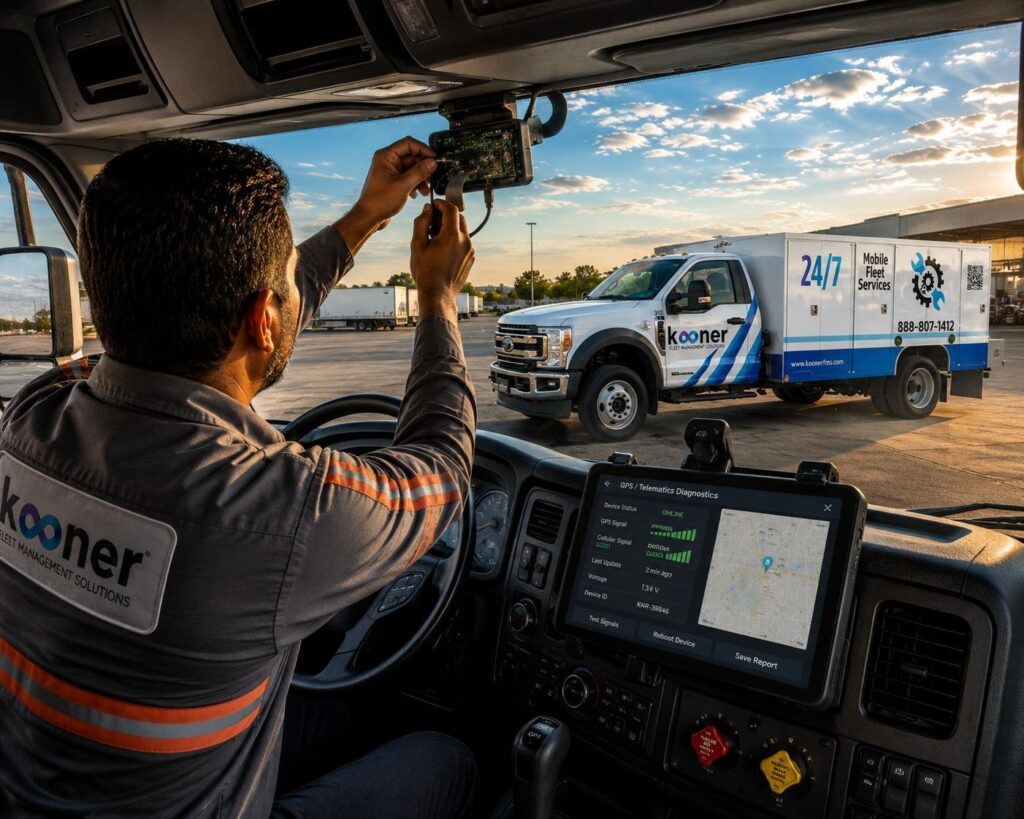
Regional fleet expansion reflects a business’s continued growth and success. But without the right infrastructure in place, that growth shakes the operational control you built at your core location. The maintenance model that worked at a single hub does not automatically translate to other locations. Here is where the cracks appear first. 1. Distributed Vendor Networks When you operate from a single base, you know which vendor to contact and which technician to assign. You set standards and can hold vendors accountable when something breaks unexpectedly. Expand regionally, and that control fragments. Each new location brings a new set of local workshops, each with different pricing structures, different skill levels, and different definitions of “job done.” The result: No standardized service checklist Invoices vary for identical jobs Weak vendor relationship Accountability gaps due to disputed quality You are no longer managing a maintenance program. You are managing multiple disconnected relationships, each pulling in its own direction. 2. Technical Skill Shortage Specialized vehicles, particularly electric, CNG, or heavy commercial assets, require trained technicians. On the flip side, the mechanic shortage has hit new levels. 65.5% of repair shops report understaffing, and one in five technician positions sits vacant. How does it impact fleet operations? Local mechanics attempt repairs they are not trained for, compounding the problem Vehicles travel long distances to reach qualified service centers, adding downtime Training local vendors takes time and budget most fleet managers do not account for in the expansion plan Knowledge gaps mean preventive maintenance gets skipped in favor of reactive fixes Every reactive fix costs more than the scheduled maintenance it replaces. That cost compounds across a regional fleet. Pro tip: Set up preventive maintenance schedules for compliance checks, tire inspections, and minor repair assessment. 3. Parts Supply Strain A centralized fleet benefits from bulk procurement. Parts are ordered in volume, stored on-site, and deployed when needed. Lead time is predictable. A regional fleet does not have that luxury at each location. Common parts supply problems during expansion: Local procurement at retail prices, 20 to 40 percent above bulk rates in many categories No standardized parts inventory across locations, leading to duplication or gaps Genuine parts harder to source locally, creating counterfeit or substandard substitution risk Approval chains slow down emergency procurement, turning a two-hour fix into a two-day wait The parts problem is not just a cost problem. It directly drives downtime. Operational Impacts: Centralized vs. Expanded Fleets Below are the operational impacts of centralized and fragmented fleet systems during regional expansion. Maintenance Metric Centralized Fleet System Fragmented Regional Fleet System Parts Procurement Bulk purchasing with deep volume discounts Emergency local purchasing at premium retail prices Service Quality Vetted, consistent in-house technicians Variable standard of work across local vendors Data Visibility Real-time tracking via a single unified platform Scattered spreadsheets and delayed invoice tracking Downtime Duration Predictable, rapid turnaround times Extended delays due to approval and shipping bottlenecks The table is not an argument against expansion. It is a map of where the risk sits. What Actually Fixes This The problem is not the expansion itself. It is expanding the fleet without expanding the operating model around it. Align expansion with structured fleet maintenance and repair services that support multi-region expansion. Practical steps that address the root cause: Centralize data before you decentralize operations A fleet management platform that records, organizes, and monitors maintenance records, invoices, and vehicle health data from all locations in a single view is non-negotiable. You cannot manage what you cannot see. Build a vendor qualification framework Define minimum standards, certifications, and service protocols before onboarding any regional vendor. Audit quarterly, not annually. Pre-position parts inventory at key regional nodes Identify the highest-consumption parts per vehicle and establish minimum stock levels at each location. This alone cuts emergency procurement significantly. Train regional staff on escalation protocols Not every repair needs a specialist, but every technician needs to know when to stop and escalate. Following a structured decision protocol saves vehicles from compounded damage. Regional expansion done right is a competitive advantage. Done without operational groundwork, it is a liability. The Bottom Line Regional fleet expansion creates growth opportunities, but it also introduces maintenance challenges that require careful planning and operational discipline. Vendor inconsistency, technician shortages, fragmented data, and strained parts supply chains reduce productivity and create blind spots if not addressed early. At Kooner Fleet Management Solutions, we prioritize standardized maintenance processes and centralized operational visibility without compromising reliability, service quality, or long-term operating costs. Get in touch to avail yourself of comprehensive fleet management solutions with nationwide coverage.
The Operational Habits That Separate High-Performing Fleets From Everyone Else
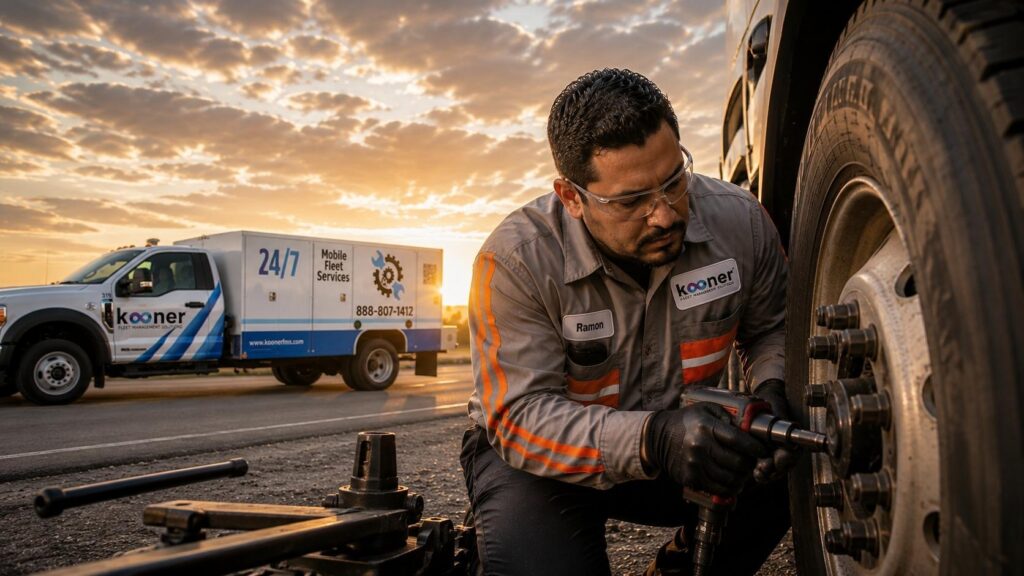
The difference between a high-performing fleet and an average one is a lot easier to spot than you might imagine. No, it isn’t a big budget or fancy fleet care. It’s something as simple as systematic preventive maintenance, proper driver coaching, consistent performance monitoring, and emergency response plans. Here are some everyday operational habits that separate efficient fleets from the rest. They Make Proactive Care Their Utmost Priority High-performing fleets run on scheduled maintenance cycles. They don’t wait for warning signs to appear. Oil changes, brake inspections, and tire rotations are handled before they become emergencies. This includes: Scheduled preventive maintenance based on mileage Regular inspections of critical components Timely replacement of worn-out parts Maintaining service records for every vehicle These small operational decisions make a significant difference when you look at the bigger picture. They Prefer Centralized Platforms for Visibility A handful of vehicles are easy to manage and don’t require complicated software. But scale changes everything. The moment operations expand, minor visibility gaps compound. That’s why high-performing fleets prioritize centralized control from day one. Centralized platforms deliver: A single dashboard for fuel usage, location tracking, maintenance logs, and driver behavior Real-time GPS and telematics that let dispatchers reroute vehicles mid-route Audit-ready records and compliance documentation that take minutes to produce With all the required data in one place, teams spend less time searching for information and more time acting on it. They Invest in Driver Training and Mentoring Rash driving, excessive idling, and delayed issue reporting are all preventable gaps in driver behavior. Regular training and mentoring help drivers build better habits while protecting your vehicles from unnecessary wear and tear. What does this do for your business? Improves fuel efficiency Extends vehicle lifespan Builds an accountable workforce Well-trained drivers operate vehicles better and have opportunities to grow professionally. Consider integrating a fleet maintenance program that includes driver training and safety management. They Sweat the Right Assets at the Right Time Understand that efficiency isn’t about adding more vehicles. It’s deploying the right vehicle for the right job and ensuring every asset is used to its full potential. That means: Matching vehicle type to route, load, and delivery requirements Tracking utilization rates to avoid underused assets Balancing workloads across the fleet instead of overusing a few vehicles Reviewing demand patterns before adding new capacity Many businesses invest in more vehicles before maximizing the ones they already own. Smart asset utilization helps control costs, improve productivity, and delay unnecessary capital spending. They Calculate Metrics Periodically They measure what matters and review those numbers consistently rather than relying on annual audits. Regular tracking helps spot inefficiencies early and supports smarter operational decisions. Metrics they monitor include: Cost per mile Preventive maintenance compliance rate Repeat repair rate These metrics aren’t meant to sit on a dashboard. Fleet maintenance professionals use them to resolve recurring issues and reevaluate their strategies. Why Some Fleets Struggle to Deliver Expected Performance? If you look closely, you’ll notice that the biggest performance gaps often come from everyday operational habits like: Reactive processes that lead to extended downtime Waiting for breakdowns instead of proactive planning keeps vehicles off the road longer than necessary. Neglecting driver behavior and accountability Poor driving habits and delayed issue reporting increase costs and operational risk. Imbalanced workload across vehicles Uneven asset utilization causes some vehicles to wear out faster while others remain underused. Inability to stay audit-ready when necessary Incomplete records and inconsistent documentation make compliance and inspections difficult. Working with fragmented data until something breaks Disconnected systems create blind spots, slow decision-making, and make it difficult to identify problems early. To overcome these challenges, consider changing your fleet maintenance approach. Final Thoughts High-performing fleets aren’t usually operating on massive budgets. They follow fundamental operational practices, including centralized data management, asset utilization, proactive maintenance, and regular performance tracking. At Kooner Fleet Management Solutions, we help fleet operators put these practices into action with our preventive maintenance programs, data analysis and reporting, and driver safety training. Get in touch.
Building a Fleet Operation That Can Withstand Market Volatility
For years, businesses assumed that pre-defined workflows helped overcome unexpected fleet-related operational challenges. Processes were set, maintenance calls were followed, and escalation plans were in place. However, they fail to account for a major challenge: Market Fluctuations. Economic headwinds continue to impact fuel costs, driver compensation, and repair and maintenance expenses. It pushed average total operating cost for U.S. fleets to an elevated $2.26 per mile ($90.89 per hour). Therefore, building a resilient fleet operation strategy that withstands market volatility becomes critical. Step 1: Scenario-Based Budgeting Static budget projections are based on a belief that market conditions will remain consistent. That’s why fleet operators often fail to prepare for scenarios such as rising maintenance expenses, customer demand shifts, and fuel price changes. The problem Budgets rely on fixed assumptions that become outdated Rising fuel and maintenance costs create unexpected financial pressure Sudden demand shifts leave no time for informed decision-making The fix Build best-case, expected, and worst-case financial scenarios Review budgets regularly instead of once a year Create contingency plans for major cost fluctuations Scenario-based budgeting replaces static forecasts, enabling businesses to make quick decisions when uncertainty strikes. Step 2: Asset Management and Utilization Organizations assume they need to add more vehicles to meet their operational goals. But in reality, many existing assets remain underutilized. The problem Underutilized vehicles add to ownership costs New assets are purchased before existing ones are fully utilized Uneven deployment reduces overall fleet efficiency The fix Reallocate underused assets to high-demand operations Delay expansion until current capacity is fully leveraged Extend the asset lifecycle of existing vehicles An agile asset management strategy prioritizes utilization before expansion. Combining this approach with on-site fleet management enhances visibility and supports smarter allocation. Step 3: Complete Operational Control Excessive idling, harsh driving behaviour, fuel misuse, route deviations, and delayed maintenance collectively drain resources. The problem Fuel waste and excessive idling increase operating costs Poor driving habits lead to asset wear and tear Fragmented reports create inefficiencies The fix Track fuel usage, vehicle location, and driver behavior Standardize reporting to improve accountability Use data analysis to assess performance and identify trends Without complete visibility, small gaps turn into significant expenses during market volatility. Step 4: Strategic Risk Management Unexpected risks are part of the process. Emergency roadside breakdowns, extreme weather, and labor shortages can all interfere with service delivery. The problem: Unplanned breakdowns disrupt deliveries and schedules Weather events and labor shortages create delays Reactive responses increase recovery costs The fix: Invest in reliable emergency roadside assistance Create an accident management support plan Identify and mitigate risks before they escalate Having structured response plans allows your vehicles to recover faster and reduces the financial impact. Step 5: Preventive and Predictive Maintenance Relying on reactive processes is no longer sustainable, especially when consequences include longer downtime, high repair costs, and missed delivery timelines. The problem: Following the fix-when-it-breaks approach Not identifying the root cause of repeat breakdowns Compliance checks aren’t conducted regularly The fix: Implement preventive maintenance programs Keep critical assets road-ready through proactive servicing Ensure fleet compliance including emissions standards and safety checks. Proactive maintenance keeps vehicles prepared for the road when they’re needed the most. Final Thoughts Market volatility is inevitable. Operational instability does not have to be. At Kooner Fleet Management Solutions, we focus on building resilient fleets through proactive maintenance strategies and nationwide service support. Our services include On-site fleet management Mobile fleet repair Last-mile maintenance We’re committed to keeping your fleets dependable regardless of external conditions. Whether you’re preparing for expansion or looking to strengthen your operations against changing market conditions, we help you build a strategy that keeps your fleet moving. Connect with us to make it a reality.